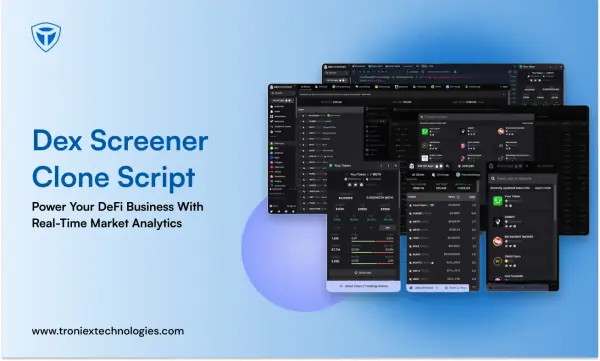
DEX Screener Clone Script: Build a Real-Time DeFi Analytics Platform
Explore how a clone script helps build a real-time DeFi analytics platform with multi-chain tracking, advanced features, and scalable architecture.
Oct 01, 2026
12 mins read
Quick Summary:
- Launch a real-time DeFi analytics platform with a DEX Screener clone.
- Track token prices, liquidity, volume, trading pairs, and transactions.
- Support multiple blockchain networks through multi-chain integration.
- Add charts, filters, watchlists, alerts, and DEX aggregation.
- Build with reliable APIs, blockchain data sources, and scalable infrastructure.
- Monetize through subscriptions, premium analytics, APIs, advertising, and licensing.
- Prioritize data accuracy, security, performance, and long-term scalability.
DeFi markets move fast, and traders need more than basic price charts to understand what is happening across decentralized exchanges.
A DEX Screener Clone Script lets businesses build a real-time analytics platform where users can track token prices, liquidity, volume, trading pairs, and market activity across multiple networks.
This guide explores the key features, development approach, monetization models, and considerations for launching your own DEX analytics platform.
What Is a DEX Screener Clone Script?
A DEX Screener Clone Script is pre-prepared software to create your decentralized exchange analytics site. You can use this tool for tracking prices of tokens, trading pairs, liquidity, and other parameters in the supported blockchains without creating a fully-fledged platform from scratch.
- Real-time DEX market tracking
- Token and trading-pair analytics
- Multi-chain data support
- Customizable dashboards and alerts
Why Launch Your Own DEX Analytics Platform?
Building your own DEX analytics platform gives you more than a place to display token prices. It lets you create a product around how traders actually research markets, compare trading pairs, monitor liquidity, and identify changing market activity.
With control over the platform’s data sources, interface, supported networks, and features, you can shape the experience around a specific audience instead of relying entirely on a third-party analytics service.
- Real-time market tracking: Monitor token prices, volume, liquidity, and trading-pair activity.
- Multi-chain coverage: Bring data from multiple blockchain networks into one interface.
- Custom user experience: Build dashboards, charts, watchlists, alerts, and filters around user needs.
- Business ownership: Maintain control over your branding, features, data presentation, and monetization strategy.
Also read: Explore DeFi development solutions for building secure, scalable decentralized finance platforms, including DEX infrastructure, AMMs, and other DeFi products.
How a DEX Screener Clone Platform Creates Business Opportunities
A DEX Screener clone platform can become a practical Web3 analytics product when it solves a clear problem for traders and crypto users.
Instead of simply copying another platform’s interface, businesses can add specialized analytics, premium tools, token discovery features, or market intelligence for a particular user segment.
This creates opportunities to generate recurring revenue while continually expanding the platform as market and user requirements evolve.
- Premium subscriptions: Offer advanced charts, analytics, alerts, and market insights.
- API access: Provide structured market data to other applications and businesses.
- Advertising: Create advertising opportunities for relevant Web3 projects and services.
- Premium analytics: Charge for deeper token, liquidity, volume, and trading-pair insights.
- White-label solutions: Adapt the platform for different businesses or niche crypto communities.

Ready to turn your DEX analytics idea into a working platform?
Explore our DEX Screener clone development solutions.
Talk To Our Experts>Essential Features of High-Performance DEX Screener Clone Software
The key components of a high-performance DEX Screener clone include market data accuracy, easy-to-use analytics and scalability.
They allow users to monitor fast-changing DeFi marketplaces, compare offers and make decisions regarding them using different blockchain networks.
- Real-Time Token Price Tracking: Displays continuously updated token prices, helping users monitor market movements without relying on delayed data.
- Live Price Charts: Provides interactive charts that help users understand token performance, price trends, and historical market movements.
- Trading Pair Tracking: Lets users monitor individual trading pairs, including price changes, transactions, liquidity, and trading activity.
- Liquidity Monitoring: Tracks liquidity levels across pools, helping users evaluate market depth and potential trading conditions.
- Trading Volume Tracking: Shows real-time trading volumes to help users identify active tokens and changing market interest.
- Advanced Token Filters: Enables users to filter tokens by price, volume, liquidity, market cap, and other metrics.
- Token Search & Discovery: Helps users quickly find tokens, trading pairs, blockchain networks, and relevant market information.
- Multi-Chain Support: Connects multiple blockchain networks, allowing users to explore diverse DeFi markets through one platform.
- Liquidity Pool Analytics: Provides detailed pool data to help users evaluate liquidity distribution and trading activity.
- Customizable Watchlists: Allows users to save selected tokens and trading pairs for convenient ongoing market monitoring.
- Price Alerts & Notifications: Sends timely alerts when selected tokens reach predefined price or market activity thresholds.
- Multi-DEX Aggregation: Combines market data from multiple decentralized exchanges, giving users broader visibility across available trading markets.
How to Build a DEX Screener Clone With DEX Analytics Platform Development
Creating a DEX screener clone is not about replicating its token graphs and price trackers alone.
The working platform will need proper planning, blockchain integration, DEX data integration, real-time data processing capabilities, effective analytics, and scalability.
Developing a well-structured DEX analytics platform will ensure the final product is able to provide market insights effectively while accommodating new features and growth in the future.
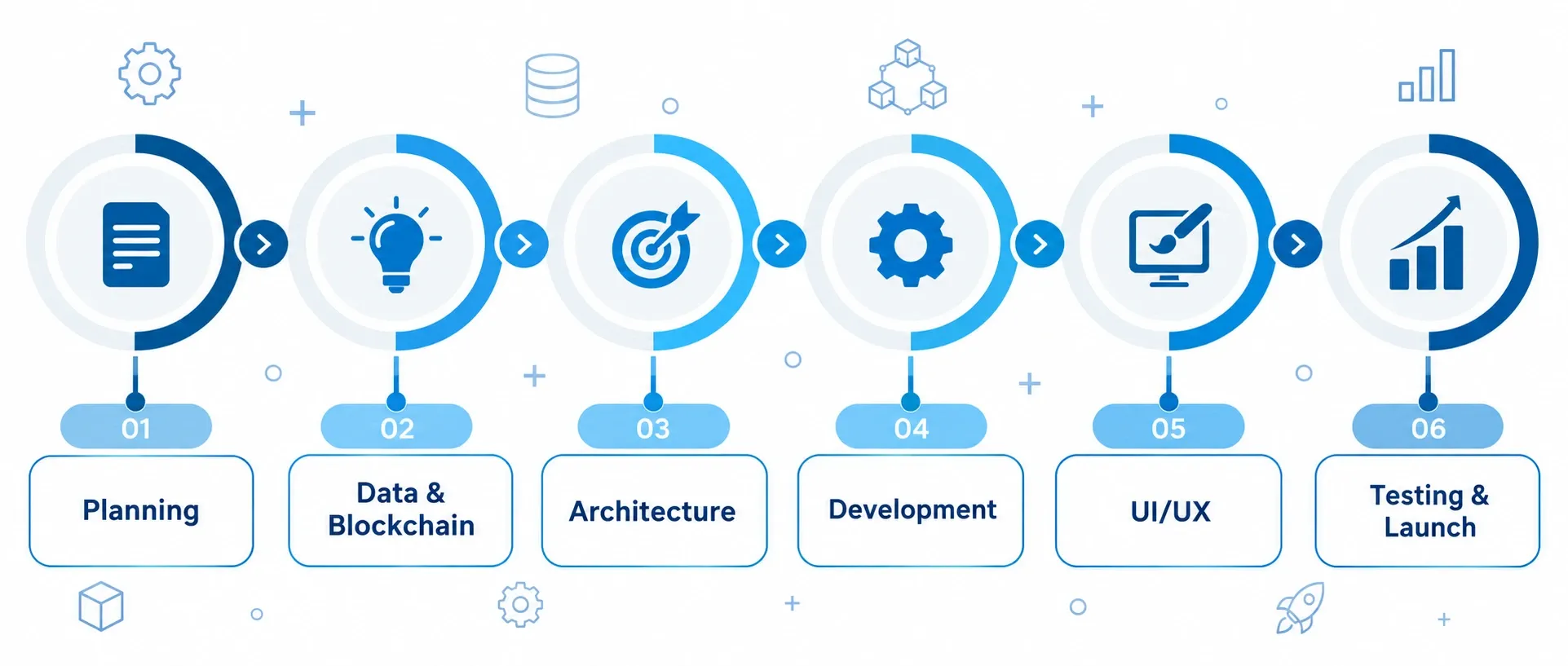
1. Define the Platform Requirements and Target Users
First, determine who your target users are, what markets you support, your key analytics, what features you want, and what are your goals.
Well-defined requirements will allow the development team to concentrate on features that matter and build a product which will address user’s problems rather than duplicate the existing interface.
Key considerations:
- Target audience
- Business model
- Supported features
- Market coverage
2. Choose Blockchain Networks and DEX Data Sources
Choose blockchain networks and trusted data sources depending on your target audience and market coverage.
Your platform might require integration with blockchain nodes, DEX APIs, indexing services, and other data providers in order to provide accurate data on token pricing, liquidity, trading pairs, and transactions.
Data sources:
- Blockchain nodes
- DEX APIs
- Indexing protocols
- Market data providers
3. Design the DEX Analytics Platform Architecture
Scalable architecture provide for building a robust DEX Screener clone. Generally speaking, developers will have to design the front end, back end, database, blockchain integrations, APIs, indexing infrastructure, and real-time data pipelines that will process growing amounts of market data.
4. Develop Real-Time Market Data and Analytics
Real-time data processing is central to a DEX analytics platform. Development teams build data pipelines that collect, validate, process, and display constantly changing information such as token prices, trading volume, liquidity, transactions, and pair activity with minimal delay.
Core analytics:
- Token price data
- Trading volume
- Liquidity metrics
- Transaction activity
5. Build the User Interface and Trading Insights
The interface should make complex blockchain data easy to understand.
Interactive charts, filters, watchlists, token pages, market indicators, and customizable dashboards can help users quickly compare assets and identify relevant market activity without navigating through complicated screens.
User-facing tools:
- Interactive charts
- Token filters
- Watchlists
- Market dashboards
6. Test, Secure, and Deploy the DEX Screener Platform
Before launch, the platform should undergo functional, performance, security, and data-accuracy testing.
Developers can then optimize infrastructure, resolve integration issues, strengthen access controls, and deploy the DEX Screener platform using scalable infrastructure designed to support future users and additional blockchain networks.
Read a practical guide on how to build a decentralized exchange, covering DEX architecture, smart contracts, liquidity pools, wallets, and core components.
Real-Time DEX Data and Multi-Chain Market Tracking for Your DEX Screener Clone App
Real-time data keeps a DEX Screener clone app useful by giving traders updated token prices, trading pairs, liquidity, volume, and transaction activity. With multi-chain integration, users can track markets across different blockchain networks from one interface.
This makes market research easier while giving businesses the flexibility to expand their platform as new DeFi ecosystems emerge.
|
Data Category |
What the Platform Tracks |
Business Value |
|---|---|---|
|
Token Data |
Price, market cap, price changes |
Helps users evaluate token performance |
|
Trading Pairs |
Pair prices, transactions, and activity |
Makes active markets easier to discover |
|
Liquidity Data |
Pool liquidity and liquidity changes |
Helps users understand market depth |
|
Trading Volume |
Buy/sell volume and volume changes |
Highlights market activity and momentum |
|
Blockchain Data |
On-chain transactions and events |
Adds transparent market insights |
|
Multi-Chain Data |
Assets and pairs across supported networks |
Expands overall market coverage |
Real-Time Token and Trading Pair Data
A DEX screener clone should give users fresh information on token prices, trading pairs, transactions, and price movements.
Real-time updates help traders follow fast-changing markets without constantly checking multiple platforms.
Multi-Chain Blockchain Data Integration
Multi-chain integration brings token and trading data from different blockchain networks into one platform.
Supporting networks such as Ethereum, BNB Chain, Solana, and Polygon can help expand market coverage and reach different DeFi user groups.
Liquidity, Volume, and Market Activity Tracking
Price alone does not tell the full market story. Tracking liquidity, trading volume, transactions, and price changes gives users a clearer view of how actively a token or trading pair is being traded.
DEX Data APIs and Real-Time Synchronization
Reliable APIs and blockchain data sources help keep market information updated.
A well-structured data pipeline can collect, process, and synchronize information efficiently, helping the platform deliver a smoother experience as data and user activity grow.
Also read: Learn how DeFi DEX aggregator development can connect multiple exchanges and liquidity sources to improve price discovery and trading efficiency.
7 Ways to Monetize a DEX Analytics Platform
The DEX analytics platform becomes a sustainable business once its valuable market data is monetized into various services that people are ready to purchase.
In contrast to a business model based on a single income stream, it is possible to leverage subscriptions, premium services, data licensing, advertisements, and corporate offerings.
The most appropriate approach will depend on the target audience, platform functionality, data scope, and analytics value.
- Subscriptions Plans: Allow users to gain access to premium tools, alerts, and market analysis.
- Premium Analytics & Advanced Tools: Offer advanced market data, filters, charts, indicators, and research tools.
- API Access & Data Licensing: Allow companies to access your reliable market data via API and data licensing.
- Advertising & Sponsored Listings: Promote relevant Web3 products and services through sponsored listings.
- Trading & Referral Commissions: Earn from trading integration, referrals, and other partner transactions.
- White-Label Platform Licensing: Allow companies to use your DEX analytics platform via white-label license.
- Enterprise Analytics Solutions: Offer tailored solutions for large enterprises including dashboards and data services.
Explore DeFi staking platform development services and revenue opportunities involving staking fees, liquidity participation, membership models, and reward mechanisms.
DEX Screener Clone Development Cost and Timeline
The investment and development timeline for a DEX Screener clone depend on the platform’s scope, supported blockchain networks, data integrations, feature set, and customization requirements.
A basic analytics platform may require fewer integrations, while a more advanced solution with multi-chain tracking, real-time data, advanced charts, alerts, and APIs requires more development effort. The following factors can influence the overall project requirements:
|
Development Factor |
What It Includes |
Complexity |
Typical Development Effort |
Cost Impact |
|---|---|---|---|---|
|
UI/UX Design |
Dashboards, charts, filters, search, and responsive layouts |
Medium |
1–2 weeks |
Medium |
|
Core Platform Development |
User accounts, token tracking, watchlists, search, and market pages |
High |
3–5 weeks |
High |
|
Blockchain Integration |
Blockchain networks, DEXs, nodes, and on-chain data sources |
High |
2–4 weeks |
High |
|
Real-Time Analytics |
Price, volume, liquidity, transactions, and pair activity |
High |
2–4 weeks |
High |
|
Advanced Features |
Alerts, advanced filters, analytics tools, and API access |
High |
2–4 weeks |
High |
|
Security & Testing |
Data validation, API security, performance, and functional testing |
Medium–High |
1–3 weeks |
Medium–High |
|
Deployment & Optimization |
Cloud deployment, monitoring, performance, and scalability |
Medium |
1–2 weeks |
Medium |
Note: This timeframe may vary depending on how the platform develops throughout the process. The introduction of more blockchain networks, additional integration with decentralized exchanges, analytics, or enterprise-grade features will most likely require more work to be done.
Also read: Learn about DEX development cost factors such as blockchain selection, smart contract complexity, frontend development, backend infrastructure, security, and liquidity.
Planning your DEX Screener platform?
Discuss your requirements with our blockchain development team and define the right development approach.
Contact Us>How Troniex Technologies Builds DEX Screener Clone Platforms
At Troniex Technologies, we approach DEX Screener clone development from both the technology and business perspective. We first understand the platform’s target users, supported blockchain networks, required market data, and planned revenue model.
Further, the development process can involve blockchain and API integrations, real-time data processing, analytics dashboards, responsive UI, security and scalable infrastructure.
This allows creating a DEX analytics platform that is designed for practical use in the current conditions but allows growth in the future.
- Blockchain integration: Integration of relevant blockchain networks and decentralized exchanges.
- Real-time data processing: Processing of continuously changing tokens and market data.
- Analytics dashboards: Displaying prices, volume, liquidity, pairs, and market activity.
- Custom functionality: Integrating additional features according to your business model and target audience.
- Scalable architecture: Prepare the platform to handle increasing users and data loads.
- Security-focused development: Apply appropriate safeguards across APIs, infrastructure, and platform access.
Explore DEX development services covering custom DEX architecture, AMM protocols, liquidity integration, smart contracts, and white-label solutions.