DeFi Analytics Platform Development: A Guide for Crypto Startups
Learn DeFi analytics platform development for startups, covering features, use cases, technology stack, metrics, revenue models, and development insights.
Oct 08, 2026
9 mins read
Ever wondered how successful DeFi businesses know where liquidity is moving, which protocols are gaining traction, or when unusual wallet activity deserves attention?
The answer often comes down to having the right data at the right time.
A DeFi analytics platform brings on-chain data, market activity, wallet behavior, protocol performance, and risk signals together in one place.
For crypto startups, this means less time sorting through fragmented blockchain data and more time turning insights into better products and decisions.
In this guide, we’ll explore how to build a DeFi analytics platform, the features it needs, technology choices, monetization models, and key considerations for long-term growth.
What Is a DeFi Analytics Platform?
DeFi analytics is a platform where blockchain data, protocol activity, market statistics, and wallet activity are collated.
This ensures that one does not have to navigate through multiple platforms manually and track transactions but can do everything from a single platform where they can track things like TVL, liquidity, APY, tokens, and trades.
Core Analytics:
- TVL and liquidity tracking
- Wallet and transaction analytics
- Token and protocol metrics
- Multi-chain data visualization
Why Are Crypto Startups Investing in DeFi Analytics Platforms?
As DeFi ecosystems fragment, there is a need for crypto companies to find ways to understand market actions and user behaviors.
A specialized analytics platform enables teams to explore new opportunities, monitor their competitors, track the performance of their protocols, and provide insights for their users.
In addition, real-time blockchain analytics provides the opportunity for product differentiation in a highly competitive Web3 space.
Startup Benefits:
- Faster market intelligence
- Better investment insights
- Real-time protocol monitoring
- Improved user engagement
Also read: Discover end-to-end DeFi DEX aggregator development solutions tailored to your trading platform requirements.
What Business Problems Can a DeFi Analytics Platform Solve?
DeFi companies are faced with problems such as the challenges of fragmented data on the blockchain, absence of transparency in the actions of wallets, and fast-changing market conditions.
An effective analytics platform helps to gather all this information in order to turn it into a form that can be used.
Analytics is also important for better decision-making in the companies since it provides information such as liquidity flow, activity of whales, and the state of protocols.
Key Problems Addressed:
- Fragmented on-chain data
- Limited market visibility
- Manual data analysis
- Delayed decision-making
Important Features to Include in a DeFi Analytics Platform
A useful DeFi analytics platform should turn complex blockchain data into clear, actionable insights through real-time tracking, multi-chain analytics, and intuitive dashboards.
- Real-Time DeFi Market Data: Give users a live view of prices, volumes, liquidity, and market movements.
- Multi-Chain Data Analytics: Bring data from multiple blockchains together for easier cross-chain analysis.
- TVL and Liquidity Tracking: Help users quickly understand where capital is flowing across DeFi protocols.
- Wallet & Address Analytics: Let users explore wallet activity, holdings, transactions, and changing investment patterns.
- Token Performance Tracking: Track token prices, trading volume, liquidity, and performance from one place.
- DEX & Liquidity Pool Analytics: Compare DEX activity, pool liquidity, trading volumes, fees, and overall performance.
- Yield and APY Monitoring: Make it easier to compare yields and spot-changing DeFi opportunities.
- Whale & Smart Money Tracking: Show significant wallet movements to help users understand where capital moves.
- Custom Alerts & Notifications: Notify users when important prices, transactions, liquidity, or market conditions change.
- Interactive Analytics Dashboard: Turn complicated DeFi metrics into simple charts, filters, and easy-to-read insights.

Build Your DeFi Analytics Platform
Turn blockchain data into actionable insights with our expertise.
Talk To Our ExpertsDifferent DeFi Analytics Solutions You Can Build for Various Use Cases
Not every DeFi business needs the same analytics solution.
A platform can be designed around specific goals, such as tracking portfolios, monitoring protocols, comparing yields, or analyzing activity across multiple blockchain networks.
|
DeFi Analytics Platform |
Primary Use Case |
Key Data Tracked |
Ideal Users |
|---|---|---|---|
|
DeFi Portfolio Analytics Platform |
Track portfolio performance |
Assets, P&L, allocation |
Investors, traders |
|
DeFi Yield Analytics Platform |
Compare yield opportunities |
APY, APR, rewards |
Yield farmers, investors |
|
DeFi Protocol Analytics Platform |
Monitor protocol performance |
TVL, revenue, users |
DeFi startups, analysts |
|
DeFi Wallet Analytics Platform |
Understand wallet activity |
Holdings, transactions, activity |
Investors, researchers |
|
DEX Analytics Platform |
Monitor decentralized trading |
Volume, swaps, liquidity |
Traders, DEX teams |
|
DeFi Risk Analytics Platform |
Identify potential risks |
Liquidity, volatility, exposure |
Investors, protocols |
|
Multi-Chain DeFi Analytics Platform |
Analyze multiple ecosystems |
TVL, transactions, liquidity |
Crypto businesses |
|
DeFi Investment Analytics Platform |
Support investment research |
Token metrics, yields, trends |
Investors, funds |
Why these models matter: Each platform serves a different analytics need, allowing startups to build a focused product instead of overwhelming users with unrelated blockchain data.
Also read: Build your own DEX analytics business with a DEX screener clone script for crypto startups, designed for real-time market data and multi-chain analysis.
Revenue Models for Custom DeFi Analytics Platform Development
Choosing the right monetization method will let you turn your DeFi analytics tool into a profitable business as well as provide your clients with blockchain data and insights.
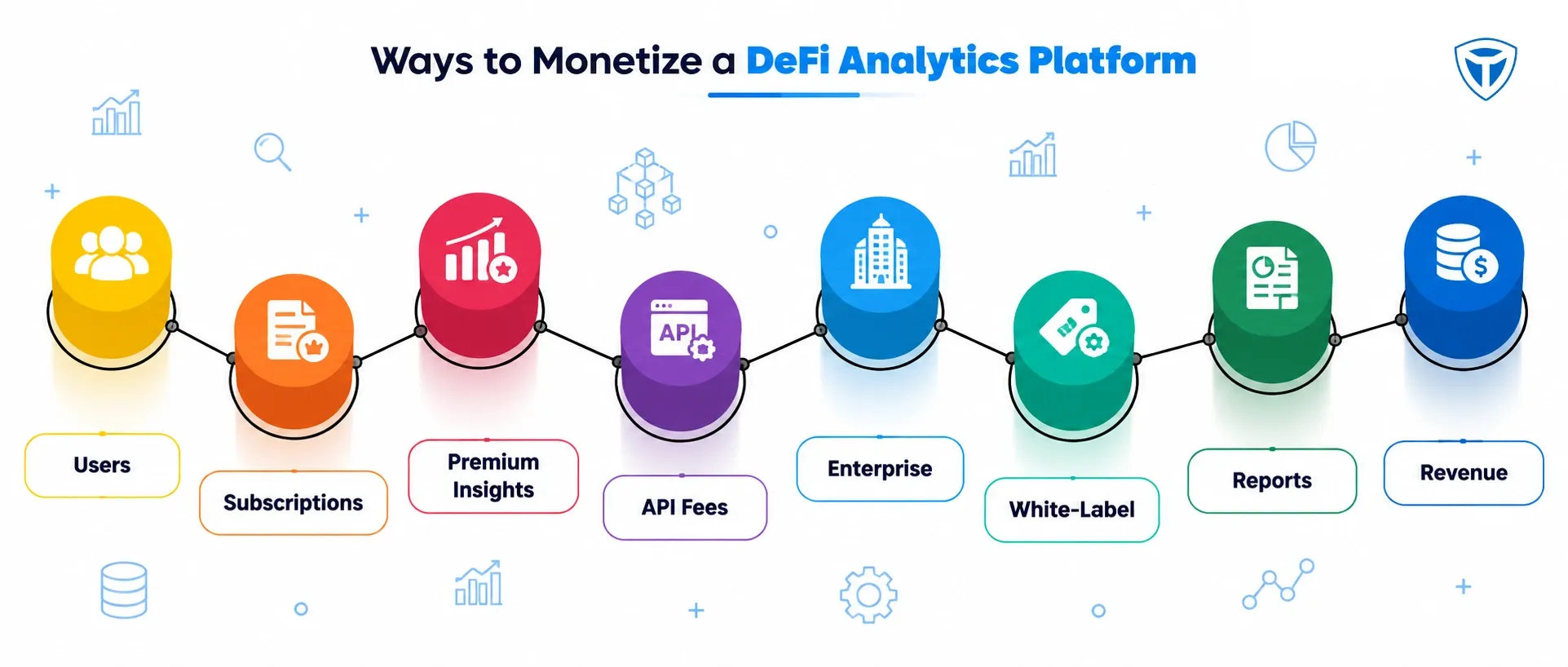
Revenue Flow Names
- Subscription Services: Provide monthly and annual subscription plans with a variety of options designed for both people and companies.
- Premium Insights: Create premium insights, analytics, reports, and research.
- API Data Fees: Use the API fees method to earn money from premium DeFi analysis and data.
- Enterprise Solutions: Provide custom analytics and reporting services for businesses.
- White Labeling: Allow other companies to rebrand your DeFi analytics tool and sell it under their own name.
- Data & Reporting Products: Use your data packages and reports for the benefit of investors and businesses that deal with cryptocurrency.
Technology Stack for DeFi Analytics Platform Development
A proper tech stack enables the DeFi analytics platform to be agile and fast in processing real-time blockchain data. Below is a list of some of the most common technologies used at each stage of development.
|
Development Layer |
Technologies |
|---|---|
|
Frontend Development |
React.js, Next.js |
|
Backend Development |
Node.js, Python |
|
Blockchain Integration |
Web3.js, Ethers.js, Viem |
|
Database |
PostgreSQL, MongoDB |
|
Real-Time Data Processing |
WebSockets, Redis |
|
Blockchain Nodes & RPC |
Alchemy, QuickNode |
|
Cloud Infrastructure |
AWS, Google Cloud, Microsoft Azure |
|
Security |
OAuth, JWT, SSL/TLS |
|
DevOps & Monitoring |
Docker, Kubernetes, Prometheus |
Why DeFi Startups Need Analytics Beyond Basic TVL Tracking
TVL provides good insight into the amount of capital that the DeFi protocol controls, but more on-chain analytics are required by startups to be able to figure out who uses their product, how the capital flows, what products work, and what the potential risks are in the ecosystem.
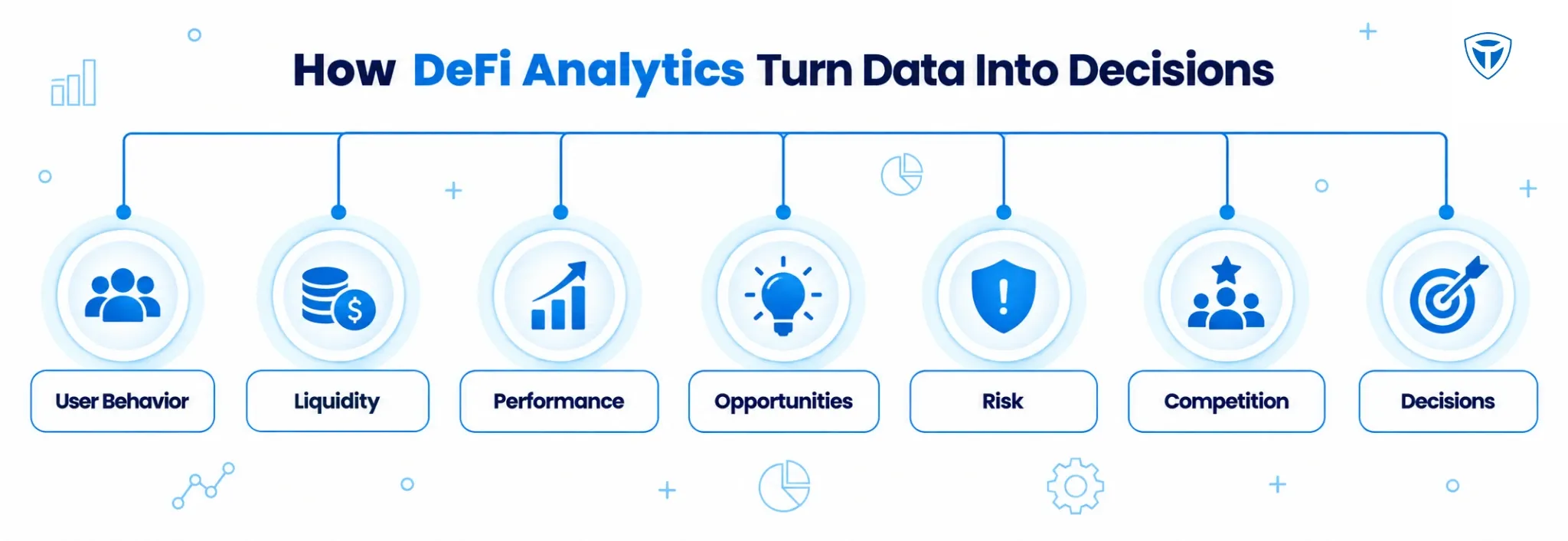
- Understanding of User Behavior: Measure the number of active wallets, transactions, engagement, and retention to figure out how users engage with your product.
- Monitoring Liquidity Flows: See how and where capital is flowing into and out of your protocol, liquidity pools, other protocols, and other blockchains.
- Protocol Performance Monitoring: combine TVL with protocol income metrics like fees, transactions, revenue, growth in number of users, etc.
- Emerging Opportunities: Use market activity to detect emerging tokens, liquidity, protocols, etc., where there might be some DeFi opportunities.
- Detecting Risks: Monitor suspicious transactions, abnormal liquidity movements, high wallet concentration, volatility, and other signals of possible problems.
- Competitive Analysis: Compare adoption level, liquidity, transaction volumes, etc., with your competitors.
- Decision-Making: Transform blockchain data into actionable insights to make the right product, user experience, and strategy decisions.
DeFi Metrics That Matter for Investors, Traders, and Protocols
DeFi metrics help different users quickly understand market activity, liquidity, returns, adoption, and potential risks across decentralized finance ecosystems.
|
DeFi Metric |
What It Measures |
Why It Matters |
Useful For |
|---|---|---|---|
|
TVL |
Capital locked in protocols |
Shows scale and capital participation |
Investors, protocols |
|
Trading Volume |
Value of trades over time |
Indicates market activity and demand |
Traders, investors |
|
Liquidity |
Assets available for trading |
Helps assess slippage and trading efficiency |
Traders, protocols |
|
APY & Yield |
Potential DeFi returns |
Helps compare earning opportunities |
Investors, farmers |
|
Active Users & Wallets |
Participating wallet activity |
Shows adoption and engagement |
Protocols, investors |
|
Protocol Revenue & Fees |
Fees and revenue generated |
Indicates financial performance |
Investors, protocols |
|
Token Performance |
Price, market cap, and volume |
Shows token momentum and demand |
Traders, investors |
|
Risk & Volatility |
Price and exposure fluctuations |
Helps identify potential risks |
Investors, traders |
Also read: Learn more about DeFi staking platform development and the features needed to launch a competitive staking platform.
Ready To Build Your DeFi Platform
Discuss your requirements and explore the right development approach today.
Contact UsWhy Choose Troniex Technologies for DeFi Analytics Platform Development?
Selecting the appropriate development partner will definitely have an impact on the stability and scalability of your analytics platform.
Troniex Technologies offers custom DeFi development solutions that combine blockchain development expertise with data-driven architecture to build a customized DeFi analytics platform.
Our specialists focus on developing secure, scalable platforms tailored to your specific business goals and requirements.
Why Work With Troniex Technologies?
- Custom DeFi analytics solutions
- Multi-chain data integration
- Real-time analytics dashboards
- Secure and scalable architecture
- Blockchain and Web3 expertise