
Every Big Win Starts With One Small Step Make Yours!
Great achievements don’t happen overnight. Take your first step today and let success follow.
4+Years of Expertise
Pioneering blockchain andAi since day one

99.6%Client Satisfaction
Where ambition meetsexecution—every time.

100%Quality Assurance
Code audited,stress-tested, future-proofed.

150+Projects Delivered
From seed-stage startupsto enterprise ecosystems.

Agriculture Software Development Company for Modern Agribusinesses
Agricultural businesses operate across interconnected activities, including cultivation, irrigation, inventory management, equipment maintenance, procurement, and distribution. Managing these processes through disconnected tools can create operational delays and inconsistent information. Working with an agriculture software development company allows businesses to bring their workflows into a unified digital environment designed around their operational requirements.
Custom agriculture software development enables businesses to build applications around their specific farming processes and operational challenges. A platform can combine crop monitoring, inventory management, workforce coordination, equipment tracking, and reporting instead of requiring employees to switch between unrelated systems.
AgTech startups often need an MVP to validate a product idea, attract early customers, and demonstrate its commercial potential. Established enterprises may require more advanced systems with multiple user roles, integrations, analytics, and infrastructure. Software architecture should accommodate these different requirements without introducing unnecessary complexity.
Agricultural software must accommodate changing operational requirements, additional farms, growing datasets, and new integrations. Scalable architecture, secure access controls, maintainable code, and flexible APIs help businesses expand their digital platforms as their operations evolve.
Our Agriculture Software Development Services
Agriculture software development involves several engineering activities, from building new applications to integrating existing systems. Businesses may need a complete digital platform or a specific application that addresses one operational challenge. Troniex can approach these requirements through a defined software development scope based on the intended product, technical complexity, and business objectives.
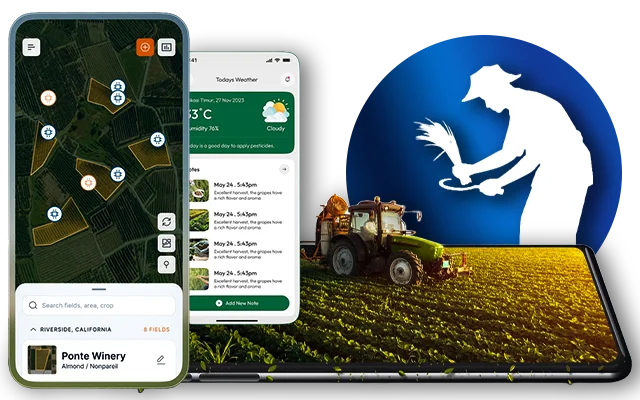
Custom Agriculture Software Development
Custom development is suitable for businesses whose operational requirements cannot be addressed effectively through standard agricultural applications. Solutions can be designed for farm administration, crop planning, resource allocation, procurement, reporting, and specialized agricultural workflows. The development scope is established through requirements analysis and technical planning.
Agriculture Mobile App Development
Mobile applications help farmers, field workers, agronomists, and business managers access relevant information while working outside traditional office environments. Agriculture mobile app development can include field reporting, crop monitoring, task assignments, inventory updates, GPS-based navigation, and notifications. Android and iOS applications can connect with centralized backend systems.
Farm Management Software Development
Farm management software centralizes operational information across agricultural activities. It can support land records, crop schedules, resource allocation, equipment maintenance, labor management, and financial reporting. Businesses can use these capabilities to monitor activities across individual farms or multiple locations.
Agriculture SaaS Platform Development
A SaaS agriculture platform allows businesses to provide software through a subscription-based model. Development may include tenant management, user subscriptions, permission controls, billing integrations, reporting, and cloud infrastructure. Multi-tenant architecture must ensure that each customer's information remains appropriately isolated.
Agriculture Software Integration and Modernization
Agricultural businesses frequently depend on existing ERP platforms, accounting applications, equipment systems, and operational databases. Software integration connects these tools through APIs and data synchronization. Modernization can also involve replacing outdated components, improving application performance, and introducing new functionality without disrupting essential business operations.
Agriculture Software Maintenance and Support
Software requires continuous attention after deployment. Maintenance activities may include bug resolution, security updates, performance optimization, compatibility improvements, infrastructure monitoring, and feature enhancements. A structured maintenance plan helps keep agricultural applications reliable as operating conditions and business requirements change.
Agriculture Software Solutions We Develop
Different agricultural businesses require different software capabilities. A commercial farm may prioritize crop planning and resource management, while an agricultural distributor may need inventory visibility and supply chain coordination. Agriculture software solutions should therefore be designed around the users, workflows, and information requirements of each business model.
Farm Management Software
Farm management platforms organize daily agricultural activities through centralized dashboards. Features may include field records, crop schedules, workforce assignments, resource consumption, equipment maintenance, and operational reports. Managers can use this information to monitor farm activities and identify areas requiring attention.
Crop Management Software
Crop management software helps agricultural businesses organize cultivation activities throughout the growing cycle. It can support planting schedules, field observations, irrigation records, fertilizer applications, pest monitoring, and harvest planning. Historical records also help businesses compare performance across seasons.
Precision Agriculture Software
Precision agriculture applications combine geospatial information, sensor readings, satellite imagery, and field observations to support location-specific decisions. Software can visualize field conditions, identify variations across agricultural land, and help users monitor crop performance. Integration with compatible agricultural equipment can further support data-driven field operations.
Livestock Management Software
Livestock management platforms organize animal records, breeding information, vaccination schedules, feeding activities, and health observations. Businesses can use digital records to monitor individual animals or entire herds, coordinate veterinary activities, and improve operational traceability.
Agricultural Supply Chain Management Software
Agricultural supply chain software connects procurement, storage, inventory, transportation, and distribution activities. It can provide visibility into product movement, supplier information, shipment status, and stock availability. These capabilities help businesses coordinate operations between farms, warehouses, distributors, and buyers.
Smart Irrigation Management Software
Smart irrigation applications combine field information, weather data, and compatible sensor readings to support water management decisions. Users can monitor soil moisture, irrigation schedules, water consumption, and system status. Automated irrigation controls may be implemented where compatible equipment and safety requirements permit.
Agriculture Marketplace Software
Agriculture marketplace platforms connect farmers, suppliers, wholesalers, distributors, and buyers through digital transactions. Features can include product listings, seller accounts, inventory availability, order management, payment integration, and delivery coordination. Business-specific workflows can support wholesale purchasing and recurring orders.
Agricultural Equipment Management Software
Equipment management applications help businesses maintain records of machinery, operational usage, servicing schedules, and maintenance expenses. GPS and telematics integrations can provide additional visibility into equipment location and utilization where supported by the connected devices.
Agricultural Inventory and Warehouse Management Software
Inventory applications manage seeds, fertilizers, pesticides, spare parts, harvested produce, and other agricultural materials. Businesses can monitor stock levels, storage locations, batch records, and product movement. Warehouse integrations can further improve inventory accuracy and coordination.
Build Custom Agriculture Software That Fits Your Business
Every agricultural business has different operational requirements. Work with Troniex Technologies to explore custom software designed around your farming workflows, business processes, and long-term technology goals.
Essential Features of Agriculture Software Development
The effectiveness of agricultural software depends on how well its features support real operational activities. A useful platform should provide relevant information without overwhelming users with unnecessary functionality. During agriculture software development, feature selection should reflect the organization's workflows, user roles, infrastructure, and reporting requirements.
Farm and Field Management Dashboard
A centralized dashboard provides an overview of farm activities, operational tasks, field conditions, and resource information. Role-based dashboards can help farm owners, managers, agronomists, and field workers access information relevant to their responsibilities.
Crop Planning and Monitoring
Crop planning features organize planting dates, cultivation activities, fertilizer applications, and harvest schedules. Field observations and historical records can help users compare crop development and identify potential operational issues.
Weather and Environmental Monitoring
Weather integrations can provide information about temperature, rainfall, humidity, and forecasts. When combined with field observations and compatible environmental sensors, these insights can help businesses plan irrigation, cultivation, and other weather-sensitive activities.
GPS-Based Field Mapping
GPS and GIS functionality supports field boundary mapping, location tagging, land visualization, and navigation. Agricultural teams can use digital maps to organize field records and associate operational information with specific locations.
Inventory and Resource Tracking
Inventory features monitor the availability and movement of agricultural supplies, equipment, and harvested products. Notifications for low stock, expiry dates, and replenishment requirements can support better resource planning.
Workforce and Equipment Management
Workforce management features organize employee records, assigned activities, attendance, and task completion. Equipment management can track usage, servicing requirements, and maintenance history through centralized records.
Automated Alerts and Notifications
Notifications help users respond to relevant events, including upcoming tasks, equipment maintenance, weather changes, inventory shortages, and field monitoring alerts. Alert rules should be configurable to avoid unnecessary notifications.
Reporting and Business Analytics
Reporting tools convert operational information into understandable business insights. Reports can cover resource utilization, crop performance, inventory movement, labor allocation, and operational expenses. Analytical dashboards help decision-makers compare activities across farms and reporting periods.
Offline Data Access and Synchronization
Agricultural operations may take place in locations with limited or inconsistent connectivity. Offline-first applications can allow users to record observations, update tasks, and access previously synchronized information. Once connectivity returns, synchronization rules help transfer updates to centralized systems while managing conflicting changes.
Agriculture Mobile App Development for Connected Farming
Agricultural mobile applications extend digital operations beyond the office. They help users record field information, receive operational updates, monitor activities, and communicate with other stakeholders. A well-designed mobile solution should consider outdoor usability, device compatibility, intermittent connectivity, and the specific responsibilities of its users. Troniex Technologies helps businesses build scalable, user-friendly mobile applications for field operations, farm management, workforce coordination, and real-time agricultural monitoring through its experienced mobile app development company.

Farmer Mobile Applications
Farmer applications can provide access to crop records, cultivation schedules, weather information, agricultural resources, and relevant notifications. Interfaces should prioritize clear navigation, practical information, and straightforward data entry.

Field Worker and Farm Operator Applications
Field-worker applications support task assignments, attendance, field observations, work progress, and equipment-related updates. Supervisors can use centralized dashboards to review submitted information and coordinate activities across teams.

Agronomist and Agricultural Consultant Applications
Agronomist applications can organize field inspections, crop observations, consultation records, and recommendations. They may also integrate images, GPS coordinates, and historical field information to support more structured assessments.

Agriculture Equipment Monitoring Applications
Equipment monitoring apps can connect with compatible machinery and telematics systems to display location, usage, operating status, and maintenance alerts. The information available depends on device capabilities and integration access.

Offline-First Mobile App Architecture
Offline-first architecture allows essential mobile functions to continue when internet access is unavailable. Local storage, background synchronization, data validation, and conflict-resolution mechanisms help maintain information consistency when users reconnect.

Android and iOS Agriculture App Development
Android and iOS development should account for device compatibility, screen sizes, location permissions, battery consumption, security, and usability. Depending on project requirements, businesses can select native or cross-platform development approaches.
Start Your Agriculture Software Development Project Today
Whether you need farm management software, an agricultural mobile application, an IoT-enabled platform, or a custom AgTech product, take the first step by discussing your project requirements with our team.
Advanced Technologies Powering Agriculture Software Solutions
Modern agriculture software combines multiple technologies to improve operational visibility, automate selected activities, and support informed decisions. The right technology stack depends on the agricultural environment, available data, connected equipment, and business objectives. Rather than adopting technology for its own sake, businesses should select capabilities that address measurable operational requirements.
Artificial Intelligence and Machine Learning
AI and machine learning can analyze agricultural datasets to identify patterns and support predictive decision-making. Applications may include crop disease identification from images, yield forecasting, demand prediction, and anomaly detection. Model accuracy depends on training data quality, environmental conditions, and ongoing validation against actual field observations. By integrating machine learning models, predictive analytics, and intelligent automation into agricultural platforms, businesses can improve operational planning and make data-driven decisions with support from Troniex Technologies AI development services

Internet of Things (IoT) and Smart Sensors
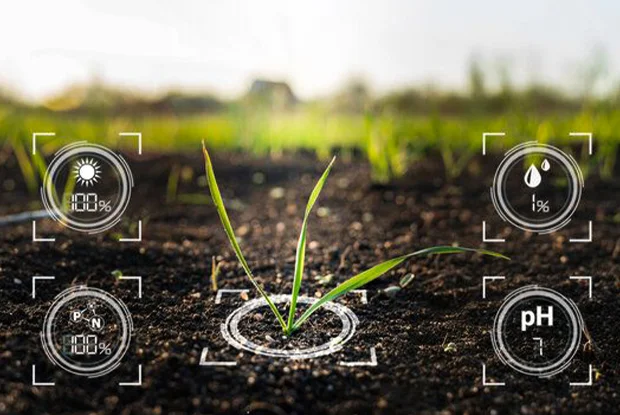
IoT technology connects agricultural sensors, monitoring devices, and compatible equipment to software platforms. Sensors can collect soil moisture, temperature, humidity, and other environmental readings. An IoT-enabled application processes this information and presents relevant updates through dashboards, alerts, and analytical reports.

GPS and Geographic Information Systems (GIS)
GPS and GIS technologies help businesses understand agricultural operations through location-based information. They support field mapping, equipment tracking, land visualization, and geospatial analysis. Integrating these capabilities with farm management applications helps users associate operational records with specific fields and locations.

Satellite Imagery and Remote Sensing
Satellite imagery and remote sensing provide additional information about agricultural land and crop conditions. Depending on image resolution, frequency, and processing methods, software can support vegetation monitoring, field comparisons, and identification of areas requiring further inspection. These capabilities complement, rather than replace, physical field assessments.

Cloud Computing and Data Analytics
Cloud infrastructure supports centralized data storage, application hosting, API connectivity, and scalable processing. Agricultural businesses operating across multiple locations can access shared information through controlled user permissions. Data analytics further helps transform collected information into reports, performance indicators, and operational insights.

Predictive Analytics and Agricultural Automation
Predictive analytics uses historical and current information to estimate possible future outcomes. Businesses may apply it to irrigation planning, resource demand, equipment maintenance, and agricultural supply requirements. Automation can execute predefined workflows, such as generating alerts or triggering approved equipment actions, when the necessary integrations are available.
Blockchain for Agricultural Traceability
Blockchain technology can support agricultural traceability by maintaining tamper-resistant records of selected transactions and product movements. For example, a supply chain platform may record product origin, processing events, and distribution milestones. Smart contracts can automate defined business rules between participating parties. The usefulness of this approach depends on data verification, participant adoption, and integration with physical supply chain processes. For agribusinesses that require transparent product tracking and verifiable supply chain records, Troniex Technologies can support blockchain-based traceability solutions through its blockchain development services.
Code,Deploy,Dominate!
Future Proof Technology, Stacked for Your SUCCESS!
 HTML5 & CSS3
 React Js
 Angular Js
 Vue Js
 Next Js
 Java
 Python
 Node Js
 PHP
 C/C++
 Rails
 SQL
 Mongo DB
 Kafka
 Nginx
 Apache
 Heroku
 CloudFlare
 AWS
 TensorFlow
 Docker
 Kubernetes
 Jenkins
 Kotlin
 Trade Giant
 React Native
 Flutter
 Wordpress
 Magento
 Shopify
 Drupal
 Hyperledger
 GO
 Rust
 Solidity
Our Trusted
Client Testimonial

Our partnership with Troniex has been fantastic. Their team is professional, committed, and always supportive. Their quality work and reliability helped us launch our project on time. I truly appreciate their support.
Project: Casino - Poker
Alex
Partner, Brevin
We are excited to work with Troniex on another project! My colleagues and I were impressed by their professionalism, attention to detail, and the support they provided during our project. Thank you guys for being with us
Project: Fibitpro
Nilesh
Sr. Consultant, Fibitpro
You guys really deserved my trust! I recommend Troniex, who need a perfect partner to setup a business. Mr. Saravanan and Mr. Rajasekar are highly motivated and talented, helped me to launch my business effortlessly.
Project: Poker Bet
James Mathew
Software Architect
I'm truly grateful to Troniex Technologies for bringing my business idea to life. Their expertise and attention to detail made the whole process smooth. I highly recommend their team to anyone looking for reliable support.
Project: Apex21
Arnold
Apex Crypto Academy
Agriculture Software Development for Different Business Models
Agriculture software should reflect the commercial model and operational structure of the organization using it. A startup launching a digital agriculture marketplace has different requirements from a large farming enterprise managing multiple locations. Understanding these differences helps establish the right application scope, architecture, user permissions, and integration strategy.
Agriculture Technology Startups
AgTech startups need software that validates a product concept while remaining flexible enough for future development. An MVP may focus on a specific problem, such as crop monitoring, farm resource management, or agricultural procurement. The architecture should support early user feedback and future feature expansion without overengineering the initial product.
Commercial Farming Enterprises
Commercial farms may require centralized management across multiple properties, departments, and operational teams. Software can support field records, workforce coordination, inventory, equipment maintenance, and performance reporting. Enterprise applications should also consider user permissions, data consistency, and integration with existing business systems.
Agribusiness and Agricultural Cooperatives
Agricultural cooperatives coordinate activities among multiple farmers, suppliers, collection centers, and buyers. Their software requirements may include member management, procurement records, product aggregation, inventory tracking, and payment coordination. Shared access must be carefully controlled to protect individual business information.
Agricultural Equipment Manufacturers
Equipment manufacturers can use connected software to provide equipment monitoring, maintenance management, customer portals, and service support. Integrations with compatible machinery and telematics systems can provide operational data that supports after-sales services and equipment lifecycle management.
Agricultural Suppliers and Distributors
Agricultural suppliers need systems that manage product catalogs, stock availability, supplier relationships, purchasing, and order fulfillment. Custom software can connect warehouse operations with customer-facing applications, helping businesses maintain more consistent inventory and order information.
AgTech Platforms and Service Providers
AgTech service providers may need multi-tenant applications that serve multiple customers through a shared platform. These systems can include customer onboarding, subscription management, analytics, API access, and configurable workflows. A carefully designed architecture supports different customer requirements while maintaining appropriate data isolation.
Our Agriculture Software Development Process
A structured development process helps businesses move from an initial agricultural technology idea to a functioning software product. Each stage should establish clear deliverables, technical decisions, and opportunities for stakeholder feedback. This reduces uncertainty and helps keep the implementation aligned with business requirements.
The process begins with understanding the organization's operations, target users, business objectives, and existing technology environment. Development teams identify the required workflows, integrations, functional requirements, and technical constraints. The outcome is a defined project scope and an implementation plan.
01
Design activities translate business requirements into application layouts and user journeys. Wireframes and interactive prototypes help stakeholders review navigation, dashboards, forms, and workflows before development begins. Agriculture applications should account for outdoor usage, different levels of digital familiarity, and device limitations.
02
The architecture stage establishes how the application components communicate and manage information. Decisions cover frontend technologies, backend services, databases, APIs, cloud infrastructure, and security controls. The technology stack should reflect project complexity, integration requirements, scalability, and long-term maintenance needs.
03
Development is organized into manageable iterations with clearly defined functionality and review points. Frontend, backend, database, and integration components are implemented according to the approved specifications. Regular demonstrations allow stakeholders to assess progress and provide feedback before the next development cycle.
04
Testing evaluates functionality, application performance, usability, compatibility, and data handling. Security testing should examine authentication, authorization, API access, data protection, and common application vulnerabilities. Additional testing may be necessary for offline synchronization, connected devices, and high-volume data processing.
05
Deployment prepares the application for its intended operating environment. Activities may include infrastructure configuration, database migration, API integration, application publishing, and production validation. A controlled release process helps reduce disruption when replacing or extending existing systems.
06
After launch, maintenance focuses on reliability, security, compatibility, and evolving business needs. Monitoring and user feedback can identify performance issues and opportunities for improvement. Businesses can prioritize enhancements based on operational value and the platform's future roadmap.
07
Third-Party Integrations for Agriculture Software
Agricultural software rarely operates in isolation. Businesses often depend on external services, connected devices, and established enterprise applications to manage their operations. Integrating these systems reduces duplicate data entry and allows relevant information to move between applications. Integration planning should consider API availability, data formats, authentication requirements, and the reliability of external services.
Weather Forecasting and Climate Data APIs
Weather API integrations provide information about temperature, rainfall, humidity, wind conditions, and forecasts. Agriculture applications can use this information to display weather updates, support irrigation planning, and generate relevant operational notifications. Data coverage and forecast accuracy depend on the selected provider and geographical availability.
GPS, GIS, and Mapping Integrations
Mapping integrations support field boundaries, location visualization, route planning, and geospatial records. Applications can combine GPS coordinates with agricultural activity logs to help businesses understand where specific operations take place. Integration selection should account for mapping coverage, licensing, and regional requirements.
IoT Sensors and Agricultural Equipment Integrations
Connected sensors and compatible equipment can provide information about soil conditions, environmental readings, machinery usage, and irrigation systems. Integrations may use device APIs, gateways, or messaging protocols to transfer information into centralized platforms. Device compatibility and reliable data transmission should be assessed before implementation.
ERP, CRM, and Accounting System Integrations
ERP integrations connect agricultural operations with purchasing, inventory, finance, and business administration. CRM integrations help manage customer relationships, sales activities, and supplier interactions. Accounting integrations can reduce manual financial recordkeeping and improve coordination between operational and financial systems.
Payment Gateway and Financial Service Integrations
Agricultural marketplaces, supplier portals, and procurement platforms may require online payment functionality. Payment gateway integrations can support transaction processing, payment status updates, refunds, and transaction records. The selection of providers should consider supported countries, currencies, settlement requirements, and applicable compliance obligations.
Satellite Imagery and Remote Sensing Integrations
Satellite and remote sensing services can provide imagery and derived datasets for agricultural monitoring. Integration with these services allows applications to display field imagery, historical observations, and vegetation-related indicators. Businesses should evaluate image resolution, revisit frequency, data availability, and processing costs before selecting a provider.
Partner with Troniex Technologies for Custom AgTech Development
Build agriculture software around your business workflows instead of relying on generic functionality. Discuss your application requirements, technical priorities, and development objectives with Troniex Technologies.
Contact UsAgriculture Software Development Cost
The cost of agriculture software development depends on the scope and complexity of the application rather than the industry category alone. A basic farm management application has different requirements from an enterprise platform combining IoT devices, geospatial analytics, mobile applications, and multiple business integrations. Understanding the main cost factors helps organizations plan budgets and prioritize development activities.
Factors Affecting Agriculture Software Development Cost
Various factors affect development estimates, including application complexity, platform requirements, UI/UX design, third-party integrations, data infrastructure, security needs, and maintenance. A thorough review of project scope and technical requirements is essential for accurate budgeting and planning for successful implementation.
Custom Agriculture Software vs. Ready-Made Solutions
Ready-made software suits businesses with standard workflows, offering quick access to features but limited customization and data ownership. Custom agriculture software is ideal for specialized needs, allowing tailored solutions despite higher initial costs. The best choice depends on specific business requirements and long-term costs.
Agriculture Software MVP vs. Enterprise Platform Development
An MVP validates a core product concept with essential features. For instance, an AgTech startup may start with crop records and field monitoring before adding advanced analytics. A well-defined MVP helps businesses assess demand before broader implementation.
Development Timeline and Project Milestones
Project timelines are influenced by functionality, team needs, technical complexity, integration, and stakeholder feedback. Simpler applications require less effort than complex enterprise solutions. A project plan typically includes discovery, design, development, testing, and deployment. Establish milestones before starting development.
Ongoing Maintenance and Infrastructure Costs
Software ownership extends beyond the initial budget. Businesses must consider cloud hosting, API subscriptions, device connectivity, security updates, backups, monitoring, and application improvements. Agricultural applications may need seasonal updates and workflow changes. A maintenance budget prevents unexpected expenses.
Why Choose Troniex Technologies for Agriculture Software Development?
Choosing an agriculture software development company requires evaluating more than its technology stack. Businesses should understand how the development partner approaches requirements, technical decisions, integration challenges, delivery management, and ongoing maintenance. Troniex Technologies can position its broader software engineering capabilities around these requirements, with the final project scope established according to each client's agricultural business objectives.
Business-Centric Custom Software Development
Agricultural applications should be designed around how the business operates. Requirements discovery helps identify user responsibilities, operational challenges, essential workflows, and expected outcomes. This provides a clearer foundation for developing software that addresses real business requirements instead of introducing unnecessary features.
Scalable and Integration-Ready Architecture
Agriculture platforms may eventually need to support additional farms, users, devices, and external applications. A modular architecture and well-defined APIs can make future enhancements easier to implement. Integration planning also helps businesses connect new software with their existing technology environment.
AI-Powered and Connected Technology Capabilities
Modern agricultural applications can benefit from AI, data analytics, IoT, and cloud technologies when these capabilities address specific operational needs. Troniex's broader AI and software engineering positioning can support projects requiring intelligent data processing, connected applications, and custom technology integrations. Each proposed capability should be assessed for data availability and implementation feasibility.
Agile Development and Transparent Execution
A structured development process gives clients visibility into requirements, deliverables, and project progress. Iterative implementation enables stakeholders to review functionality, provide feedback, and prioritize improvements throughout development. Clear communication and documented acceptance criteria help maintain alignment between business expectations and technical delivery.
Security, Testing, and Quality Assurance
Security and reliability are essential for software managing business operations and sensitive agricultural information. Development should incorporate appropriate access controls, secure APIs, testing procedures, data protection, and deployment validation. The specific security controls should reflect the application architecture and the client's risk requirements.
Long-Term Technical Support and Maintenance
Agriculture software should evolve as business operations, connected equipment, and technology requirements change. Maintenance planning helps organizations manage updates, resolve technical issues, optimize performance, and introduce new features. A long-term support arrangement can also provide continuity as the platform expands.