Crypto Payment Gateway Integration Services: A Complete Guide for Businesses
Learn how crypto payment gateway integration works, its key benefits, features, and how businesses across industries put it to use.
Sep 24, 2026
10 mins read
Quick Takeaways
- Crypto payment gateways connect businesses with blockchain-based payment infrastructure.
- Integration benefits include global payment access, flexible payment options, and scalable transaction processing.
- Core features include multi-currency support, wallet integration, payment APIs, real-time tracking, and automated settlement.
- Business use cases span e-commerce, fintech, money transfers, gaming, Web3, and international B2B payments.
- Customization allows businesses to tailor gateways to their payment flows and industry requirements.
- Scalable infrastructure helps businesses handle increasing transaction volumes and future payment requirements.
- Ongoing maintenance keeps APIs, blockchain connections, security, and payment systems reliable.
What Are Crypto Payment Gateway Integration Services?
Services of crypto payment gateway integration enable companies to receive cryptocurrency payments through the integration of their website, application or payment platform into the crypto network.
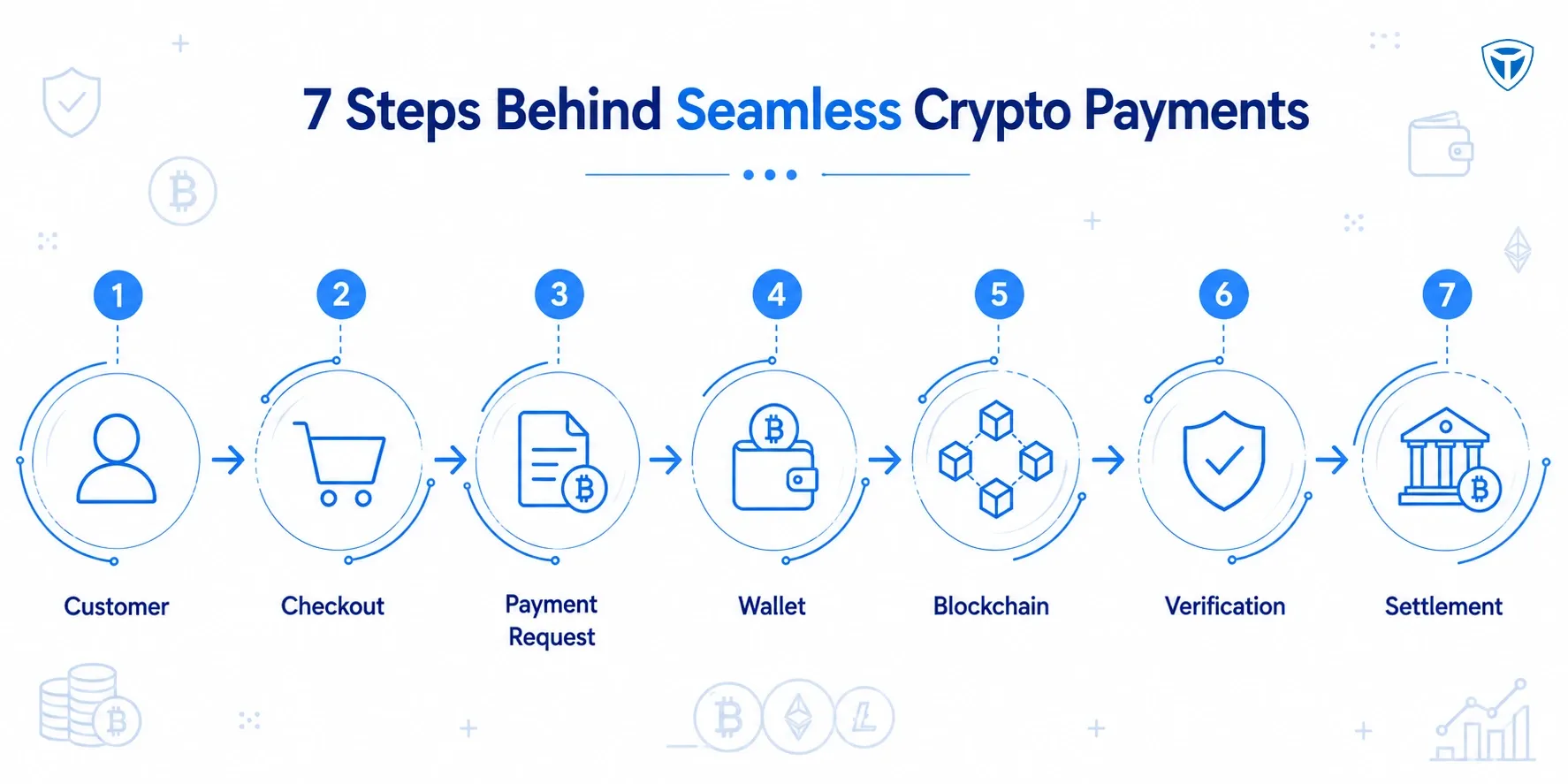
The integration process takes place behind the scenes and involves handling of payment requests, wallets, confirmation on the blockchain, and settlement.
These services enable fintech startups, entrepreneurs, and money transfer businesses to easily integrate cryptocurrency payments into existing systems.
How Does Crypto Payment Gateway Integration Work?
Crypto payment gateway integration links the merchant's platform to wallets, blockchain networks, and payment APIs.
The customer chooses the crypto, makes the payment, and the payment gateway confirms the blockchain transaction. Upon confirmation, the payment is logged and settled in either cryptocurrency or supported fiat money.
Also read: Discover how Coingate clone platform development can turn your crypto payment idea into a practical business solution.

Build Your Crypto Payment Gateway Today
Launch secure crypto payments tailored to your business requirements and customers.
Talk To Our ExpertsBenefits of Crypto Payment Gateway Integration for Businesses
Adding crypto payments isn’t simply about giving customers another way to pay. When the infrastructure is designed properly, it can help businesses reach new markets, simplify certain payment workflows, and serve customers who already prefer digital assets.
For fintech startups and money transfer businesses, these benefits can make crypto payment integration services a to their existing payment strategy.
- Reach Global Customers: Accept digital payments from customers across supported international markets.
- Offer More Payment Choices: Give customers an alternative to cards and traditional bank payments.
- Speed Up Eligible Transfers: Process transactions through blockchain networks without relying entirely on banking rails.
- Support Multiple Cryptocurrencies: Let customers pay with different digital assets through one system.
- Reduce Manual Work: Automate payment confirmation, status updates, and transaction processing.
- Scale With Your Business: Add new currencies, networks, and payment capabilities as demand grows.
- Simplify Settlement: Support crypto or fiat settlement based on your business requirements.
Key Features of Crypto Payment Gateway Integration
A good crypto gateway should make payments feel simple for the customer while giving the business enough control behind the scenes.
That means looking beyond basic payment acceptance and considering everything from wallet connectivity to transaction tracking and settlement.
The right crypto payment processing integration should also be flexible enough to support new assets and networks as your business expands.
|
Feature |
What It Helps Businesses Do |
|
Multi-Currency Support |
Accept different cryptocurrencies through one payment infrastructure. |
|
Multi-Chain Support |
Process payments across compatible blockchain networks. |
|
Wallet Integration |
Connect wallets for receiving and managing digital assets. |
|
Payment API |
Connect crypto payments with websites, apps, and business systems. |
|
Real-Time Tracking |
See payment status and blockchain confirmations as they happen. |
|
Automated Settlement |
Move eligible funds into crypto or fiat settlement workflows. |
|
Merchant Dashboard |
Manage transactions, settlements, and payment activity from one place. |
|
Transaction Reporting |
Review payment history and settlement data more easily. |
|
Refund Management |
Manage refunds through a structured payment workflow. |
Also read: Explore the essential steps and functionalities required to develop a mobile payment app like Zain Cash
Key Differences Between Crypto and Traditional Payment Gateways
Crypto and traditional payment gateways serve a similar purpose, but the way they process transactions is quite different.
Traditional gateways generally rely on banks, card networks, and established financial intermediaries.
Crypto gateways use blockchain networks and digital wallets. For businesses considering both options, understanding these differences makes it easier to decide.
|
Factor |
Crypto Payment Gateway |
Traditional Payment Gateway |
|
Payment Asset |
Cryptocurrencies and digital assets |
Fiat currencies |
|
Processing Infrastructure |
Blockchain networks |
Banks and payment networks |
|
Wallet Requirement |
Usually required for crypto transactions |
Generally not required |
|
Transaction Verification |
Blockchain confirmation |
Processor or bank authorization |
|
Settlement |
Crypto or supported fiat |
Primarily fiat |
|
Cross-Border Payments |
Can use blockchain-based transfers |
Depends on banking infrastructure |
|
Price Volatility |
Can affect crypto payment values |
Generally lower currency volatility |
|
Integration Requirements |
APIs, wallets, and blockchain services |
APIs, processors, and banking systems |
Practical Use Cases of Crypto Payment Gateways Across Different Industries
Crypto payment gateways are becoming a practical option for businesses that want to offer more flexible ways to pay.
Troniex builds gateway integrations for e-commerce platforms, fintech apps, money transfer services, and international B2B payment flows. Six use cases below.
E-Commerce and Online Retail Payments
Online stores can accept cryptocurrency at checkout without building blockchain payment infrastructure from scratch.
Gateways can handle payment requests, confirmations, transaction tracking, and settlement while keeping the checkout experience simple.
- Online Purchases: Let customers pay for products using supported digital currencies through a familiar checkout.
- International Orders: Give overseas customers an alternative payment method when purchasing products online.
- Digital Products: Accept crypto payments for software, subscriptions, digital downloads, and other virtual offerings.
Also read: Explore how a crypto payment gateway for e-commerce platforms enables secure, flexible, and global cryptocurrency payments.
Fintech and Digital Banking Platforms
Fintech platforms can add crypto payments alongside their existing financial services.
Gateway integrations can connect wallets, blockchain networks, conversion services, and settlement systems through a unified payment setup.
|
Use Case |
Business Application |
|
Digital Asset Accounts |
Provide users with convenient cryptocurrency payment and account features. |
|
Crypto-Fiat Services |
Allow users to move between supported digital and traditional currencies. |
|
Payment Applications |
Add crypto functionality without rebuilding the entire payment infrastructure. |
Cross-Border Money Transfer Services
Money transfer businesses can use crypto gateways to add blockchain-based payment options for international transactions.
This provides another way to move value across markets while simplifying certain payment workflows.
|
Use Case |
Business Application |
|
Remittance Services |
Offer additional options for sending value to eligible international recipients. |
|
Recipient Payments |
Support digital-asset transfers to recipients across supported markets. |
|
Multi-Market Operations |
Manage payment services across regions through unified infrastructure. |
Also read: See how cross-border payment app development can make international transfers faster, smoother, and easier to manage.
Gaming and iGaming Payments
Gaming and iGaming platforms can accept digital assets from users who prefer crypto payments.
Gateways can manage payment requests, transaction verification, wallet connections, and payment status updates within the existing platform.
- Player Account Funding: Allow users to add funds using supported cryptocurrencies and payment options.
- In-Game Purchases: Enable crypto payments for virtual goods, premium features, and other digital content.
- Digital Gaming Services: Offer alternative payment options for users purchasing gaming-related services.
Web3 and Blockchain Platforms
Web3 platforms can use crypto gateways to simplify payments for digital services, marketplaces, and blockchain-based products. They can also provide better transaction tracking while working with users' existing crypto wallets.
- NFT Marketplaces: Enable cryptocurrency payments for digital collectibles, assets, and marketplace transactions.
- Token-Based Services: Support payments for blockchain products, decentralized applications, and Web3 services.
- Web3 Subscriptions: Provide recurring payment options for eligible blockchain-based platforms and services.
International B2B Payments
Businesses can use crypto payments as an additional option for paying overseas suppliers, contractors, and partners.
Gateways help manage payment processing, transaction tracking, and settlement, making cross-border B2B payments easier to manage.
- Supplier Invoices: Give international suppliers an additional way to receive business payments.
- Contractor Payments: Support digital-asset payments for remote professionals and service providers.
- Business Partnerships: Create flexible payment arrangements for companies working with international partners.
Also read: Understand Cash App clone development cost with insights into development features, customization requirements, third-party integrations, and ongoing expenses.
Challenges in Crypto Payment Gateway Integration
Crypto payments come with plenty of opportunities, but they also require careful planning. Blockchain networks don’t all work the same way, cryptocurrency prices can change quickly, and regulatory expectations vary between markets.
There are also practical concerns around wallets, transaction errors, security, and reconciliation.
Recognizing these challenges early helps your team build a payment system that is more reliable from day one.
- Network Congestion: Busy blockchain networks can slow confirmations and increase transaction costs.
- Crypto Price Changes: Market volatility can affect the value received during settlement.
- Changing Regulations: Compliance requirements can vary depending on the country and business model.
- Wallet Compatibility: Each supported asset or network may require compatible wallet infrastructure.
- Incorrect Transactions: A wrong wallet address can make a payment difficult to recover.
- Security Threats: Poorly protected APIs or wallets can expose sensitive payment information.
- Third-Party Issues: External APIs and services can affect payment availability and reliability.
- Transaction Reconciliation: Multiple assets and networks can make accounting more complicated.
Start Building Your Crypto Payment Solution
Work with Troniex Technologies to turn your payment vision into reality.
Contact UsWhy Choose Troniex Technologies for Crypto Payment Gateway Integration?
At Troniex Technologies, we understand that every payment business has different requirements. As a crypto payment gateway development company, we don’t treat crypto integration as a plug-and-play task. We work around your payment flow, supported assets, target markets, and existing infrastructure to create.
From crypto payment API integration and wallet connectivity to transaction processing and scalable architecture, we focus on building an integration that supports your business as it grows.