Cash App-Like App Development Cost: What You’re Really Paying
Planning a Cash App clone? Explore development costs, key features, technology, timeline, hidden expenses, and smart ways to manage your budget.
Oct 09, 2026
12 mins read
Developing a Cash App-like application requires more effort than writing code. Your budget for the initial development process includes UI/UX design, key payment functionality, security features, integration options, testing, and deployment.
The actual price of developing a Cash App-like app will depend on the level of functionality that you will need for the first app release.
For a standard cash app, the cost of development starts at around $10,000 - $30,000. That will allow covering all necessary features to create an efficient payment application that does not have advanced banking functionalities.
What Is Included in the Basic Development Budget?
- UI/UX Design: Smooth user interface and user experience design.
- User Registration: Secure registration, login, and profile management functionality.
- Digital Wallet: Managing balance, fund transfers, and transaction history.
- Money Transfers: Basic money transfers between registered users.
- Payment Integration: Integrating with a proper payment provider or gateway.
- Security Features: Transaction encryption, authentication, and security.
- Testing & Deployment: Testing the functionality and bug fixes and deploying the app.
The given budget will be appropriate for companies that plan to test their payment application's idea and create the infrastructure for it.
The budget will grow with the introduction of features like banking integration, advanced fraud prevention tools, international payments, etc.
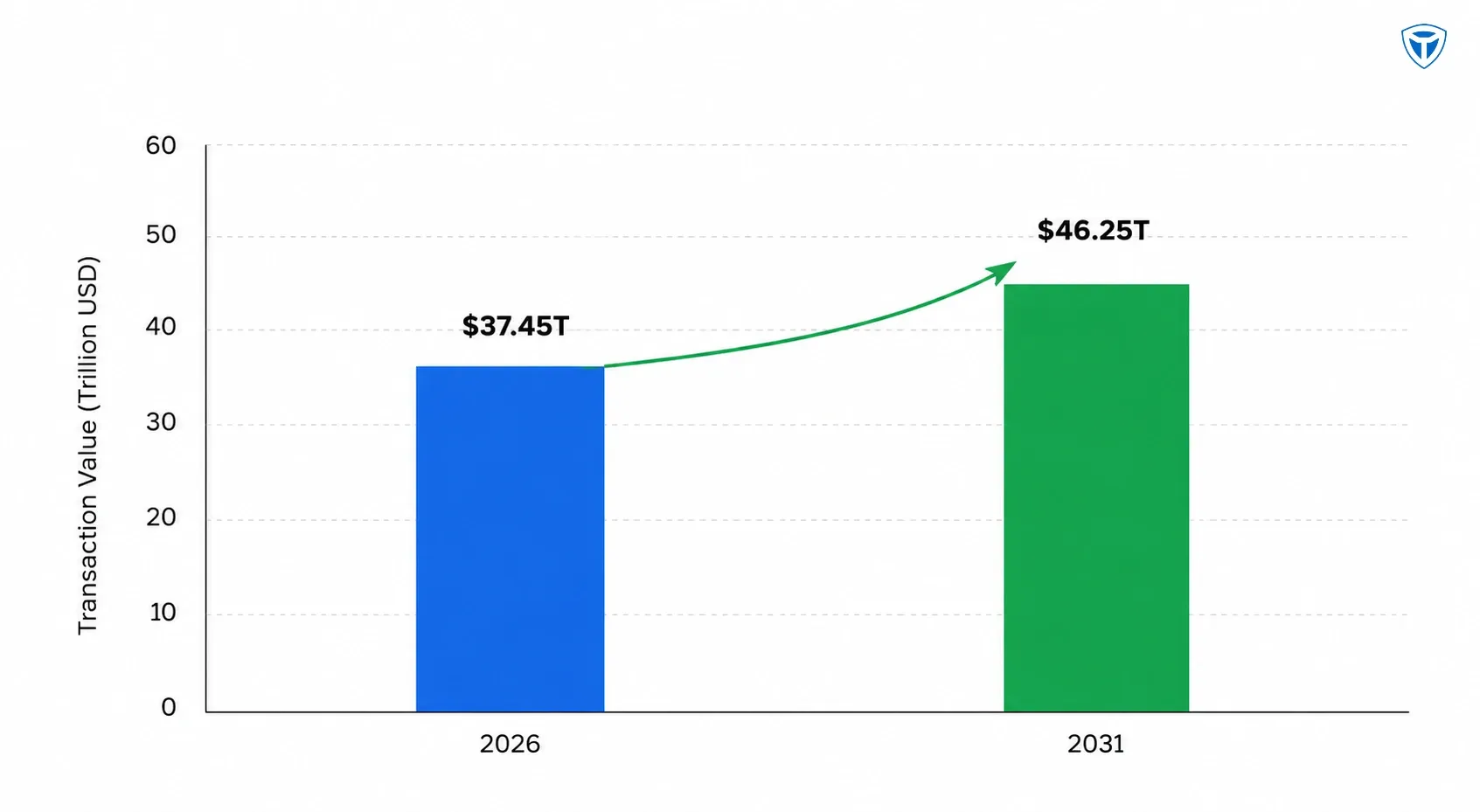
The digital payments market continues to expand rapidly, creating opportunities for businesses to launch innovative payment platforms. Global digital-payment transaction value is projected to reach $37.45 trillion in 2026 and grow to $46.25 trillion by 2031, highlighting the long-term potential of Cash App-like payment solutions.
Tech Stack for Cash App-Like App Development
Choosing the correct technology stack is critical to creating a reliable and efficient Cash App-based payment app solution.
Rather than picking the technology stack based on its popularity, you need to pick one that suits the transaction volume, security needs, supported operating systems, integration, and future expansion plans of your application.
|
Technology Area |
Recommended Options |
Purpose |
|
Frontend |
Flutter, React Native |
Builds responsive cross-platform interfaces |
|
iOS Development |
Swift |
Supports high-performance native iOS apps |
|
Backend |
Node.js, Python |
Handles APIs, business logic, and transactions |
|
Database |
PostgreSQL, MongoDB |
Stores user, wallet, and transaction data |
|
Cloud Infrastructure |
AWS, Google Cloud |
Provides scalable hosting and infrastructure |
|
Payment Integration |
Stripe, PayPal, and Banking APIs |
Enables secure payment processing |
|
Security |
OAuth 2.0, AES, SSL/TLS |
Protects accounts, data, and transactions |
|
Real-Time Services |
WebSockets, Redis |
Supports live balances and transaction updates |
|
API Architecture |
REST, GraphQL |
Connects mobile apps with backend services |
When developing a fintech app, one needs to approach the use of technologies considering both security and scalability from the very start.
An efficient system architecture will help cope with increasing numbers of transactions, facilitate integration with third parties, and ease the introduction of additional financial features as the platform grows.

Create Your Own Payment Platform
Launch a customized payment platform built around your business goals.
Talk To Our ExpertsCash App-Like Apps Based on Business Use Cases
Looking to build a payment app with a specific purpose?
Cash App-like technology can be adapted for different financial services, including wallets, banking, transfers, and crypto payments.
Explore these 10 app types to find an approach that fits your business idea.
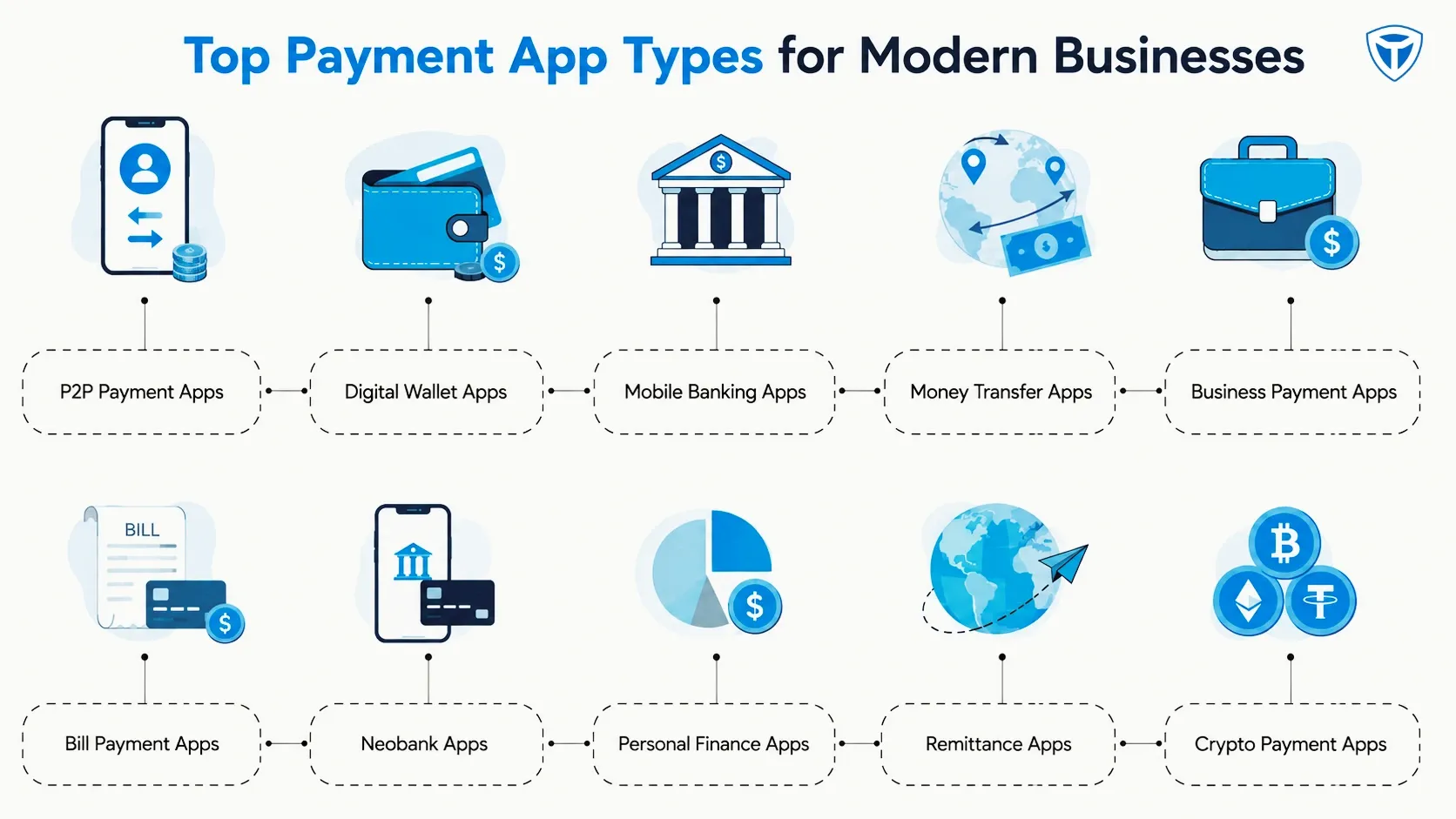
- P2P Payment Apps: Enable users to quickly send and receive money directly between individuals.
- Digital Wallet Apps: Allow users to manage money stored in an app, manage balances, and pay digitally.
- Mobile Banking Apps: Provide banking services such as transfers, account management, and transaction tracking.
- Money Transfer Apps: Support fast domestic or international money transfers between users and bank accounts.
- Business Payment Apps: Help businesses to accept payments and manage transactions digitally.
- Bill Payment Apps: Allow users to pay utility bills, subscriptions, and recurring expenses through one platform.
- Neobank Apps: Offer digital-first banking services without relying on traditional physical bank branches.
- Personal Finance Apps: Help users to manage money by tracking their spending, budgeting, and planning money.
- Remittance Apps: Make cross-border money transfers easier for individuals and families sending funds internationally.
- Crypto Payment Apps: Enable users and businesses to send, receive, store, and use cryptocurrencies for payments.
Cash App Clone Development Cost: How the Timeline Affects Your Budget
Timeline development is one of the key factors influencing the cost of developing your Cash App clone.
The more complicated the project becomes, the greater the number of design, engineering, testing, validation, and integration activities needed.
Thus, proper timeline planning will help you manage your costs effectively and build a successful fintech product.
Basic App Development Timeline
A fundamental Cash App replica normally requires 2-3 months of development and is best suited for starting ventures that need to launch with basic payment and wallet functionalities.
|
Deliverables |
Timeline |
Complexity |
Estimated Cost |
|
UI/UX Design |
2–3 weeks |
Low |
$1,000–$1,500 |
|
Wallet & User Module |
3–4 weeks |
Medium |
$2,000–$2,500 |
|
P2P Payment Integration |
3–4 weeks |
Medium |
$2,500–$3,000 |
|
Testing & Launch |
2 weeks |
Medium |
$2,500–$3,000 |
|
Overall Development |
2–3 months |
Low–Medium |
$8,000–$10,000 |
Mid-Level App Development Timeline
A mid-level application generally requires 3–4 months and introduces richer payment functionality, banking integrations, and enhanced security features.
This option works well for businesses that want more than basic payment functionality and need a stronger foundation for growth.
|
Deliverables |
Timeline |
Complexity |
Estimated Cost |
|
Advanced Wallet Features |
3–4 weeks |
Medium |
$3,000–$5,000 |
|
Banking & Payment APIs |
3–4 weeks |
High |
$3,500–$6,000 |
|
KYC/AML Integration |
2–3 weeks |
High |
$2,500–$4,000 |
|
QA & Security Testing |
2-3 weeks |
High |
$3,000–$5,000 |
|
Overall Development |
3–4 months |
Medium–High |
$12,000–$20,000 |
Advanced App Development Timeline
An advanced Cash App-like platform can take 5–6+ months to develop. The longer timeline is usually associated with sophisticated financial infrastructure, multiple integrations, international payment capabilities, real-time processing, and enterprise-level security.
|
Deliverables |
Timeline |
Complexity |
Estimated Cost |
|
Multi-Currency Support |
4–5 weeks |
High |
$6,000–$8,000 |
|
Fraud Detection System |
3–4 weeks |
High |
$5,000–$6,000 |
|
Real-Time Infrastructure |
4–5 weeks |
High |
$7,000–$9,000 |
|
Performance & Compliance Testing |
3–4 weeks |
High |
$5,000–$6,000 |
|
Overall Development |
5–6+ months |
High |
$25,000–$30,000+ |
Note: These figures are indicative planning estimates. The actual Cash App clone development cost can vary depending on features, integrations, target platforms, security requirements, development team location, scalability needs, and applicable regulatory requirements.
Hidden Costs to Consider for Cash App-Like App Development
Initial cash application development costs are just a portion of your total investment. Third-party integrations, security, infrastructure, maintenance, and scalability might lead to additional expenses, which should be considered before developing the product to prevent unexpected costs after its release.
Third-Party API & Integration Expenses
Payment gateway, banking API, KYC service, and fraud detection integration services could charge additional fees for their use.
Security & Compliance Fees
Security audits, penetration testing, encryption services, KYC/AML services, and compliance consulting could increase your fintech budget.
Cloud Infrastructure & Hosting Fees
Cloud hosting services, including cloud servers, databases, backups, storage, monitoring services, and data transfer, could increase your expenses on infrastructure.
Maintenance & Technical Support Fees
Typical post-launch expenses include fixing bugs, security updates, changing APIs, improving performance, and providing technical support.
Application Store & Payment Processing Fees
Depending on your business model, you might incur expenses for payment processing, transaction fees, currency conversion fees, marketplace fees, etc.
Scalability & Performance Optimization Expenses
As your number of users and transactions increases, you might need database optimization, caching services, infrastructure improvements, and load testing.
Your total costs will depend on the features you choose, target market, transaction volumes, integrations, and regulatory compliance. Consider these estimates when planning your total cash application budget.
Also read: Explore how custom Payit clone script development can help businesses build a digital payment platform tailored to their needs.
Ways to Reduce Cash App Clone Development Cost
Reducing Cash App clone development cost is about making smarter development decisions, not cutting essential quality. Prioritizing features, using proven technologies, leveraging APIs, and testing early can help control your budget while keeping the platform secure and scalable.
Prioritize Essential Features
Focus on features users need most and introduce advanced functionality later.
- Start with core payment features.
- Remove unnecessary features initially.
- Prioritize features by user demand.
|
Approach |
Cost Impact |
Best For |
|
Essential features only |
Lower |
New startups |
|
Essential + selected advanced features |
Moderate |
Growing businesses |
|
Full feature set |
Higher |
Established fintech businesses |
Choose a Cost-Efficient Tech Stack
The right technology can reduce development effort, maintenance requirements, and long-term costs.
- Use proven frameworks.
- Choose scalable technologies.
- Avoid unsupported tools.
- Consider cross-platform development.
|
Technology Choice |
Cost Impact |
|
Cross-platform |
Lower |
|
Native development |
Higher |
|
Open-source tools |
Lower |
|
Custom technologies |
Higher |
Build in Phases
A phased approach lets you launch core functionality first and introduce advanced features as your business grows.
- Launch essential payment features.
- Gather real user feedback.
- Prioritize high-demand features.
- Add advanced functionality gradually.
|
Phase |
Focus |
|
Phase 1 |
Core payments |
|
Phase 2 |
Advanced features |
|
Phase 3 |
Banking & security |
|
Phase 4 |
Scaling & optimization |
A smart development strategy isn't about choosing the cheapest option. It is about investing where it matters most while avoiding unnecessary development work.
Why Choose Troniex Technologies for Cash App-Like App Development?
Cash App payment integration services at Troniex Technologies involve fintech knowledge, solid architectural design, and efficient product development to develop an app similar to a Cash App Clone Script to fulfill your business objectives.
The developers at our company emphasize UX design, payment integration, scalable back-end systems, and security-oriented development.
Through collaboration with you, we work to make your payment application concept come true in the form of a highly reliable and scalable product for your end-users.
Make Your Payment App Vision Happen
Build a reliable Cash App-like platform designed for long-term growth.
Contact Us