Build Your Own Restaurant App: Development Options for Food Business Owners
Explore restaurant app development options for food businesses, including essential features, costs, clone solutions, and ways to build your own restaurant app.
Nov 23, 2026
10 mins read
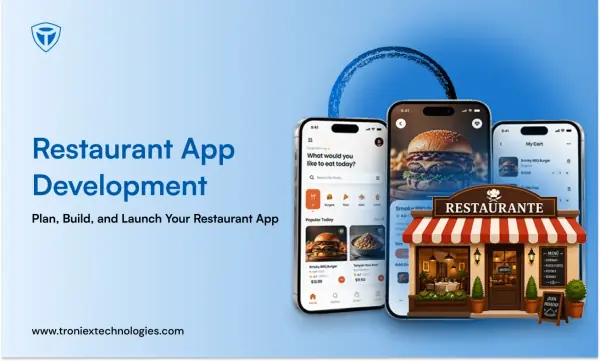
Building a restaurant app gives food businesses a better way to manage online orders, connect with customers, and simplify daily operations. With the right development approach, restaurant owners can create a convenient ordering experience while supporting business growth.
This guide explores different restaurant app development options, essential features, and monetization strategies to help you build an app that meets your business needs.
What Is a Restaurant Mobile App and How Does It Work?
A restaurant mobile app is a digital platform that allows customers to explore menus, place food orders, reserve tables, and make payments directly from their smartphones. It connects customers, restaurant staff, and delivery teams through a single platform.
Customers select their meals and place orders, while restaurant staff receive and manage them through a centralized dashboard. The app also supports payment processing, order updates, and delivery tracking, helping restaurants simplify daily operations and improve customer convenience.
Why Should Food Businesses Invest in a Restaurant Mobile App?
Customers today prefer ordering food, booking tables, and checking menus from their phones rather than calling a restaurant. A dedicated restaurant app makes these tasks easier while giving business owners better control over daily operations. It also helps restaurants stay connected with customers, encourage repeat orders, and offer a smoother dining experience.
Key Benefits of Investing in a Restaurant Mobile App:
- Make Ordering Easier: Let customers browse your menu, choose their meals, and place orders whenever they want.
- Bring Customers Back: Use loyalty rewards, discounts, and special offers to encourage repeat purchases.
- Reach More Customers: Make your restaurant accessible to people looking for convenient online ordering and delivery.
- Manage Daily Operations: Handle orders, payments, menu updates, and customer information in one place.
Different Types of Restaurant Apps You Can Build for Your Business
Every food business has different needs. Some restaurants want to accept online orders, while others focus on table bookings, food delivery, or managing multiple outlets. Choosing the right restaurant app depends on how you serve customers and manage your business.
|
Restaurant App Type |
Purpose |
|---|---|
|
Food Ordering App |
Allows customers to browse menus, customize meals, and place orders directly through the app. |
|
Restaurant Delivery App |
Helps restaurants manage delivery requests, assign delivery partners, and track orders. |
|
Table Reservation App |
Lets customers check table availability, choose preferred time slots, and book tables. |
|
Restaurant Management App |
Helps owners manage orders, menus, inventory, staff, and daily restaurant activities. |
|
Multi-Restaurant App |
Connects multiple restaurants through one platform, allowing customers to explore different food businesses. |
|
Restaurant Loyalty App |
Helps restaurants reward regular customers through points, discounts, memberships, and special offers. |
|
Restaurant POS App |
Simplifies billing, payment processing, sales tracking, and order management. |
|
Restaurant Aggregator App |
Brings different restaurants together in one marketplace where customers can compare menus and order food. |
Choosing the right app type: Before starting development, consider your restaurant's operating model, target audience, ordering process, and expansion plans. These factors help determine which app solution best supports your business goals.
Essential Features to Include in Your Restaurant App Development Services
A successful restaurant app should make ordering simple for customers and daily management easier for restaurant owners. The right restaurant app development features help businesses handle online orders, manage menus, process payments, and improve customer engagement. When planning custom restaurant app development, consider these essential features:
- User Registration and Login: Allows customers to create accounts, manage profiles, and view order history.
- Restaurant Menu Management: Displays food items, prices, descriptions, images, and availability.
- Online Food Ordering: Lets customers browse menus, customize meals, and place orders.
- Shopping Cart: Allows customers to review items, adjust quantities, and confirm orders.
- Multiple Payment Options: Supports UPI, credit cards, debit cards, and digital wallets.
- Real-Time Order Tracking: Helps customers track orders from preparation to delivery.
- Table Reservation: Enables customers to check availability and book tables in advance.
- Push Notifications: Sends updates about order status, special offers, and promotions.
- Loyalty and Rewards Program: Encourages repeat orders through reward points, memberships, and discounts.
- Admin Dashboard: Helps restaurant owners manage orders, menus, payments, and customer information.

Your Restaurant App Journey Starts Here
Turn your food business vision into a powerful mobile app with Troniex Technologies.
Talk To Our ExpertsRestaurant App Development Process: From Planning to Launch
Building a restaurant app involves more than designing screens and adding food menus. A well-planned restaurant mobile app development process helps ensure the platform meets your business needs and provides a smooth experience for customers.
From requirement analysis and UI/UX design to third-party integrations, testing, and launch, each stage plays an important role in developing a reliable restaurant app.
- Business Requirement Analysis: Understand your restaurant's business model, target audience, operational needs, and app development requirements.
- App Planning and Strategy: Define the app structure, essential features, technology stack, budget, and development roadmap.
- UI/UX Design: Create user-friendly layouts, wireframes, and prototypes for smooth navigation and convenient ordering.
- Frontend and Backend Development: Build customer-facing interfaces, admin dashboards, databases, and core application functionality.
- Third-Party API Integration: Integrate payment gateways, GPS maps, push notifications, and delivery management services.
- App Testing and Quality Assurance: Test app functionality, payment processing, security, performance, and ordering workflows before launch.
- App Launch and Maintenance: Publish your restaurant app and provide regular updates, technical support, and performance improvements.
Revenue Models for Your Restaurant Mobile App
A restaurant mobile app can generate revenue through different restaurant app monetization models, depending on how your platform operates.
Whether you run a single restaurant or a multi-restaurant ordering platform, choosing the right revenue model for your food business helps create additional income opportunities and support long-term growth.
|
No. |
Revenue Model |
How It Generates Revenue |
|---|---|---|
|
1 |
Direct Food Sales |
Generate income through online food orders placed directly using your restaurant app. |
|
2 |
Delivery Charges |
Collect food delivery fees from customers for each completed order. |
|
3 |
Subscription Plans |
Earn recurring revenue through monthly or yearly restaurant app subscription plans. |
|
4 |
Loyalty and Membership Programs |
Offer premium restaurant memberships with exclusive benefits, discounts, and rewards. |
|
5 |
Featured Restaurant Listings |
Charge restaurant partners for sponsored listings and better platform visibility. |
|
6 |
Commission-Based Revenue |
Earn commission on food orders completed through your multi-restaurant platform. |
|
7 |
In-App Advertising |
Generate additional income through restaurant app advertisements and sponsored promotions. |
Choosing the right model: Select revenue streams based on your restaurant's business model, customer expectations, and growth plans. You can also combine multiple models to create more income opportunities.
How AI and Automation Can Improve Restaurant App Operations?
Running a restaurant involves handling orders, answering customer questions, managing stock, and keeping track of sales.
AI-powered restaurant app development makes these tasks easier by reducing manual work and helping owners make better decisions. Here are six ways AI and automation can improve everyday restaurant operations.
- AI-Powered Food Recommendations: Suggest dishes based on customers' favorite meals, previous orders, and food preferences.
- Automated Order Management: Automatically receive orders, update their status, and reduce manual work for restaurant staff.
- AI Chatbots for Customer Support: Answer common questions and help customers with orders, payments, and reservations.
- Predictive Inventory Management: Track stock levels, estimate ingredient requirements, and help restaurants reduce food waste.
- Personalized Marketing and Offers: Send relevant discounts and special offers based on customers' ordering habits.
- Sales Forecasting and Analytics: Identify popular dishes, understand sales patterns, and plan future business needs.
How to Manage Multiple Restaurant Locations Through One App?
Running multiple restaurant outlets means keeping track of orders, staff, menus, and inventory across different locations. Managing everything separately can take time and create confusion.
A multi-location restaurant management app makes this easier by bringing all your branches together in one place.
Business owners can check daily activities, monitor sales, and make updates without having to manage each outlet individually.
Key Features for Managing Multiple Restaurant Locations:
- Centralized Order Management: View and manage incoming orders from all restaurant branches through one dashboard.
- Branch-Wise Menu Management: Update menus, food prices, and item availability based on each location.
- Inventory Tracking: Check stock levels across branches and avoid running out of essential ingredients.
- Staff Management: Organize employee schedules, assign tasks, and monitor staff activities at each outlet.
- Sales and Performance Reports: Compare branch-wise sales, order volumes, and overall business performance.
- Location-Based Order Management: Send customer orders to the nearest or preferred restaurant branch for convenient service.
Popular Restaurant App Clone Solutions for Food Businesses
Building a restaurant app from scratch isn't the only option for food business owners. You can also consider restaurant app clone solutions inspired by popular food delivery platforms.
These ready-made solutions provide a starting point with essential features for managing restaurants, customer orders, payments, and deliveries.
|
No. |
Clone Solution |
Business Purpose |
|---|---|---|
|
1 |
Uber Eats Clone App |
Build an online food ordering and delivery platform for multiple restaurants. |
|
2 |
DoorDash Clone App |
Connect customers, restaurants, and delivery partners through one platform. |
|
3 |
Grubhub Clone App |
Create a marketplace for restaurant discovery and online food ordering. |
|
4 |
Zomato Clone App |
Develop a platform for restaurant discovery, reviews, and food ordering. |
|
5 |
Swiggy Clone App |
Launch a food ordering and delivery platform with multiple restaurant partners. |
|
6 |
Deliveroo Clone App |
Build an on-demand food delivery platform for local restaurants and customers. |
Why Partner with a Restaurant App Development Company?
Building a restaurant app requires the right features, technology, and development experience. At Troniex Technologies, we help food businesses turn their ideas into practical mobile app solutions.
From designing easy-to-use interfaces to integrating online ordering, payment gateways, and delivery tracking, our team handles every stage of development.
We focus on building restaurant apps that make daily operations easier and create a better experience for your customers.
One App. More Orders. Better Restaurant Management!
Simplify restaurant operations with a customized app for managing menus, orders, payments, and customer interactions.
Contact Us