What Is Coinbase Wallet & Who Is It For?
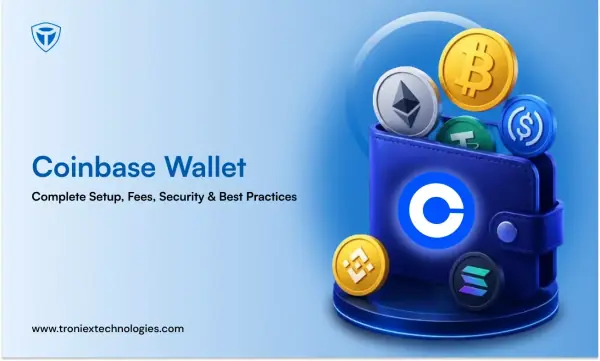
Coinbase Wallet is a self-custody (or non-custodial) Web3 wallet, meaning users have full control over their private keys and digital assets (unlike exchange accounts, where a third party holds custody). It’s a gateway to decentralized finance (DeFi), NFTs, and blockchain applications.
This wallet is ideal for:
- Beginners exploring crypto ownership
- DeFi users engaging in staking, lending, or swaps
- NFT traders managing digital collectibles
Key benefits are full control, more privacy, and multi-chain access. For entrepreneurs, it is a roadmap for building next-gen financial products, too. Platforms like Troniex Technologies specialize in crypto wallet development services.
Coinbase Wallet Overview (2026 Update)
Discover the newest Coinbase Wallet features, updates, and capabilities in 2026, including multi-chain support, usability enhancements, and evolving Web3 integrations.
Main Features
Coinbase Wallet has evolved into a powerful multichain wallet with:
- Ethereum, Polygon, and other networks support
- dApp browser built-in for Web3 interaction
- Secure NFT storage and management
- Token swapping with integrated liquidity providers
These features position it as more than a storage tool; it’s a full Web3 operating layer.
Coinbase Wallet vs Coinbase Exchange
|
Feature |
Coinbase Wallet |
Coinbase Exchange |
|
Custody |
User-controlled |
Coinbase-controlled |
|
Private Keys |
Owned by user |
Not accessible |
|
Purpose |
Storage, DeFi, NFTs |
Trading, buying/selling |
|
KYC |
Not required |
Required |
|
Web3 Access |
Full |
Limited |
|
Security Responsibility |
Coinbase |
User |
This distinction is important for users who want to compare Coinbase Wallet vs Coinbase, particularly when considering convenience versus control.
How Coinbase Wallet Works
Understand the inner workings of Coinbase Wallet, including private keys, blockchain transactions, gas fees, and secure decentralized network interactions.
Private Keys & Seed Phrase Explained
A private key is a cryptographic code that shows you own your crypto assets. Coinbase Wallet generates a seed phrase (12–24 words) that is used as a backup.
If you lose this phrase, access to your funds is permanently lost; no recovery authority exists.
Blockchain Interaction Model
Coinbase Wallet is different from centralized apps because it interacts directly with blockchain networks. When you start a transaction:
- It is signed using your private key
- Broadcast to the blockchain
- Verified by network validators
This ensures transparency and decentralization.
Gas Fees & Transaction Validation
Every transaction requires a gas fee, paid to validators. Fees vary based on:
- Network congestion
- Blockchain type (Ethereum vs Polygon)
That’s key to understanding Coinbase Wallet fees.
Benefits of Coinbase Wallet
Learn the key benefits of Coinbase Wallet, including self-custody, privacy, and easy access to DeFi, NFTs, and multi-chain ecosystems.
Full Ownership & Self-Custody
Users have full control of their funds, following the principle “Not your keys, not your crypto.”
Enhanced Privacy & Control
No mandatory KYC for wallet creation ensures greater anonymity compared to exchanges.
Access to Web3 & DeFi Ecosystem
Coinbase Wallet connects seamlessly to:
- DeFi platforms
- NFT marketplaces
- Decentralized exchanges
Companies that are looking to play in this space often invest in building DeFi platforms to create similar ecosystems.
Multi-Chain & Asset Support
A multi-chain wallet that is versatile, supporting multiple networks and asset types.
User-Friendly Interface for Beginners
What Coinbase Wallet offers compared to complex wallets:
- Simple onboarding
- Intuitive UI
- Guided workflows
Security Advantages
- Encrypted keys stored locally
- Biometric authentication
- No centralized storage vulnerability
Coinbase Account vs Coinbase Wallet: What’s the Difference?
Coinbase account vs. Coinbase Wallet: Differences in custody, security responsibilities, use cases, and which one is right for you
A Coinbase account is a custodial exchange account where Coinbase has control over your funds. Coinbase Wallet is a non-custodial wallet, where you have control over your private keys. The key difference is ownership; Coinbase holds assets in accounts, but the user maintains full control of the wallet.
Core Differences Table
|
Feature |
Coinbase Account |
Coinbase Wallet |
|
Custody |
Coinbase |
User |
|
Private Keys |
Not accessible |
Fully owned |
|
KYC |
Required |
Not required |
|
Use Case |
Trading |
Storage, DeFi |
|
Security Responsibility |
Platform |
User |
Use Case Breakdown
Use a Coinbase account for:
- Buying crypto with fiat
- Beginner trading
Use a Coinbase Wallet for:
- DeFi participation
- NFT storage
- Long-term holding
How to Set Up Coinbase Wallet: Step-by-Step Guide
Follow a simple, beginner-friendly Coinbase Wallet setup process, including installation, wallet creation, seed phrase backup, and optional exchange integration steps.
Step 1: How to Download & Install
Available on:
- iOS and Android
- Browser extensions
Search for the official app to avoid phishing versions.
Step 2: Creating a New Wallet
Steps:
- Install the app
- Generate a wallet
- Store your seed phrase offline
Step 3: Importing an Existing Wallet
Restore access to your vault on other devices using the same seed phrase you already have.
Step 4: Connecting to Coinbase Exchange (Optional)
Link your exchange account for easy asset transfers.
To build a similar onboarding flow, a startup needs a strong UX design, which is usually provided by blockchain wallet development solutions.
Best Security Practices for Coinbase Wallet
Learn about the best security practices for Coinbase Wallet, including how to keep your seed phrase safe, how to avoid scams, how to use hardware wallets, and how to use decentralized applications safely.
Seed Phrase Storage Strategies
- Write it on paper (not digital)
- Store in multiple secure locations
Safe dApp Interaction
- Only connect to verified platforms
- Avoid unknown smart contracts
Using Hardware Wallet Integration
For large holdings, use hardware wallets for cold storage.
How to Avoid Scams & Rug Pulls
- Double-check URLs
- Avoid unsolicited linking
- Verify token authenticity
Security is a major reason businesses invest in crypto security solutions during wallet development.
Coinbase Wallet Supported Assets & Networks
Discover the cryptocurrencies, tokens, NFTs, and blockchain networks supported inside the Coinbase Wallet, demonstrating its multichain support and Web3 ecosystem integrations.
Supported Cryptocurrencies
Supports major tokens like:
- ETH, BTC (wrapped)
- ERC-20 tokens
NFT & Web3 Support
Users can:
- Store NFTs
- Interact with marketplaces
Multi-Chain Capabilities
- It supports Layer 2 networks, thereby reducing fees and increasing scalability.
Coinbase Wallet Usage by Region
Understand how to use Coinbase Wallet, regulatory concerns, taxes, and adoption trends in India, the United States, Europe, and other regions.
Coinbase Wallet in India
- Legal to hold crypto, but regulated
- 30% tax on crypto gains
- Limited INR on-ramp options
Coinbase Wallet in the US & Europe
- Strong compliance frameworks
- Exchange requires KYC; wallet does not
High Adoption Regions
- North America: institutional growth
- Asia: retail adoption surge
- Europe: regulatory clarity improving
Understanding regional demand is key for businesses entering Web3 markets.
Use Cases & Advanced Features for Coinbase Wallet
Explore Coinbase Wallet features, including DeFi integrations, NFT management, token swaps, and cross-chain bridges to enable real-world blockchain use cases.
DeFi Integration
Users can:
- Stake tokens
- Lend assets
- Earn yield
NFT Management
- Store and transfer NFTs
- Connect to marketplaces
Token Swaps & Bridges
Swap tokens directly or bridge assets across chains.
Why Troniex Technologies for Coinbase Wallet Development?
If you’re planning to build a product like Coinbase Wallet, choosing the right development partner is critical.
Troniex Technologies offers:
- Custom crypto wallet development
- DeFi and NFT integration
- Multi-chain architecture
- Enterprise-grade security
Leveraging its expertise in building scalable Web3 platforms, Troniex helps startups deploy secure, user-friendly wallet solutions tailored to their business objectives.
Create your own Coinbase Wallet-like platform today with Troniex Technologies.
Conclusion
Coinbase Wallet is a powerful self-custody Web3 wallet that gives you control, flexibility, and access to decentralized ecosystems.
Key Takeaways:
- Full ownership of private keys
- Ideal for DeFi and NFT use cases
- Requires strong personal security practices
- Supports multi-chain assets
Who Should Use It?
- Crypto beginners seeking ownership
- Advanced users exploring DeFi
- Businesses analyzing Web3 infrastructure