White Label Neobank Development Cost: Pricing, Features & Factors
Planning a white-label neobank? Learn about development costs, key features, pricing models, timelines, and factors that can impact your overall budget.
Sep 07, 2026
10 mins read
Launching a neobank doesn’t have to mean building everything from scratch. A white label neobank gives businesses access to ready-made banking infrastructure that can be customized to their brand and requirements.
But how much does it actually cost? The answer depends on features, customization, integrations, security, compliance, and app complexity.
In this guide, we’ll explore white label neobank development costs, pricing models, basic-to-advanced app options, development timelines, key cost factors, and practical ways to reduce expenses.
You’ll also learn what to look for when choosing the right white label neobank provider.
White Label Neobank Development Cost: An Overview
The white-label development cost of the neobank will be determined by variables like customization, features, integration, security, compliance, and technological needs.
White labels are able to minimize development costs because white label products already have the banking infrastructure built-in.
The total investment will comprise elements like digital wallets, payment services, KYC/AML, card management, banking APIs, and transaction monitoring.
The analysis of such costs at the beginning is essential for selecting a scalable and secure product within a particular budget.
Key Factors Affecting White Label Neobank Development Cost
The white label neobank development cost depends on several factors, including feature complexity, customization, API integrations, security, compliance, and scalability.
Understanding these elements early helps businesses set realistic budgets and avoid unexpected development expenses.
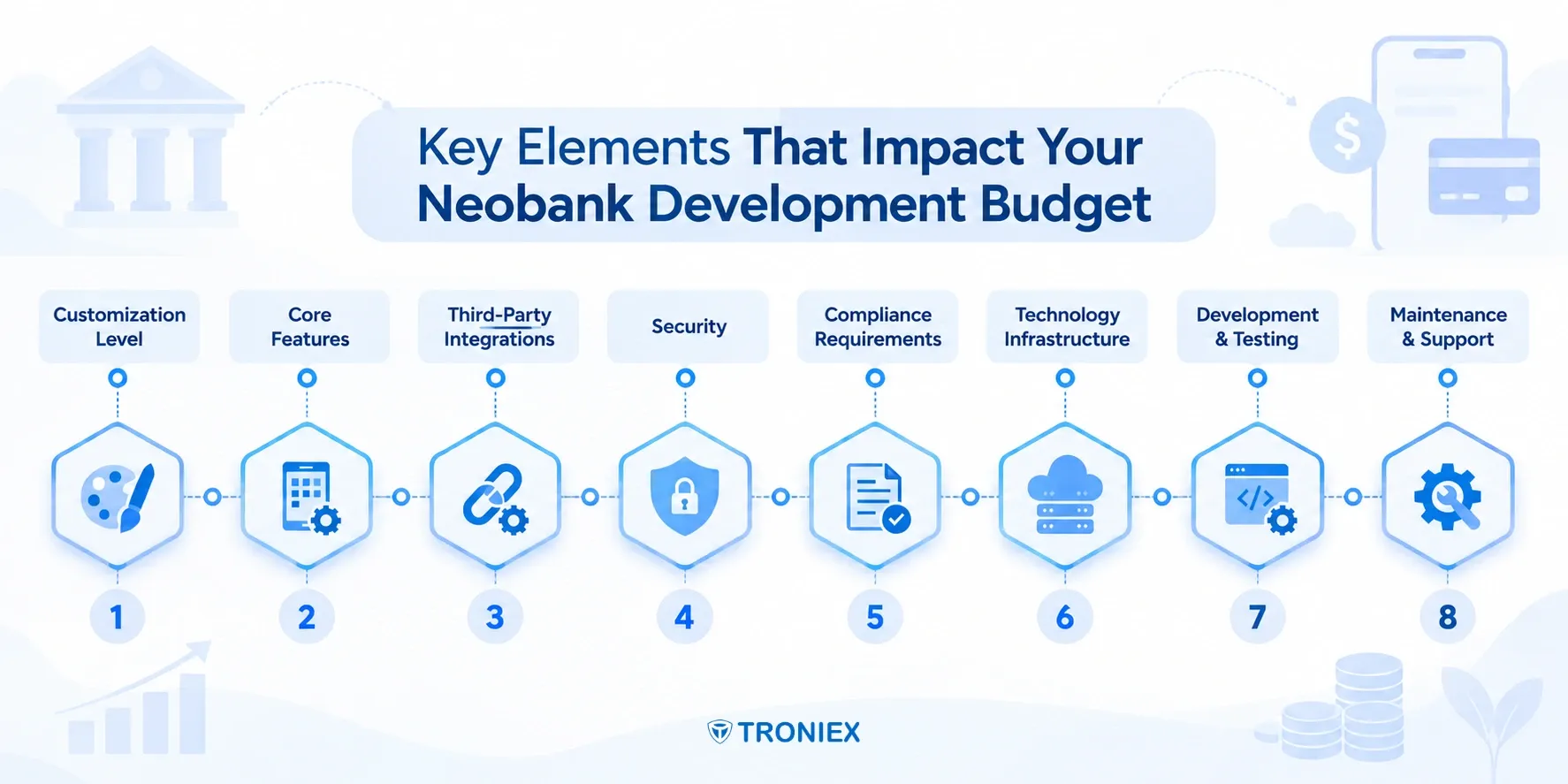
- Customization Level: Branding, UI changes, custom workflows, and unique features can increase development effort and overall cost.
- Core Features: Features such as wallets, payments, cards, transfers, and analytics add to the platform’s development scope.
- Third-Party Integrations: Banking APIs, payment gateways, and KYC/AML providers require integration, testing, and sometimes additional service fees.
- Security: Strong encryption, authentication, fraud prevention, and transaction monitoring are essential for protecting financial data.
- Compliance Requirements: KYC, AML, licensing, and regional regulations can affect both development requirements and ongoing operational costs.
- Technology Infrastructure: Cloud hosting, databases, APIs, and scalable architecture influence the platform’s performance and long-term operating expenses.
- Development & Testing: Development, integration, QA, security testing, and deployment all contribute to the time and resources needed for launch.
- Maintenance & Support: Regular updates, bug fixes, security patches, monitoring, and technical support keep your neobank reliable after launch.

Get Your White-Label Neobank Cost Estimate
Plan your neobank project with transparent pricing and expert guidance.
Talk To Our ExpertsIs Investing in a White Label Neobank Worth It?
When businesses want to venture into digital banking but don't have the luxury of years to develop an entire platform themselves, using a white label neobank can be a wise move for them.
This is because they will already have a fully functional banking platform that can then be branded according to their requirements.
However, it would not be wise to take only the upfront cost of developing the platform into account. Various other factors like security, scalability, maintenance, third-party services, and regulatory compliance also come into play when it comes to judging the long-term viability of a white label neobank.
Key benefits to consider:
- Launch faster: Get your digital banking platform to market sooner.
- Save development effort: Start with proven, ready-made infrastructure.
- Customize easily: Adapt the platform to your brand and customer needs.
- Grow with demand: Scale features and capacity as your user base expands.
White Label Neobank Features That Impact Development Cost
The features you choose can directly affect your white label neobank development cost. Simple services like creating digital accounts and wallets are relatively easier to build.
However, implementing advanced services will entail adding integrations, security layers, and other aspects. It is a good way to manage costs at the early stages without sacrificing opportunities for future growth.
Below is a list of features that might affect your budget:
- Digital accounts & wallets: Ability to create an account, maintain balance, deposit and make transactions.
- Cards management: Physical or virtual cards could need card issuing or card processing integration.
- Compliance with KYC/AML regulations: Account verification, transaction monitoring could use third-party services.
- Payment & banking APIs: Multiple integrations can increase development and maintenance costs.
- Multi-currency support: International transactions may require additional APIs and compliance work.
- Fraud monitoring: Advanced security tools can increase infrastructure and integration expenses.
- Notifications & support: Real-time alerts and customer support features improve the user experience but add to the project scope.
The key is to choose features based on your customers’ needs and business goals, rather than adding unnecessary functionality from the start.
White Label Neobank Development Pricing by App Complexity
The cost of white label neobanks varies widely according to how much functionality is needed. The basic platform caters to all the basic necessities of a bank while the mid-range includes many integrations and financial solutions.
The advanced platforms, on the other hand, require security, automation, analysis, and compliance among others. Having a good idea about the different levels is important when deciding where to start from.
|
App Complexity |
What You Can Expect |
Estimated Price Range |
|---|---|---|
|
Basic |
Digital accounts, wallets, transfers, transaction history, and basic notifications |
$8,000–$10,000+ |
|
Mid-Level |
Basic features plus card management, KYC/AML, payment APIs, multi-currency support, and stronger security |
$15,000–$20,000+ |
|
Advanced |
Advanced security, fraud detection, automation, analytics, AI-powered features, and multiple integrations |
$25,000–$35,000+ |
These figures are general estimates, not fixed quotes. The final cost can vary based on customization, integrations, compliance requirements, supported regions, technology choices, and ongoing maintenance.
Defining your must-have features and business goals upfront can help you choose the right development level and avoid unnecessary spending.
White Label Neobank Development Cost Breakdown
Understanding where your budget goes makes it easier to plan a white label neobank project. The total investment isn’t limited to platform development; it can also include customization, integrations, security, compliance, testing, and ongoing support.
The exact amount depends on your business model, feature requirements, and level of customization.
Here’s a simple breakdown of the main cost components:
|
Cost Component |
What It Covers |
Cost Impact |
|---|---|---|
|
Platform Licensing |
Access to the white label banking infrastructure and core platform |
Low–Medium |
|
UI/UX Customization |
Branding, interface design, navigation, and user experience changes |
Low–Medium |
|
Core Banking Features |
Digital accounts, wallets, transfers, payments, and transaction management |
Medium |
|
API Integrations |
Banking, payment, KYC/AML, card, and third-party service integrations |
Medium–High |
|
Security & Compliance |
Authentication, encryption, identity verification, monitoring, and compliance tools |
Medium–High |
|
Card Services |
Virtual/physical card issuing, management, and processing integrations |
Medium–High |
|
Testing & Deployment |
Functional testing, security checks, cloud setup, and production deployment |
Low–Medium |
|
Maintenance & Support |
Bug fixes, platform updates, monitoring, security patches, and technical assistance |
Ongoing |
Looking at these components separately helps businesses identify which areas need more investment and where they can simplify the initial scope.
A clear cost structure also makes it easier to plan future feature upgrades without affecting the platform’s long-term scalability.
How long does white label neobank development take?
A white label neobank can often be launched within a few weeks to several months, depending on customization, integrations, compliance requirements, and overall project complexity.
These timelines are indicative, as some development stages can happen simultaneously while regulatory or third-party dependencies may extend the launch schedule.
|
Development Stage |
Key Activities |
Timeline Range |
Timeline Factors |
|---|---|---|---|
|
Planning & Requirements |
Define business model, users, features, and technical requirements. |
1–2 weeks |
Project scope |
|
UI/UX Customization |
Customize branding, screens, navigation, and user flows. |
1–3 weeks |
Design complexity |
|
Platform Configuration |
Configure the white label banking infrastructure. |
1–2 weeks |
Customization needs |
|
API Integration |
Connect banking, payment, KYC/AML, card, and third-party APIs |
2–4 weeks |
Number of integrations |
|
Development & Customization |
Tailor features, workflows, and business logic |
2–5 weeks |
Feature complexity |
|
Security & Compliance |
Implement security controls, verification, monitoring, and compliance processes |
2–4 weeks |
Regulatory requirements |
|
Testing & QA |
Test functionality, integrations, security, and performance |
2–3 weeks |
Testing scope |
|
Deployment |
Configure the production environment and launch |
1–2 weeks |
Deployment requirements |
|
Post-Launch Support |
Monitoring, bug fixes, updates, and improvements |
Ongoing |
Business needs |
How Can You Save on White Label Neobank Development?
The best way to reduce the cost of white label neobanking creation is not to spend more than you have to from the very beginning of the project.
Use essential banking functions, apply pre-developed modules and APIs, personalize when it makes sense for your business, and select a scalable platform.
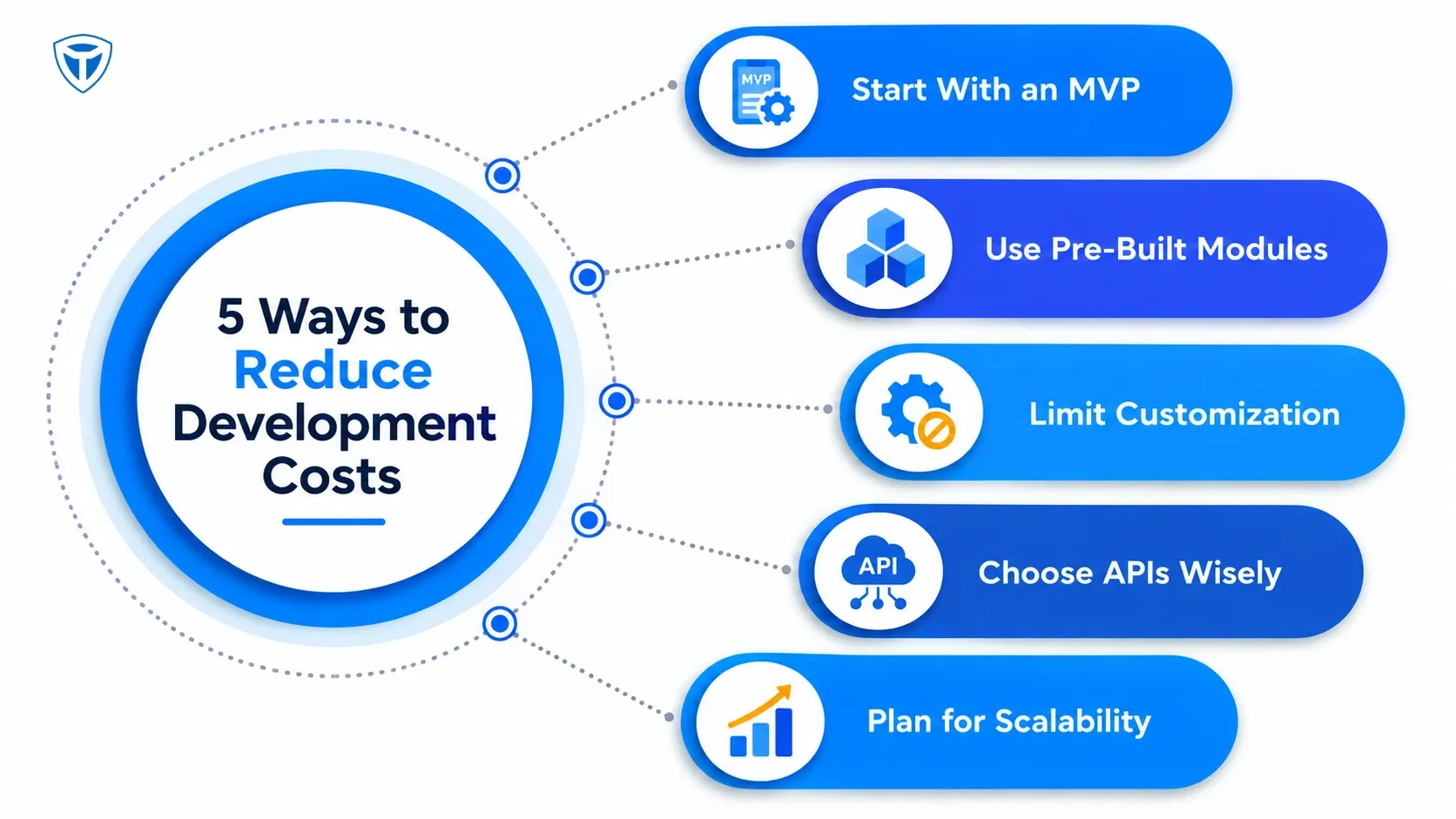
- Start With an MVP: Launch with essential features first. This keeps initial costs lower and gives you room to improve based on customer needs.
- Use Pre-Built Modules: Use ready-made banking components instead of building everything from scratch. This saves development time and effort.
- Limit Customization: Customize what matters most, such as branding and user experience. Avoid unnecessary changes that can increase development costs.
- Choose APIs Wisely: Select reliable and cost-effective APIs that match your needs. Consider integration, usage fees, security, and long-term reliability.
- Plan for Scalability: Build with future growth in mind. Scalable infrastructure helps you support more users without expensive redevelopment later.
How to Choose the Right White Label Neobank Provider?
When it comes to choosing a provider of white label neobank services, cost shouldn’t be your only factor.
Ensure that you choose a provider who has extensive experience in the fintech sector and also provides services such as integration, security, customization, compliance, scalability, and more. Troniex Technologies is a provider of customizable white label neobanks.
Provider Evaluation Checklist:
- Fintech experience: Check relevant banking and fintech projects.
- Security & compliance: Review security measures and KYC/AML support.
- Customization: Ensure features and branding can be tailored.
- Scalability: Confirm the platform can grow with your business.
Ready to launch your own white-label neobank?
Contact Troniex Technologies today to discuss your requirements and get a tailored development plan for your business.
Contact UsConclusion
Creating a white-label neobank might be considered as an effective strategy for entering the digital banking market much faster without having to invest the necessary time and money into building everything from scratch.
Your total cost will depend on various factors such as the number and type of features you want to have and other aspects related to your solution.
Choosing the right development partner is equally important. Troniex Technologies provides white-label neobank development solutions tailored to business requirements, with customizable features, secure integrations, and scalable architecture.
Whether you’re planning a basic neobank or a more advanced digital banking platform, our team can help you define the right scope and development approach.