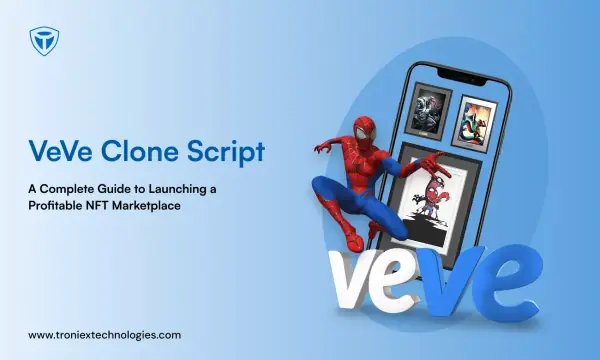
VeVe Clone Script: A Complete Guide to Launching a Profitable NFT Marketplace
A Veve clone script is a customizable software framework that allows startups and enterprises to launch an NFT marketplace app like Veve efficiently.
Sep 11, 2026
9 mins read
The NFT (Non-Fungible Token) marketplace ecosystem has transformed from trading digital art as its primary offering into numerous different avenues and application areas. For instance, platforms like VeVe have proven that curated Intellectual Property (IP) collections combined with gamified user experiences on mobile-first platforms produce sustainable, high-revenue NFT businesses.
For entrepreneurs and enterprises considering entry into this space, building an NFT marketplace like VeVe is a valid business strategy since it has been shown to be successful; however, building an NFT marketplace from the ground up requires significant time, resources, capital, and technology.
A Veve clone script becomes strategically important in this context because an app built with this technology allows you to create a fully-featured, scalable NFT marketplace with less development risk, increased speed to market, and a predictable return on investment (ROI).
By using a white-label solution built on industry best practices, founders can avoid the trial and error associated with new or unknown architectures.
This guide will provide a clear breakdown of VeVe clone development, allowing decision-makers to understand the technological foundation and commercial effect of developing their own NFT marketplace similar to VeVe.
What Is a VeVe Clone Script?
A VeVe clone script is a custom-built software application ready for immediate deployment. It replicates the core features, the experience for end-users, and the revenue generation features of the VeVe NFT Platform and enables companies to quickly develop and bring to market an NFT Marketplace App that is similar to VeVe without reinventing the wheel.
How Does the Clone Marketplace Work?
The concept behind a VeVe clone NFT marketplace is to combine the speed and ease of using a traditional app experience with the security and benefits of using blockchain technology to create NFTs.
Users will be able to see curated collections of NFTs and buy them using either cryptocurrency or fiat currency (physical money), and will also be able to trade the NFTs on a secondary marketplace or in person and display their collectibles in a fun, interesting way.
With this type of architecture, founders can focus on building partnerships, licensing IP (Intellectual Property), and growing their user base, rather than spending time developing low-level protocols.
Veve Clone App vs Custom NFT Marketplace Development
While fully custom NFT marketplace app development offers flexibility, it typically requires:
- 1-2 months of development time
- Dedicated blockchain architects and security engineers
- Ongoing infrastructure optimization
Using a VeVe clone script enables businesses to dramatically reduce the time required for development and launch by 1-2 weeks while providing predictable costs, creating a compelling reason for both startups and enterprises to validate their NFT business models using it.
Why Entrepreneurs Are Building NFT Marketplaces Like VeVe in 2026
The NFT industry is shifting from speculation to branded digital collectibles and community experiences, prompting businesses to develop marketplaces for direct customer engagement and unique ownership.
Growing Demand for Branded Digital Collectibles
Consumers seek meaningful connections with brands through digital collectibles, transforming traditional merchandise into interactive experiences. NFTs offer verifiable ownership, scarcity, and community engagement, enhancing loyalty across entertainment, sports, and gaming industries. Entrepreneurs can build dedicated NFT marketplaces.
Sports, Entertainment, Gaming, and Loyalty Programs Are Driving Adoption
NFT marketplaces are thriving across industries, enabling brands to engage audiences through digital ownership. Sports, entertainment, gaming, and loyalty programs leverage NFTs for collectibles, exclusive access, and community rewards, transforming traditional interactions into dynamic digital experiences.
Brand-Owned NFT Marketplaces vs. Third-Party Platforms
Businesses often consider existing NFT marketplaces for digital collectibles, but a dedicated NFT marketplace offers better control over branding, customer experience, and revenue, allowing for custom features like storefronts, exclusive drops, and community rewards.
Long-Term Revenue Potential of VeVe-Like NFT Marketplaces
An effective NFT marketplace can generate ongoing revenue through various strategies, including primary sales, transaction fees, creator royalties, premium memberships, and partnerships with sports, entertainment, artists, gaming studios, and influencers.
What Are the Key Technical Components of a VeVe Clone Script?
In order to have a successful clone app of Veve, you must balance the integrity of blockchain with the usability of traditional applications. Below is a checklist of the essential components required to make a viable NFT Marketplace clone.
NFT Minting Engine and Smart Contract Layer
The foundation of the Veve-like NFT marketplace is the Smart Contract Layer, which governs NFT minting and control of supply, transfer of ownership and royalty collection, and the use of immutable metadata.
A well-architected smart contract layer also enables dynamic royalty enforcement and ensures continued revenue for creators and platforms.
Integrated Wallet and Payment Gateway Support
To enable wider adoption of modern NFT Marketplace app development, services now include support for both:
- Non-custodial wallets (please see MetaMask or WalletConnect), and also,
- Fiat on-ramps (credit cards, UPI, Bank Transfer)
Using a hybrid payment model significantly increases conversion rates, particularly for users who are not familiar with cryptocurrencies.
Secondary Marketplace and Auction Mechanisms
The Veve Clone NFT Marketplace must provide for peer-to-peer trading, fixed-price listings, and timed auctions. A high percentage of the long-term profits generated by secondary market trading activity typically comes from the transaction fees, anywhere from 30% to 50% of the total income for the marketplace.
Business Benefits of Launching an NFT Marketplace Like VeVe
From a commercial standpoint, the VeVe clone script model aligns strongly with scalable digital asset businesses.
Faster Time-to-Market with Lower Risk
By utilizing a white-label version of the NFT Marketplace application, the founder's technical uncertainty is significantly reduced, and they can act on current market trends rather than wait for lengthy development cycles.
Proven Monetization Models
Most Veve-like NFT marketplaces monetize through:
- Primary NFT sales
- Secondary market commissions
- Premium Drops & Limited Edition Products
- Brand and IP Licensing Partnerships
The addition of diverse revenue streams provides an opportunity to strengthen financial resilience for the NFT Marketplace.
Enterprise-Grade Scalability
A professionally built NFT marketplace app development company will design the system to handle high traffic spikes during NFT drops, an essential requirement for brand-led marketplaces.

Launch Your NFT Marketplace Like VeVe
Start a fully functional NFT platform with proven features and faster deployment.
Talk To Our ExpertsHow We Develop a VeVe Clone Script: Step-by-Step Development Process
Creating a successful NFT marketplace like VeVe involves more than just a trading platform. It requires user-friendly design, secure blockchain, smart contracts, and robust asset management for diverse digital communities.
Step 1. Requirement Analysis and Business Strategy
The development process starts with analyzing your business goals, target audience, marketplace model, and growth plans to ensure the VeVe clone script meets your specific needs.
Step 2. UI/UX Design and Marketplace Experience Planning
An effective NFT marketplace prioritizes user experience, simplifying the discovery, purchase, trade, and management of digital collectibles through intuitive design and engaging interfaces.
Step 3. Smart Contract Development and NFT Infrastructure
Smart contracts are essential for NFT marketplaces, handling ownership, transactions, royalties, and asset verification, including minting, sales, auctions, and supporting ERC-721 and ERC-1155 standards.
Step 4. Marketplace Backend Development
The backend infrastructure supports core operations of the VeVe clone platform, including user management, NFT listings, transactions, collections, order tracking, analytics, and admin controls.
Step 5. Wallet Integration and Payment Setup
Wallet connectivity enables seamless NFT management, supporting MetaMask, WalletConnect, Trust Wallet, and custom solutions, with various cryptocurrency and payment options based on marketplace needs.
Step 6. Testing and Quality Assurance
Before launch, the platform undergoes thorough testing for reliability and performance, including functional, security, and user acceptance tests to resolve issues before user access.
Step 7. Security Audit and Risk Assessment
Security is vital in NFT marketplaces due to valuable assets and transactions. Key measures include audits, assessments, encryption, access control, fraud prevention, and monitoring.
Step 8. Deployment and Marketplace Launch
Upon successful testing, the VeVe clone script is deployed to the chosen blockchain and hosting environment, including configuration, setup, deployment, and final performance checks for launch.
Step 9. Post-Launch Support and Platform Growth
Launching the marketplace is just the start. Ongoing enhancements, like maintenance, upgrades, and security, are vital for adapting to NFT trends and improving user experience.
Choosing the Right Blockchain for a VeVe-Like Marketplace
|
Blockchain |
Strengths |
Best Use Case |
Considerations |
|
Ethereum |
Large ecosystem |
Premium collectibles |
Higher transaction costs |
|
Polygon |
Low fees |
Consumer marketplaces |
Excellent scalability |
|
Immutable |
NFT-focused |
Gaming collectibles |
Specialized ecosystem |
|
Solana* |
High throughput |
Fast trading |
Different tooling |
Choosing the Right NFT Marketplace Development Company
Choosing the right NFT marketplace development company can greatly impact platform stability and long-term growth.
Proven Experience with NFT Ecosystems
Look for NFT ecosystem development companies that have successfully launched NFT marketplace applications.
- Veve Clone NFT Marketplace solutions
- Rarible Clone Script implementations
- Gods Unchained Clone Script or gaming NFT platforms
Cross-domain expertise indicates architectural maturity.
Post-Launch Support and Scalability
Reliable NFT marketplace development services are important to users, as they include ongoing support, new features that enhance the marketplace's performance and ongoing performance improvements.
Actionable Insights That Set Successful VeVe Clones Apart
- Curated drops vs. open minting = Scarcity-driven demand
- Mobile-first UX, not desktop-first UX
- Make an analytics dashboard to measure all drops and user activity
- Establish IP partnerships before launch
The difference between a successful NFT marketplace and an experimental marketplace lies in these key elements.
Scale Your NFT Marketplace Globally
Launch a multi-currency, multi-language NFT platform built for global users.
Contact UsConclusion
Entrepreneurs and businesses can launch a scalable and profitable NFT marketplace using a Veve clone script without having to build a completely new infrastructure.
An experienced NFT marketplace app development company can help the business launch quickly, compliantly, and securely with monetization as part of their overall business strategy.
If your business needs to validate the demand for NFTs, partner with brands, and establish your marketplace globally, then you will want to use a Veve-like NFT marketplace built on a white-label solution. This combination will give your business both a commercially viable and strategically flexible solution.