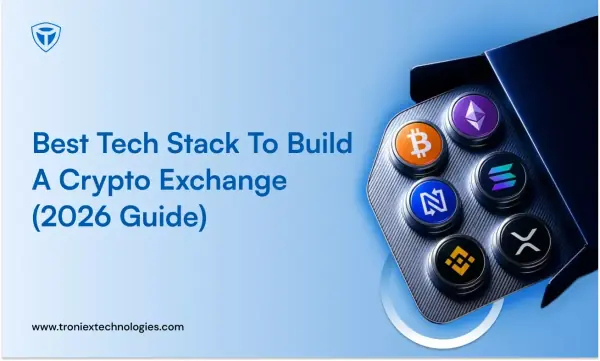
Best Tech Stack to Build a Cryptocurrency Exchange in 2026
The best tech stack for a crypto exchange in 2026 pairs Go or Rust for the matching engine, PostgreSQL and Redis for data, React with Next.js for the frontend, and Kubernetes on AWS or GCP for infrastructure. This guide breaks down why, layer by layer, and where white-label changes the calculation.
Oct 08, 2026
10 mins read
- Go and Rust dominate matching engine builds in 2026 because neither has garbage collector pauses that stall order matching mid-cycle.
- PostgreSQL, Redis, and Kafka form the default database layer for nearly every exchange in production today.
- Fully custom builds start from $45,000 and run 3 to 12 months. White-label starts at $10,000 and launches in 7 to 30 days.
- React with Next.js is the default frontend for trading interfaces, largely for TypeScript support and server-side rendering.
What "tech stack" Means for a Crypto Exchange?
Your stack is the set of languages, databases, frameworks, and infrastructure tools that run each layer of the exchange: the engine that matches trades, the database that stores balances, the frontend traders see, and the servers everything runs on.
Get the stack wrong, and you don't find out in week one. You find out at month 8, when your order book lags under a volatility spike or your database can't keep up with withdrawal volume during a market crash.
Two mistakes come up again and again:
- Teams pick the language they already know instead of the one the job needs, then discover their matching engine can't hold sub-millisecond latency under load.
- Teams treat the stack as a one-time decision instead of a layered one. The language for your matching engine and the language for your KYC dashboard don't need to match.

Ready to See a Production-Ready Stack in Action?
Stop guessing which languages and databases will scale. See our exchange infrastructure handle 50K concurrent orders with zero lag.
Request a Live DemoLicensed in the EU. Deploy in 5 minutes. Trade 200+ cryptocurrencies.Choosing a Language for the Matching Engine
Go and Rust are the two languages exchanges will use for matching engines in 2026.
Both avoid garbage collector pauses that stall order matching mid-cycle, which is the one failure mode this component has zero room for.
The matching engine runs on every trade, every second the exchange is open, and a slow match costs traders real money. Rust adds compile-time memory safety, which matters when a bug in this layer means a bad trade execution, not a crashed webpage. Go trades some of that safety for faster development and a simpler hiring pool.
|
Language |
Strength |
Tradeoff |
Best for |
|
Rust |
Memory safety, no GC pauses |
Steeper learning curve, smaller hiring pool |
Exchanges where a matching bug is unacceptable |
|
Go |
Fast development, easier hiring |
Slightly more runtime overhead than Rust |
Teams that need to ship and iterate quickly |
|
C++ |
Lowest possible latency |
Hardest to hire for, easiest to get wrong |
Firms porting legacy trading infrastructure |
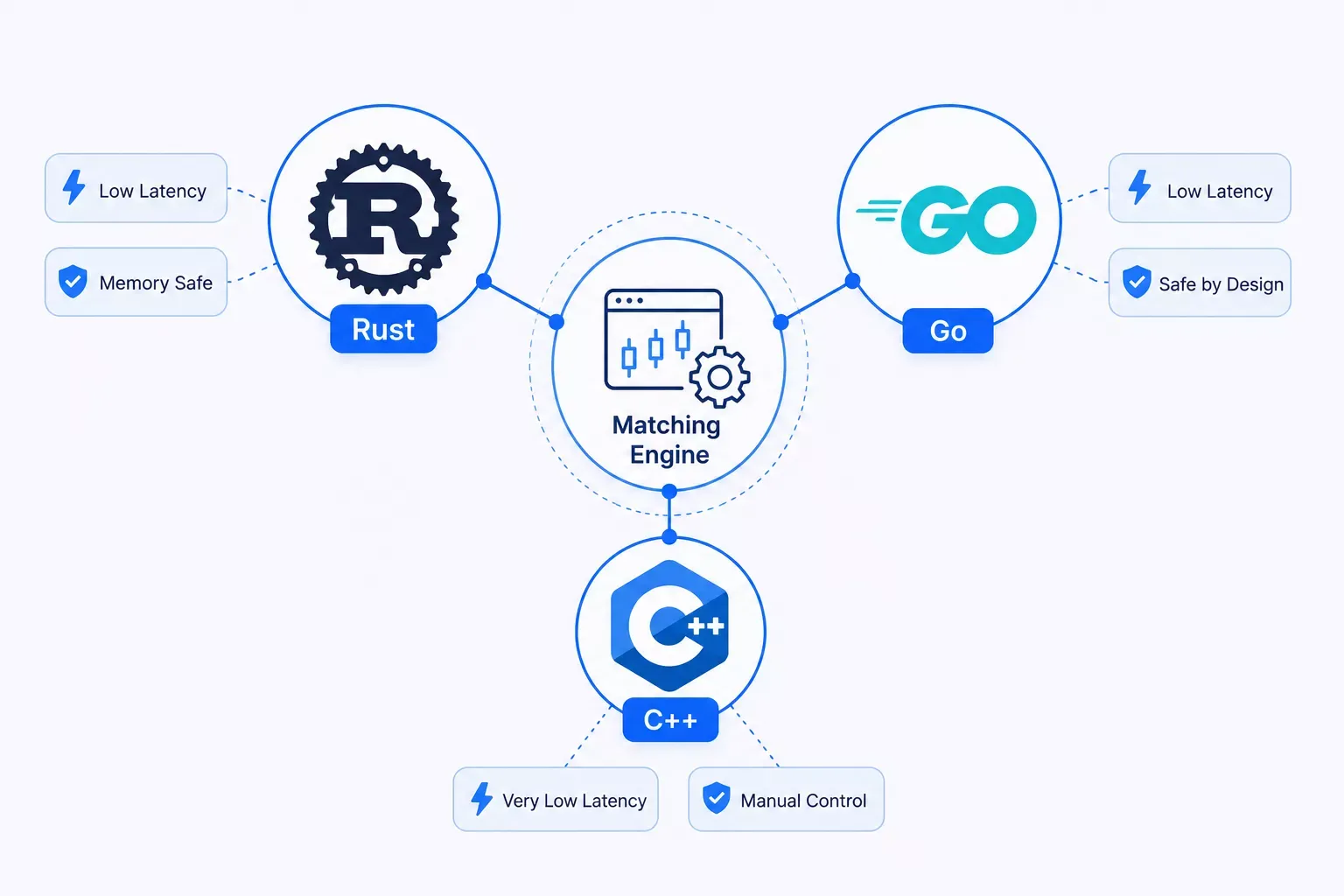
Node.js and Python work well for the services around the engine (APIs, user services, KYC automation), but neither belongs inside the matcher itself. Python's interpreter overhead alone rules it out for anything latency-sensitive.
For the matching algorithm itself (price-time priority, data structures, order book design), that's a deeper topic than language choice. Our matching engine guide covers it in full.
Database and Caching Layer
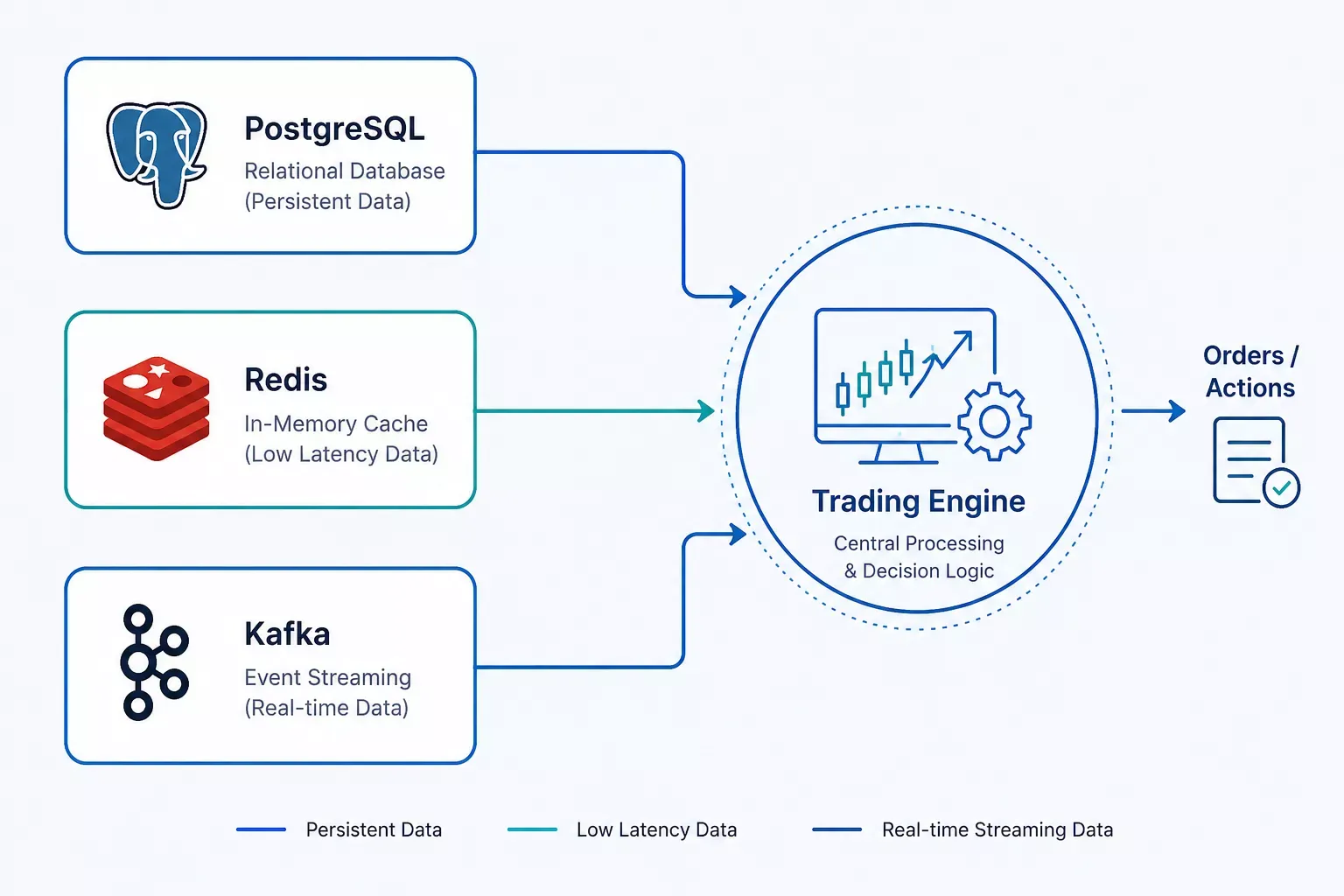
Crypto exchanges run on three databases: PostgreSQL, Redis, and Kafka, each doing a different job.
PostgreSQL
Handles the transactional core: balances, trade history, user accounts. It's the layer where an ACID guarantee isn't optional. A dropped or double-counted transaction here is a support ticket at best and a regulatory problem at worst.
Redis
Caches the live order book in memory. Reading the order book off disk on every price check adds latency your traders will notice within days of launch. Redis keeps it in RAM where it belongs.
Kafka
Streams events between services: trade executions, order updates, wallet events. It decouples your matching engine from your notification service, so a slow email queue never touches trade execution speed.
MongoDB and Cassandra show up too, usually for logs and analytics data that doesn't need relational structure. Neither belongs in the settlement path.
A common failure mode: under-provisioning Redis memory, which shows up as order book lag exactly when trading volume spikes and you can least afford it.
Frontend and API Layer
React with Next.js is the default frontend choice for trading interfaces in 2026. Server-side rendering cuts initial load time, TypeScript catches state bugs before they hit production, and the ecosystem has more crypto-specific charting libraries than Vue or Angular.
The API layer runs on two protocols doing different jobs:
- REST handles account actions: placing an order, checking a balance, updating settings.
- WebSocket handles anything that updates without a page refresh: live price feeds, order book depth, trade execution confirmations.
Polling a REST endpoint for price updates instead of using WebSocket is a common early mistake. It shows up as a UI that feels a beat behind the market.
TradingView's Charting Library is the closest thing to a standard for exchange price charts. Most exchanges license it rather than build charting in-house.
Blockchain and wallet integration
Solidity covers Ethereum and EVM-compatible chains, and Rust covers Solana and Polkadot. Which one you need depends on which chains you're integrating.
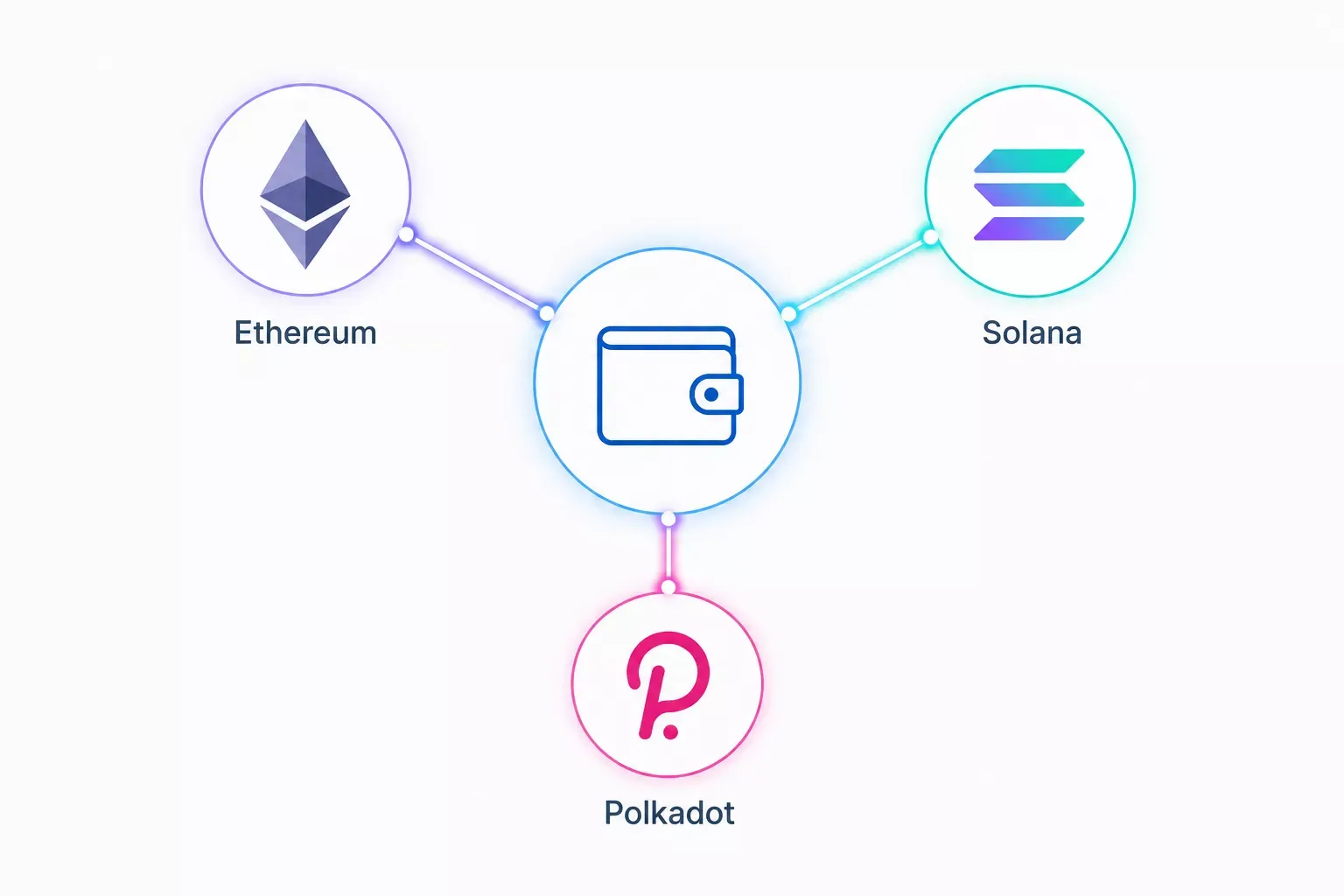
Solidity is the most documented option and the easiest to audit, since most third-party security firms have deep Solidity experience.
Rust covers Solana and Polkadot. Both chains chose Rust for the same reason exchanges choose it for matching engines: performance without a garbage collector, confirmed in Solana's own developer documentation.
For wallet connectivity, Web3.js remains the most common Ethereum library, though Viem and Wagmi have picked up ground for their smaller bundle size and better TypeScript support. @solana/web3.js is the standard for Solana integration.
The stack decision that gets underestimated here isn't the library; it's RPC node reliability. A wallet library is only as good as the node it's talking to. Running your own node cluster (or paying for a reliable managed provider) matters more than which JavaScript library you pick, especially once you're supporting more than one chain.
Ready to Scope your Exchange's Tech Stack?
Talk to Troniex's infrastructure team about what a custom stack looks like for your volume, chains, and compliance requirements.
Talk To Our ExpertsCloud Infrastructure and Scaling
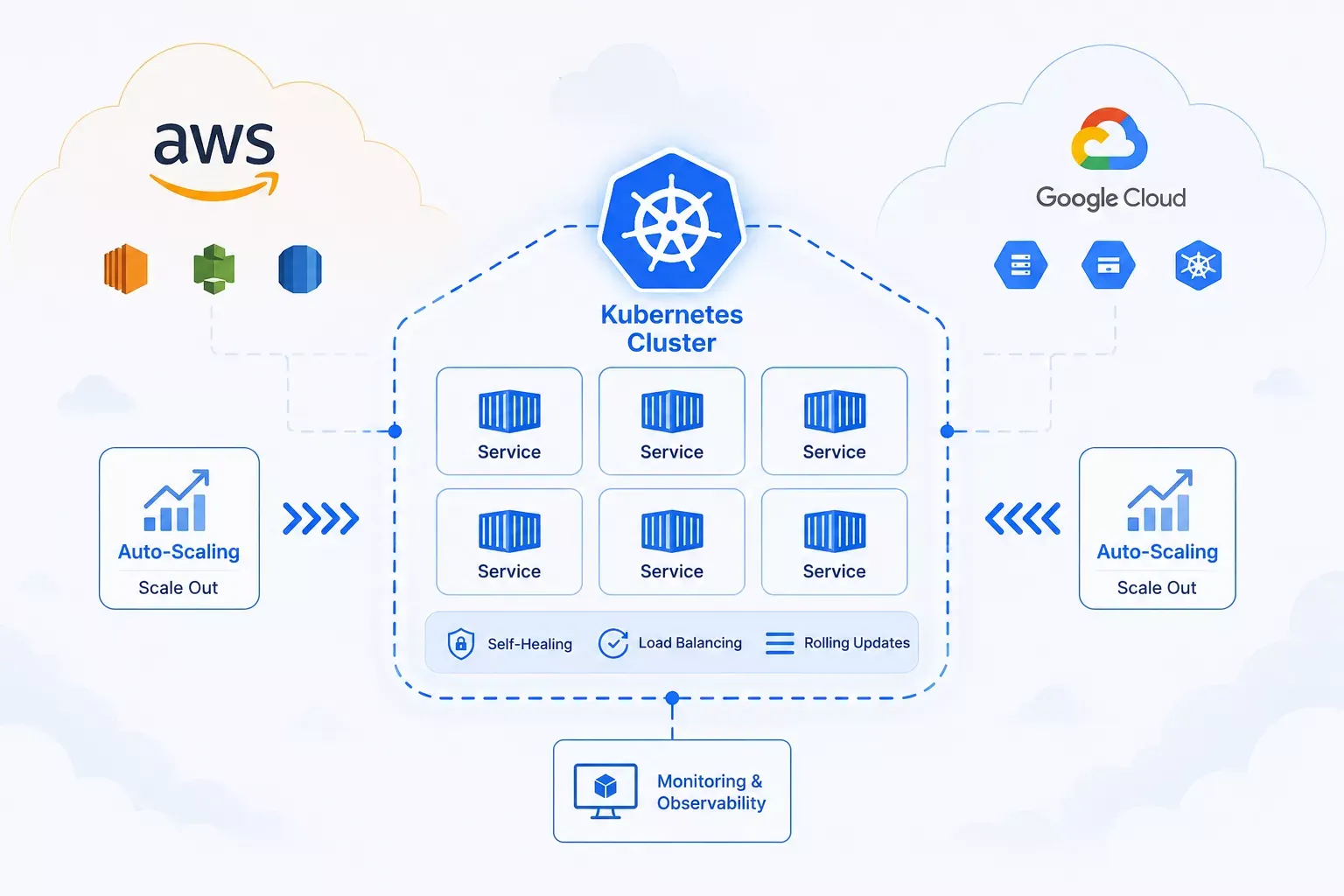
Docker packages each service, Kubernetes orchestrates and scales them, and AWS or GCP hosts the cluster. This combination is close to universal among exchanges built after 2023.
The reason Kubernetes specifically: exchange traffic isn't steady. A market crash or a token listing can spike traffic 10x in minutes, and Kubernetes' autoscaling capabilities add capacity without a human paging into a console at 3am. Multi-region deployment matters too, not for latency alone but for the uptime SLA traders expect from an exchange during exactly the moments it's under the most load.
Security-Relevant Stack Choices
This section covers tooling, not process. For the full security and compliance framework (KYC/AML, GDPR, audit practices), see our architecture guide.
At the stack level, three choices matter most:
- A hardware security module (HSM) or cloud KMS for signing keys, rather than storing them in application code.
- A dedicated encryption library for data at rest, application-layer encryption, not just disk-level.
- Separate infrastructure for hot and cold wallet signing, so a breach in one doesn't expose the other.
These are infrastructure decisions your engineering team makes once, early, and rarely revisits. That's exactly why getting them right at the start matters.
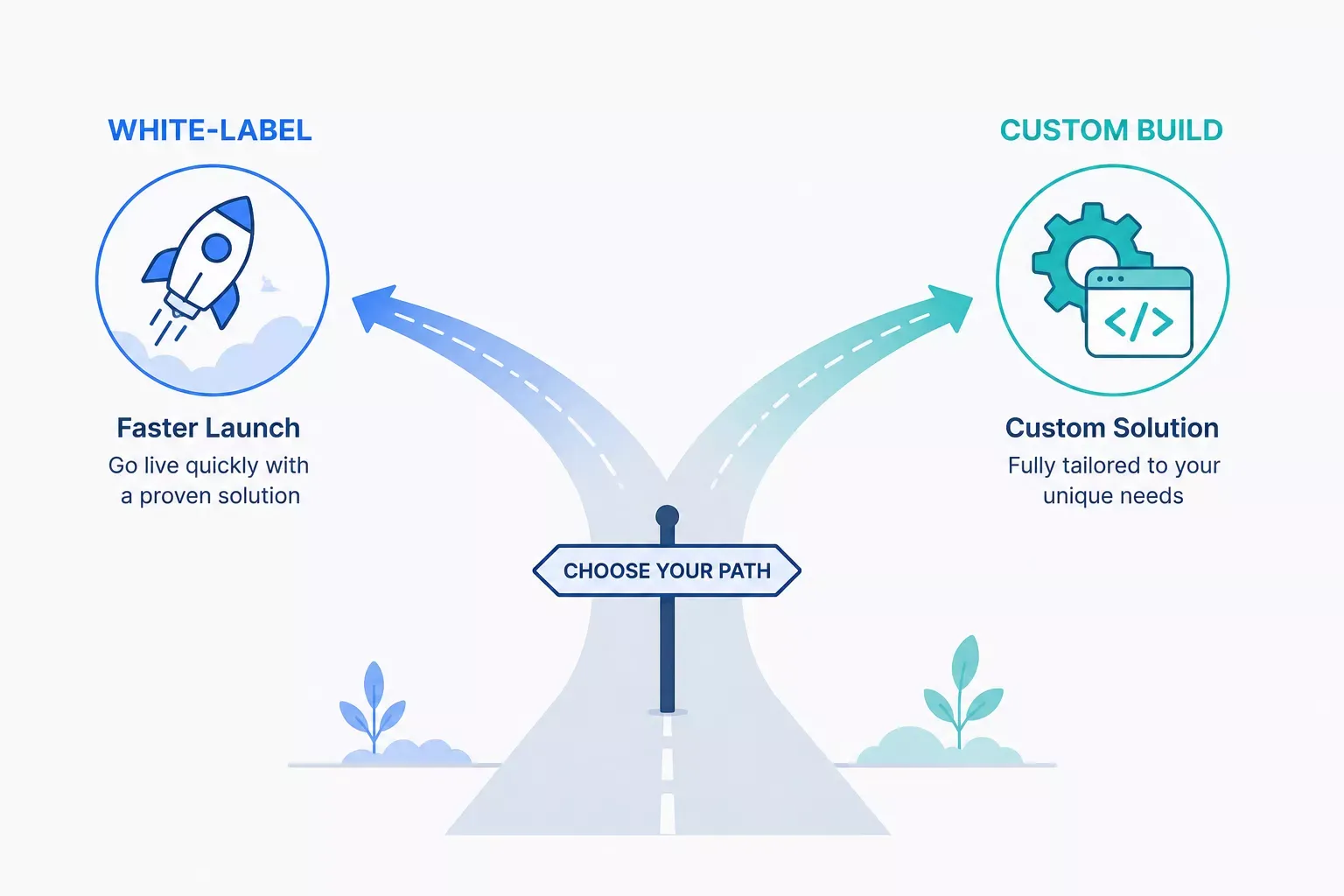
Build from Scratch vs. White-label: Which Path Fits Your Timeline
This is the decision that determines every other one on this list.
|
White Label |
Hybrid / semi-custom |
Fully custom |
|
|
Cost |
$10,000 to $30,000 |
$35,000 to $70,000 |
$45,000+ (scales with scope) |
|
Timeline |
7 to 30 days |
30 to 90 days |
3 to 12 months |
|
Stack control |
Limited to vendor's stack |
Partial, core modules customizable |
Full |
|
Best for |
Speed to market, proven compliance coverage |
Exchanges that need one or two differentiated components |
Exchanges where the stack itself is the differentiator |
These figures cover the platform build itself.
Backend development typically eats 30 to 40% of that budget, security another 15 to 25%, and compliance or licensing anywhere from 10 to 30% depending on jurisdiction.
Full breakdown, regional developer rates, and hidden costs (the ones that show up after launch, not in the initial quote) are in our crypto exchange development cost guide.
Fully custom builds make sense when your competitive edge depends on something the stack controls directly: sub-millisecond matching latency, a proprietary liquidity model, or infrastructure you need to own outright for a specific regulatory reason.
If none of those apply, a 12-month build timeline is a cost you're paying for control you may not use.
White-label and hybrid solutions make sense when the market opportunity has a shorter shelf life than a custom build.
Note this is a full-stack build-vs-buy decision, distinct from the matching-engine-specific build-vs-buy tradeoff, where the same question gets asked at just the engine layer.
Tools and resources
- Redis – in-memory order book caching. Free, open source.
- Apache Kafka – event streaming between services. Free, open source.
- PostgreSQL – transactional database. Free, open source.
- Kubernetes – container orchestration and auto-scaling. Free, open source (managed versions on AWS/GCP are paid).
- TradingView Charting Library – exchange-grade price charts. Paid license.
- Web3.js / Viem – Ethereum and EVM wallet connectivity. Free, open source.
- @solana/web3.js – Solana wallet and chain integration. Free, open source.
- AWS KMS / HashiCorp Vault – key management for signing infrastructure. Paid.
Discover top crypto exchange development companies in Japan that help businesses launch customized cryptocurrency exchanges.
Conclusion
Your matching engine language and your database layer are the two decisions hardest to walk back after launch. Everything else in the stack (frontend framework, charting library, even cloud provider) can migrate later with effort but not existential risk.
If you're weighing build vs. white-label for your own timeline, talk to our infrastructure team about what a custom Troniex stack looks like for your specific volume and compliance requirements.