KYC/AML for Crypto Payment Gateways: What International Businesses Need Before Launch
Learn the key KYC/AML requirements for launching a crypto payment gateway internationally, from identity checks and sanctions screening to transaction monitoring.
Sep 15, 2026
11 mins read
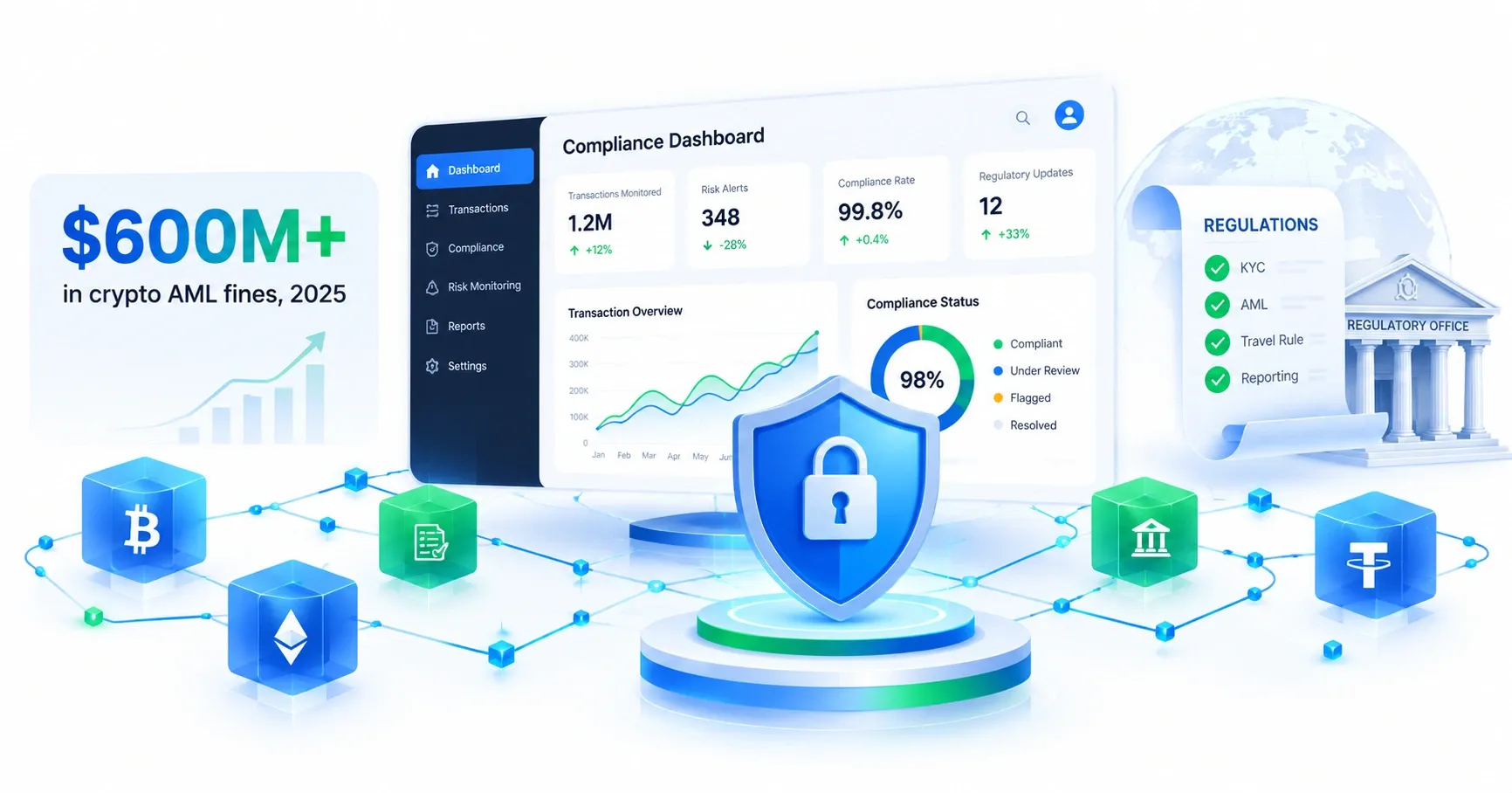
Crypto exchange AML fines surpassed $1 billion globally in 2025, with regulatory penalties across all sectors up 417% year over year in the first half alone. The single largest crypto penalty, $504 million against OKX, came from facilitating over $5 billion in suspicious transactions. Most of these firms had a KYC program. What they didn't have was one built to hold up under audit, and heading into 2026, regulators are enforcing harder, not easing off.
International businesses often treat KYC/AML as a checkbox to add once the gateway is live. That sequencing is exactly what gets gateways shut down or banks to cut ties, because retrofitting compliance means reconciling transaction history and user data against rules that didn't exist when the accounts were created.
This piece lays out what's actually required for crypto payment gateway development internationally, region by region, not as a generic global standard. That applies whether you're building for a crypto payment gateway for e-commerce storefront, an exchange, or a remittance platform.
TL;DR: Crypto exchange AML fines topped $1 billion in 2025, including a $504 million OKX penalty for weak AML controls. As of mid-2026, 83% of surveyed jurisdictions have implemented the FATF Travel Rule, up from 73% in 2025, and enforcement is now catching up to adoption. Before launching a crypto payment gateway internationally, businesses need identity verification, transaction monitoring, and region-specific licensing in place, not bolted on after launch.
Key takeaways:
- Crypto exchange AML fines surpassed $1 billion in 2025, from OKX's $504 million penalty down to Paxos's $26.5 million fine, and overall financial-crime penalties rose 417% year over year in H1 2025
- As of mid-2026, 83% of surveyed jurisdictions have implemented the FATF Travel Rule, up from 73% in 2025, and 96 of 117 surveyed jurisdictions require VASP licensing
- OFAC sanctioned its first DeFi protocol in January 2025 and continues expanding coverage into 2026, including a $344 million freeze on wallets tied to Iran's central bank in April 2026
- A gateway compliant in one region (US, EU, or UAE) is not automatically compliant in another; each has its own licensing category and monitoring standard
- Stablecoins carried 86% of illicit crypto flows in 2025, making them the top monitoring priority, not a lower-risk asset class
- Building KYC/AML into the gateway from day one costs less than retrofitting it after launch
Why KYC/AML Isn't Optional for a Crypto Payment Gateway
OKX's $504 million penalty in February 2025 split between $420.3 million in forfeiture and an $84.4 million criminal fine, the result of onboarding accounts without adequate identity checks or sanctions screening.
Coinbase Europe followed in November 2025 with a €21.46 million fine from the Central Bank of Ireland for failing to monitor more than 30 million transactions worth roughly €176 billion.
Neither company lacked a KYC program entirely. Both had gaps regulators found specific and expensive. That pattern repeats across 2025's enforcement actions, and it points to what regulators are actually checking:
- Transaction monitoring quality, not just whether a monitoring tool exists
- Sanctions screening coverage across the full user base, not just at signup
- Whether licensing matches the services actually offered, not a generic registration
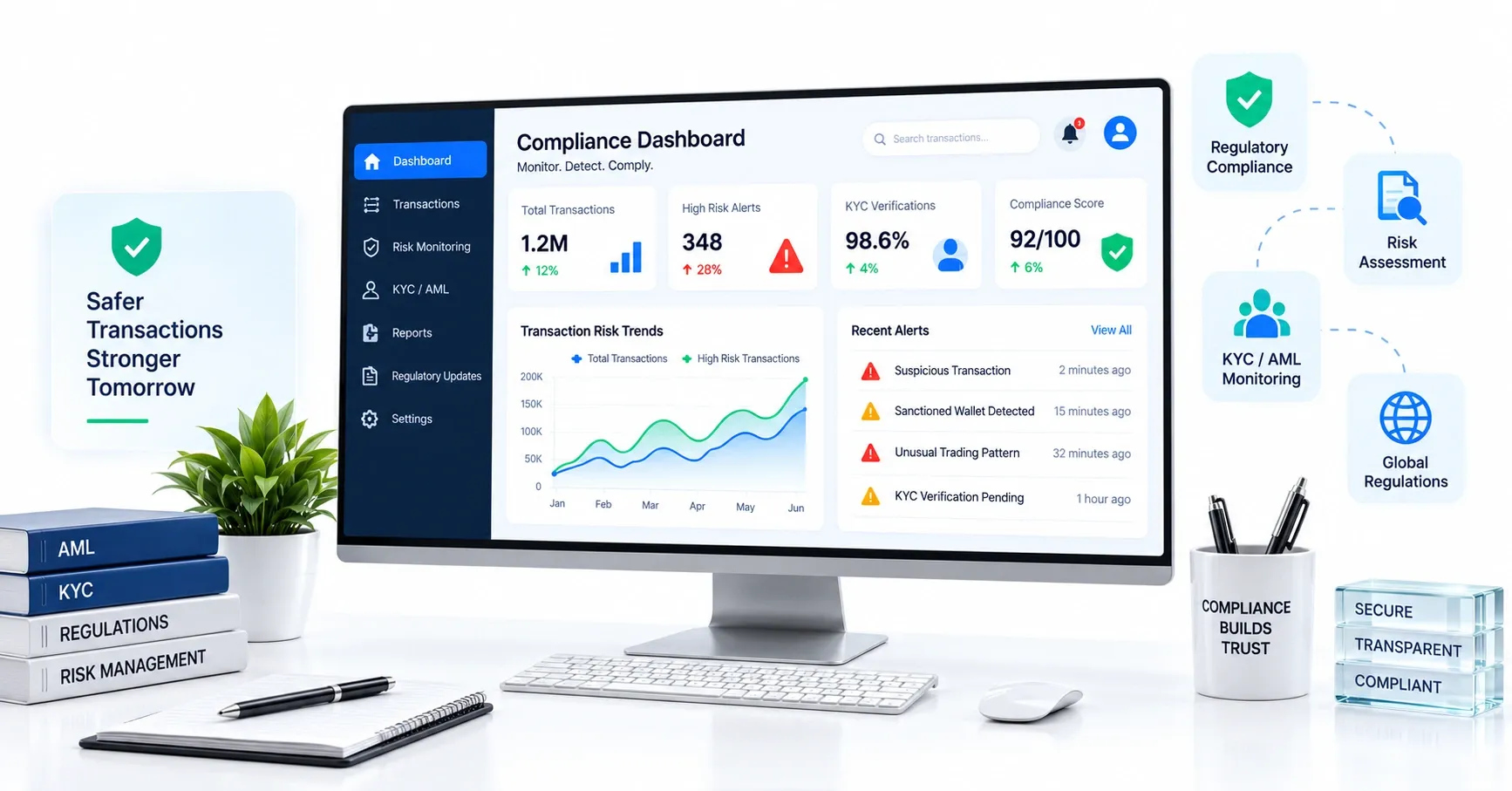
The business risk extends past fines. Crypto wallet addresses on OFAC's Specially Designated Nationals sanctions list grew to 1,245 by February 2025, a 32% increase year over year, and OFAC has kept expanding since: in April 2026, it sanctioned two wallets tied to Iran's central bank, freezing roughly $344 million in what regulators called the largest on-chain freeze of state-linked crypto reserves on record. A "no-KYC" gateway might stay technically legal in a shrinking number of jurisdictions, but banks and payment processors increasingly cut ties with unverified platforms regardless of local legal status. Losing a banking relationship can shut down a business faster than a regulator ever would.
What Is the FATF Travel Rule, and Does It Apply to You?
The FATF Travel Rule requires crypto businesses to share originator and beneficiary information for any transaction above $1,000 or €1,000, the same way banks share sender and recipient data on a wire transfer.
If your gateway processes cross-border payments above that threshold, the rule applies to you. This is the exact requirement that trips up teams doing cross-border payment app development without a compliance-first architecture.
Adoption has accelerated fast:
- As of July 2026, 83% of surveyed jurisdictions have passed legislation implementing the Travel Rule, up from 73% in 2025
- An additional set of jurisdictions report implementation actively underway, not just planned
- FATF's own 2026 update shifted its emphasis from adoption gaps to enforcement gaps, a sign regulators consider the legislative phase largely done
That shift matters. Enforcement lagging adoption used to read to some businesses as "no one's checking." Heading into 2026, that gap is the thing FATF itself is now targeting, not a permanent feature of the rule.
For a gateway specifically, this means building data-sharing into every cross-border transaction above the threshold, matching whatever format the counterparty VASP requires. Skipping this because enforcement lagged in past years is a bet against where regulators have explicitly said they're heading next.

Launch With Compliance Built In
Develop a secure crypto payment gateway aligned with global regulatory requirements.
Talk To Our ExpertsKYC Requirements by Region: US, EU, and UAE Compared
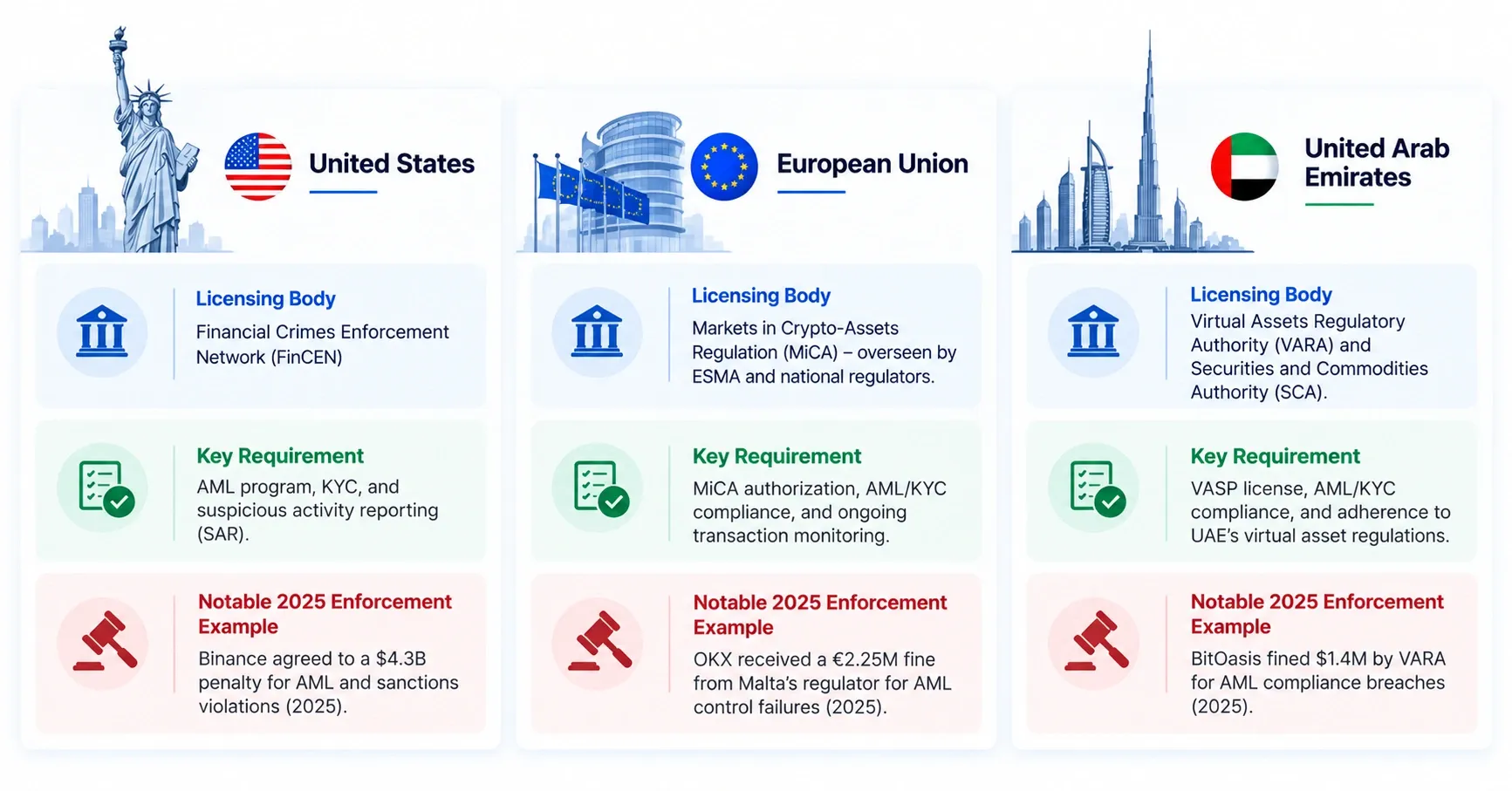
Businesses expanding internationally often assume one KYC program covers every market. It doesn't.
|
Region |
Licensing Body |
Core Requirement |
2025 Enforcement Example |
|---|---|---|---|
|
United States |
FinCEN |
Money Services Business registration + Bank Secrecy Act reporting |
Block, Inc. (Cash App): $40M fine, NYDFS, AML screening lapses on its peer-to-peer platform |
|
European Union |
National regulators under MiCA |
Authorization matched to service category (payment processing differs from custody) |
Coinbase Europe: €21.46M fine, Central Bank of Ireland, failed to monitor €176B in transactions |
|
United Arab Emirates |
VARA (Dubai) or ADGM (Abu Dhabi) |
License category matched to exact service offered; categories are not interchangeable |
No major public 2025 fine; the recurring risk here is businesses applying for the wrong license category, not weak monitoring |
A gateway compliant with US FinCEN rules is not automatically compliant with EU MiCA or UAE VARA requirements. Businesses expanding internationally often discover this only after a bank flags a transaction or a regulator asks a question their compliance program can't answer.
Registration alone doesn't satisfy ongoing monitoring obligations, and a license issued for one service type doesn't cover another. If the UAE is one of your target markets, crypto exchange development companies in the UAE face this exact VARA/ADGM category mismatch most often.
Across all three regions, the underlying number is worth noting: 96 of 117 jurisdictions surveyed now require VASPs to be licensed or registered, but only 76 have actually completed that licensing.
A meaningful share of the industry is operating in the gap between "required" and "done," and that gap is where enforcement actions concentrate.
What a Compliant KYC Flow Actually Looks Like
Modern KYC verification for payment gateways runs fast for low-risk users and slows down deliberately for high-risk ones. Coinbase clears low-risk verification in under 30 seconds. Bitget's flow takes closer to 15 minutes. Both are compliant, and the gap between them shows how much a risk-based approach affects the user experience without sacrificing the underlying control.
A compliant flow needs three things working together:
- Identity verification tiers: low-risk users clear quickly, flagged users route to manual review
- Document verification with a liveness check: a live selfie matched against the ID, not a static photo upload
- Ongoing sanctions and PEP screening: running at onboarding and repeating on defined triggers, not just once
Tools like Sumsub, Jumio, and Onfido handle most of this out of the box, but the tiering rules and re-verification triggers still need someone to own and adjust them as transaction patterns shift.
Manual review matters more than it sounds. Automated systems catch patterns they were trained to catch. Novel laundering methods, the kind that show up in enforcement cases as "growth at all costs" onboarding, often need a person to notice something doesn't add up before the transaction clears.
Transaction Monitoring and the Stablecoin Blind Spot
Stablecoins carried 84% of verified fraud inflows and 86% of all illicit crypto flows in 2025. That's the opposite of how most businesses think about stablecoin risk.
Price stability makes stablecoins feel like the safer asset class, but that same stability is exactly why bad actors prefer them for moving funds without the volatility that makes tracing easier.
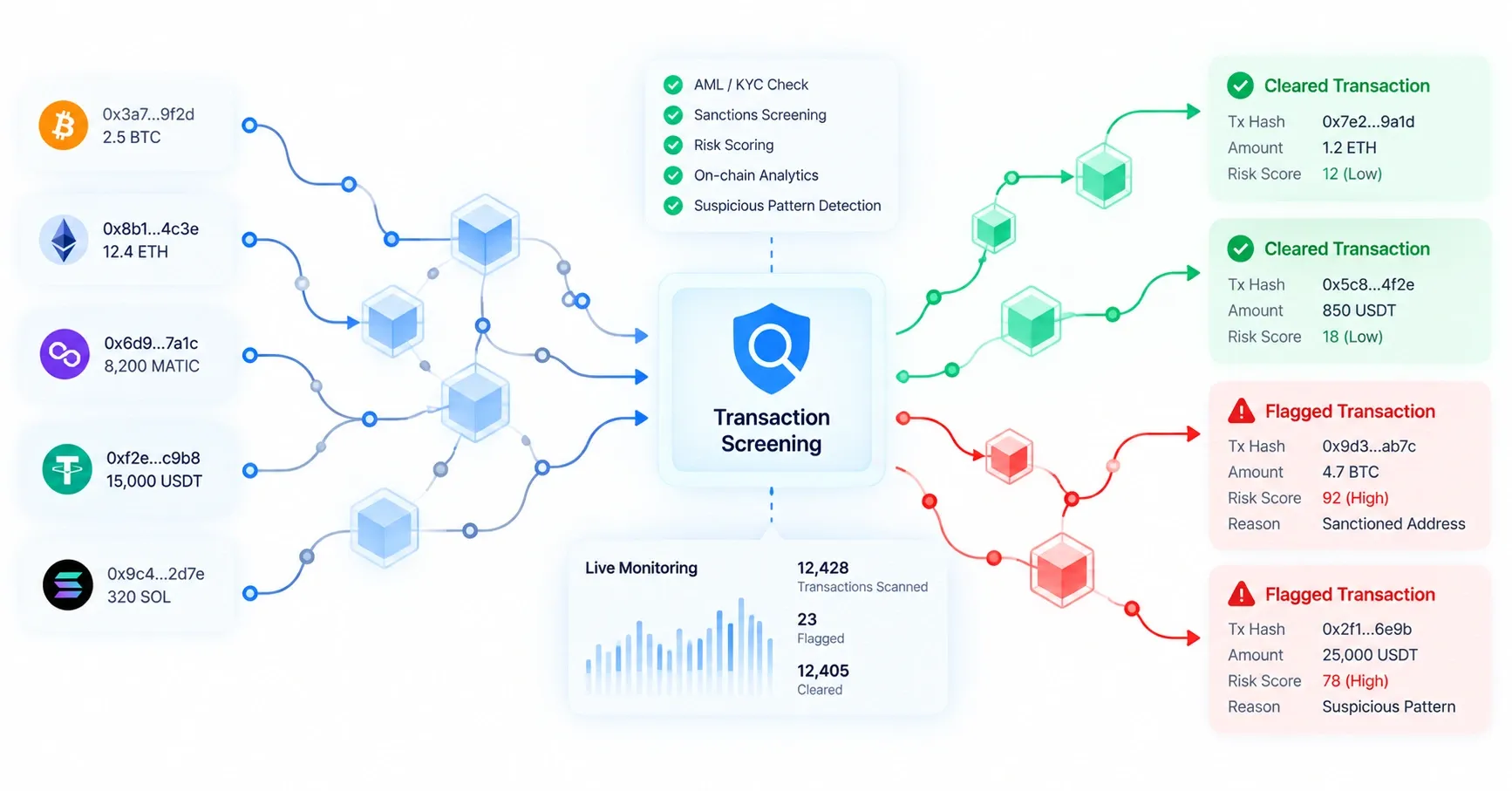
A gateway processing international payments needs on-chain monitoring integrated across every chain it supports, not just the most common one:
- Elliptic covers 99% of global crypto trading volume
- Chainalysis and TRM Labs offer comparable multi-chain coverage
- A gateway supporting five chains while only monitoring two has a real gap regardless of which vendor it uses
Stablecoin transactions specifically need tighter thresholds than a blanket monitoring rule applied across all assets.
If your monitoring system treats a stablecoin transfer the same as a volatile-asset transfer, it's applying the wrong risk model to the flow carrying the most illicit volume.
What Happens If You Skip Compliance
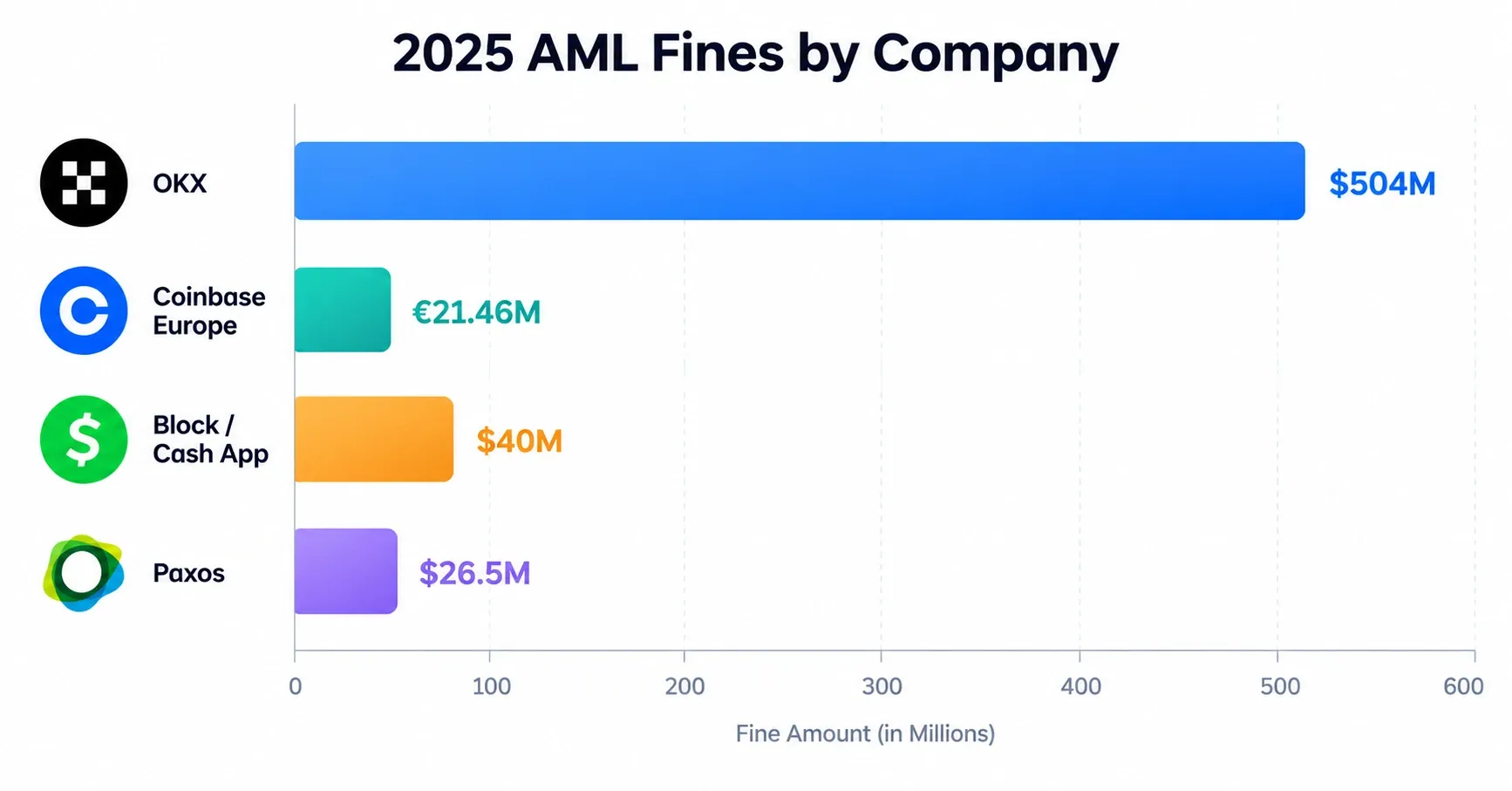
- OKX: $504 million (Feb 2025) for facilitating over $5 billion in suspicious transactions
- Coinbase Europe: €21.46 million (Nov 2025) for failing to monitor €176 billion in transactions
- Block, Inc. (Cash App): $40 million (2025) for AML screening lapses on its peer-to-peer platform
- Paxos: $26.5 million (2025) for failing to monitor illicit flows from partner Binance
None of these were the largest fine of the year, and none involved a company with no compliance program at all. The common thread is monitoring gaps that existed underneath a program that looked adequate on paper, and regulators have carried that same scrutiny into 2026, expanding sanctions coverage (the April 2026 Iran-linked wallet freeze is one example) rather than easing enforcement.
Beyond the fines themselves, the real damage is often structural:
- Lost banking relationships
- Terminated payment processor agreements
- In some jurisdictions, personal liability for founders and executives tied to compliance failures
A fine is a one-time cost. Losing your bank mid-operation can end the business. The pattern across every 2025 enforcement action is the same: gaps get found in monitoring quality and licensing scope, not in whether a KYC form exists at signup.
Building Compliance Into Your Gateway from Day One
Retrofitting KYC/AML into a live payment gateway costs more and takes longer than building it in from the start. Transaction history, user data, and new monitoring rules all need reconciling after the fact, and that reconciliation happens under pressure, usually after a regulator or bank has already flagged something.
If you're briefing a development partner rather than building compliance in-house, ask three specific questions:
- Which region's licensing categories does their experience actually cover, not just "international compliance" in general
- How do their compliance modules handle GDPR data retention for EU customers alongside KYC record-keeping requirements that pull in the opposite direction
- Can they show a build where region-specific licensing, not just generic KYC, was part of the architecture from the start
With 96 of 117 jurisdictions now requiring VASP licensing and only 76 having completed it, the businesses closing that gap early are the ones that treated compliance as infrastructure, not as a feature added before launch.
Our own breakdown on how to build a crypto payment gateway covers where compliance modules fit in the architecture stage specifically, before a single line of the transaction flow gets built.
Treat Compliance as Infrastructure, Not a Launch-Day Checkbox
Compliance is regional, not universal. A gateway built for FinCEN doesn't clear MiCA or VARA automatically, and retrofitting monitoring or licensing after launch costs more than building it in from the start. T
he enforcement gap that made some regions feel low-risk is closing fast heading into 2026: Travel Rule adoption already sits at 83% of surveyed jurisdictions, and FATF has now shifted its own focus to closing enforcement gaps rather than adoption gaps.
If you're planning to launch or expand internationally, whether that's a standalone gateway or compliance built into a broader crypto exchange, talk to a development partner who has already built KYC/AML compliance into gateways across multiple regulatory regimes, rather than treating each new region as a separate problem to solve after the fact.
Build Compliance Into Your Crypto Payment Gateway
Create a compliant gateway with KYC, AML, monitoring, and licensing.
Contact Us