Is Launching a Crypto Margin Trading Exchange Profitable in 2026?
Discover the true ROI of launching a crypto margin trading exchange in 2026, costs, revenue models, risks, and profitability insights from Troniex Technologies.
Jan 22, 2026
14 mins read
The crypto trading landscape in 2026 is bigger, faster, and more leveraged than ever.
Global exchange revenues are soaring, crossing $63.38 billion this year, and a growing share of that comes from margin and derivatives trading, where traders borrow capital to amplify returns.
For exchange founders, that leverage doesn’t just boost traders’ profits, it multiplies the platform’s revenue potential too.
Whether you build from scratch or use a margin trading clone, the underlying ROI mechanics remain the same.
But behind those profits lies volatility of another kind. In just one month, October 2025, the industry witnessed $19 billion in forced liquidations and over $2.5 billion in security losses, wiping out accounts, damaging trust, and exposing the fragility of many platforms.
Compliance costs are climbing, regulatory frameworks are tightening, and the days of “launch fast, fix later” are long gone.
So, is it still profitable to launch a crypto margin trading exchange in 2026?
The short answer: yes, but only if you approach it with data discipline, compliance precision, and enterprise-grade security.
At Troniex Technologies, we help exchange operators achieve exactly that, engineering high-ROI trading platforms built for scalability, security, and sustainable growth.
In this analysis, we’ll break down the real numbers behind ROI, uncover where profits are made (and lost), and reveal what it truly takes to run a profitable margin trading exchange in 2026.
The Market Opportunity in 2026
The crypto exchange sector has entered an acceleration phase that few other fintech industries can match.
According to Coinlaw’s 2025 market reports, the global cryptocurrency exchange market surged from $50.95 billion in 2024 to $63.38 billion in 2025, a 24% year-over-year increase.
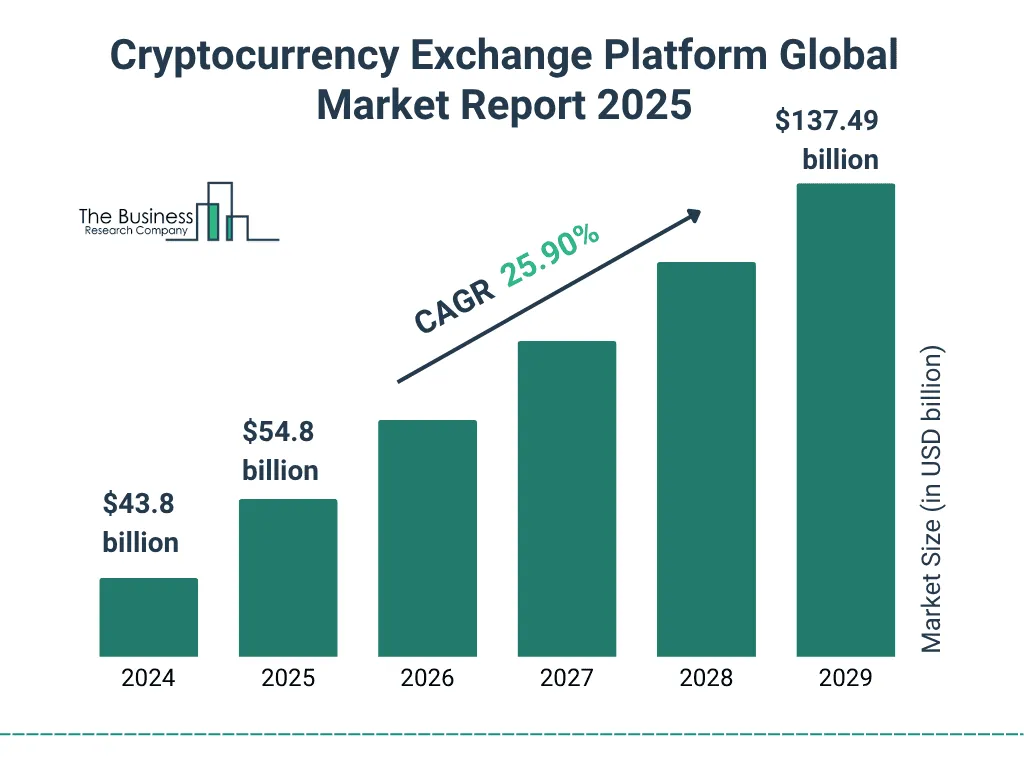
Forecasts indicate this number could soar past $137 billion by 2029, maintaining a strong 25.9% CAGR.
This growth isn’t just about user adoption; it’s about trading intensity. Global trading volume hit $4.27 trillion in September 2025, with margin and derivatives now accounting for a significant share of that activity.

Ready to Supercharge Your ROI with Margin Trading?
Partner with Troniex Technologies to launch your own margin trading platform and build your future in high-growth digital finance.
Talk To Our ExpertsWhy Margin Trading Dominates Exchange ROI?
Margin trading is no longer a niche; it’s a revenue engine for crypto exchanges.
Unlike spot exchanges that rely solely on transaction fees, margin platforms generate multi-layered income through:
- Interest on borrowed funds (5–15% APR)
- Funding rate spreads
- Liquidation fees
- Premium API or copy-trading subscriptions
That mix creates recurring, compounding revenue streams that outperform traditional trading models.
In fact, margin trading exchanges report 20–30% higher average revenue per user (ARPU) than spot-only platforms.
Regional Profitability Hotspots
Regions like Singapore, Dubai, and the EU (under MiCA) are leading profitability zones, offering clear licensing paths and favorable tax structures.
Emerging markets entering the regulatory mainstream are proving ideal for startups seeking faster ROI and lower compliance friction.
Expert Insight: Exchanges launched through Troniex in Singapore and the UAE have achieved 30–40% faster ROI, primarily due to lower regulatory overhead and access to global liquidity pools.
How Margin Trading Exchanges Generate Revenue?
Unlike spot exchanges that depend solely on transaction fees, margin trading exchanges generate diversified, compounding income streams.
Every time a trader opens, holds, or closes a leveraged position, the exchange earns in multiple ways.
This layered model allows operators to generate steady revenue regardless of market direction, bullish, bearish, or flat.
Let’s break down the six primary ROI channels driving profitability in 2026.
1. Trading Fees: The Baseline Revenue Stream
Every trade executed on the platform incurs a small fee (typically 0.05–0.2%).
While these fees may seem minor individually, they compound dramatically with volume.
Example: A platform processing $10 million in daily trading volume with a 0.1% fee earns $10,000 per day, or $3.65 million annually.
As liquidity and user base grow, this base revenue scales without proportional cost increases, creating a strong ROI foundation.
2. Margin Loan Interest: The Passive Profit Multiplier
Margin lending is one of the most lucrative components of a trading exchange.
Platforms lend funds to traders at 5–15% annualized interest, and since these loans are collateralized, risk is comparatively low.
For every $1 million in active margin loans, a platform earns $50K–$150K annually in interest.
What is the $500 Margin on a $10,000 Position?
In crypto margin trading, a $500 margin on a $10,000 position means you are using 20x leverage: you put up $500 as collateral and borrow the remaining $9,500 from the exchange or liquidity pool.
If the trade moves 5% in your favor, your profit is around $500, effectively doubling your initial margin, but a 5% move against you can trigger liquidation and wipe out most or all of that $500.
That is why strong risk limits and liquidation controls are critical for both traders and the exchange’s ROI.
This revenue accumulates continuously, even when trading volumes fluctuate, making it a reliable passive income stream.
3. Liquidation Penalties: Profiting from Volatility
When traders fail to maintain margin requirements, the system automatically liquidates their positions.
Exchanges collect 2–5% of the liquidated position value as a penalty or processing fee.
During high-volatility periods, these fees spike dramatically, sometimes generating $10K–$100K+ in penalty revenue within a single day.
While ethically sensitive, this mechanism ensures liquidity integrity while bolstering platform revenue during volatile market cycles.
Also Read: How to Improve Liquidity in Crypto Exchange?
4. Dynamic Funding Rates: Built-In Profit Spread
In perpetual futures markets, exchanges charge or pay funding rates between long and short positions. The platform earns from the spread between these rates.
This model guarantees revenue even in sideways markets, as the funding differential always flows through the exchange’s systems.
This creates non-directional profitability, meaning ROI isn’t tied to market sentiment.
5. Premium APIs and Institutional Services
Professional traders, market makers, and funds demand low-latency APIs, priority order routing, and advanced analytics.
Platforms monetize these through subscription tiers or enterprise plans:
- Monthly API subscriptions: $500–$5,000
- Institutional analytics dashboards: $10K–$100K+ annually
These services turn the exchange from a trading venue into a technology product, further diversifying its revenue base.
6. Copy Trading and Performance Fees
Modern users value convenience and community-driven investing.
Copy trading enables them to mirror successful traders’ strategies, with the exchange taking a 10–20% performance fee.
For mid-sized platforms, this generates consistent recurring revenue while boosting engagement and retention, key ROI accelerators.
The ROI Stack: Putting It All Together
Here’s what a balanced revenue model looks like for a mid-tier margin trading exchange:
|
Revenue Source |
Monthly Potential |
ROI Role |
|
Trading Fees |
$50K–$500K |
Core recurring revenue |
|
Margin Loan Interest |
$20K–$200K |
Passive income |
|
Liquidation Penalties |
$10K–$100K |
Volatility-based upside |
|
Funding Rate Spread |
$10K–$50K |
Market-neutral gain |
|
Premium APIs |
$10K–$100K |
Institutional monetization |
|
Copy Trading |
$5K–$50K |
Retention-driven revenue |
Total Monthly Potential: $100K–$1M+, depending on scale and liquidity.
Our clients use the Troniex Revenue Analytics Dashboard to visualize ROI from all these streams, before launch, allowing smarter capital allocation and faster scaling.
The Cost Equation - Investment vs Returns
Before projecting profits, exchange operators must confront the real costs of entry.
Launching a crypto margin trading exchange in 2026 requires substantial upfront investment not just in technology, but also in liquidity, compliance, and security.
These are no longer optional expenses; they’re ROI determinants.
The development model you choose defines your time-to-market, customization flexibility, and capital risk:
|
Model Type |
Development Cost |
Description |
|
White-Label Exchange |
$5K–$7K+ |
Ready-made system with branding, ideal for MVP or regional launch |
|
Basic CEX |
$7K–$15K |
Core trading, limited margin capabilities |
|
Advanced Margin Exchange |
$15K–$25K+ |
Multi-chain, advanced leverage, risk engine, and analytics |
|
Enterprise-Grade Platform |
$25K–$75K+ |
Institutional features, deep liquidity, and regulatory integrations |
|
Full Custom Development |
$25K+ |
Proprietary order-matching, AI-driven risk modules, and unique UX |
Key Insight: Custom exchange development demands capital but delivers higher long-term ROI through brand differentiation, user trust, and control over trading architecture.
Operational and Ongoing Costs
Beyond development, maintaining performance and compliance requires continuous investment.
First-year operational expenses often exceed the cost of initial build-out:
- Security Infrastructure
- Compliance & Legal
- Infrastructure & Hosting
- Customer Support & Operations
- Insurance & Risk Coverage
- Liquidity & Market Making
Industry data shows that first-year costs for a margin trading exchange typically range between $235,000 and $735,000, depending on scale and market readiness.
Regional Cost Variations
Development and compliance expenses vary significantly by geography:
|
Region Developer |
Hourly Rate |
Project Cost |
|
North America / Western Europe |
$100–$150/hr |
$150K–$250K+ |
|
Eastern Europe |
$40–$70/hr |
$70K–$120K |
|
Southeast Asia / India |
$30–$80/hr |
$25K–$75K+ |
For most startups and early-stage ventures, Asian and Eastern European development partners offer a practical balance between technical depth and cost efficiency without compromising on quality or security.
A well-capitalized exchange reaches breakeven in 6–24 months, depending on scope:
- White-Label: 150% breakeven in 6–12 months
- Custom: 200% breakeven in 12–24 months
- Enterprise: 300–400% breakeven in 24–36 months
Expert Insight: Exchanges with early liquidity partnerships and risk automation can accelerate ROI by 30–40%. The sooner an exchange achieves stable trading volume (>$10M daily), the faster the profit curve compounds.
Fast-Track Your Crypto Margin Trading Exchange Launch
Leverage Troniex’s white-label margin trading suite to reduce time and expenses. Connect with us now to transform your vision into reality fast.
Contact UsTroniex Technologies Cost Advantage
At Troniex Technologies, we help clients minimize both time-to-market and cost-of-capital pressure through modular development.
Our white-label margin trading clone suite includes:
- Pre-integrated order-matching engine
- Multi-chain liquidity aggregator
- Built-in KYC/AML and compliance dashboard
- AI-powered risk management modules
These capabilities reduce launch costs by up to 40% and cut deployment timelines from 6 months to as little as 45 days, letting founders reach operational profitability faster without technical debt.
Also Read: White Label Crypto Exchange Cost (2026)
Risk Factors That Erode Profitability
Profitability isn’t just about earning, it’s about protecting. The biggest ROI killers are:
1. User Experience Failures
Downtime, delayed stop-losses, or margin misfires trigger mass liquidations and user distrust.
Our Fix: Real-time order throttling and isolated margin prevent cascading failures.
2. Security Breaches
In 2025 alone, exchanges lost $2.55B to hacks.
Our Fix: Multi-sig cold wallets, 24/7 monitoring, and on-chain auditing.
3. Regulatory Overheads
Jurisdictional missteps delay launch or trigger fines exceeding $500K+.
Our Fix: Prebuilt compliance (KYC/AML) aligned with MiCA, VARA, MAS.
4. Infrastructure Downtime
Every minute offline equals lost revenue.
Our Fix: Load-balanced, multi-region failover infrastructure ensuring 99.99% uptime.
5. Liquidity Gaps
Thin order books drive traders away.
Our Fix: Integrated liquidity engines connect to Tier-1 pools instantly.
Exchanges don’t fail because the market is unprofitable; they fail because risk wasn’t engineered out of the system.
Market Lessons - The $19B Liquidation Event
A Wake-Up Call for the Margin Trading Industry
In October 2025, the crypto market witnessed one of the most dramatic events in its history, a $19 billion liquidation cascade that rippled through major exchanges like Binance, Bybit, and OKX within 48 hours.
Bitcoin fell 18% in a single day, triggering forced liquidations across overleveraged positions. Nearly 1.2 million traders were liquidated, with hundreds of millions lost in minutes.
For investors, it was another reminder of crypto’s volatility.
For exchange operators, it was a stress test of resilience, infrastructure, and risk management.
What Worked
Exchanges with:
- Isolated margin accounts
- Auto-leverage throttling
- AI risk analytics
- Liquidity circuit breakers
…not only survived, but gained new users during the crisis.
Exchanges with robust risk engines maintained positive cash flow and retained 60%+ of daily active users, while weaker competitors saw volume drop by 70%.
Troniex Resilience Stack:
- AI-driven liquidation control
- Auto-leverage adjustment
- Failover architecture
- Post-liquidation recovery tools
Lesson: Profitability is protected during crises, not earned during bull runs.
ROI Modeling and Profitability Scenarios
- Optimistic: Daily volume $25M, ROI 300–400%, breakeven in 6–8 months; driven by institutional liquidity and risk automation.
- Realistic: Daily volume $8–12M, ROI 85–150%, breakeven in 12–18 months; based on retail traders and margin lending.
- Pessimistic: Daily volume below $5M, ROI -40% to -100%, no breakeven; risk of compliance failure or security breach.
Our Exchange ROI Simulator models these scenarios before development, helping founders plan liquidity, risk exposure, and capital allocation for maximum yield.
Critical Success Factors for Sustainable ROI
Exchanges that implemented these measures maintained operational uptime, user trust, and positive cash flow, even in crisis conditions.
In contrast, competitors without such systems lost up to 60% of their daily active traders and saw trading volume drop by 40–70% in the weeks following.
- Risk management automation uses AI to recalibrate margins every 100 milliseconds, reducing loss ratios by 45%.
- Early regulatory readiness lowers legal costs by 30–40%, helping exchanges avoid compliance issues.
- A security-first architecture prevents fund loss and enhances user trust by three times.
- Scalable infrastructure with under 10 millisecond trade latency improves trade execution and ROI.
- User protection through risk alerts and demo trading programs reduces user churn by 30%.
All five are embedded in Troniex’s margin exchange suite, ensuring that every dollar spent compounds into a durable ROI.
ROI Verdict - Is It Worth Launching in 2026?
The data is clear: 2026 isn’t just another year for crypto margin trading; it’s the most strategically favorable time to enter the market since 2020.
The total market capitalization of leveraged trading has doubled, institutional volume is at an all-time high, and regulatory maturity has replaced much of the uncertainty that once scared founders away.
Profitability in 2026 is no longer about taking more risk; it’s about managing it better.
The Troniex Advantage
At Troniex Technologies, we build exchanges engineered for ROI:
- 40% faster development
- Built-in liquidity access
- AI-based risk mitigation
- Automated compliance with VARA, MiCA, and MAS
- Real-time ROI analytics
- Launch confidently. Operate securely. Scale profitably.
👉 Book a consultation with Troniex Technologies to model your ROI and launch a margin trading exchange designed for profitability in 2026 and beyond.
Conclusion
Crypto margin trading exchanges are no longer high-risk ventures; they are high-discipline businesses.
The difference between failure and fortune lies in how well you manage liquidity, risk, and compliance.
With the right partner and data-driven strategy, ROI isn’t speculation; it’s engineering.
Troniex Technologies helps founders turn that engineering into reality.